

| Piece count | |
|---|---|
| Brand | |
| Atmosphere | |
| Artist | |
| Occasion | |
| Art museum | |
| Art movement | |
| Difficulty | |
| Puzzle Dimensions | 68 cm x 48 cm |
| Box Dimensions | 31 cm x 24 cm x 6.5 cm |
| EAN | 8026311016259 |
5 reasons to choose our art puzzles





Home / Shop / Puzzle arte moderna / Kandinsky, Colour Study, 1,000-Piece Puzzle
19,90€
19,90€
Out of stock
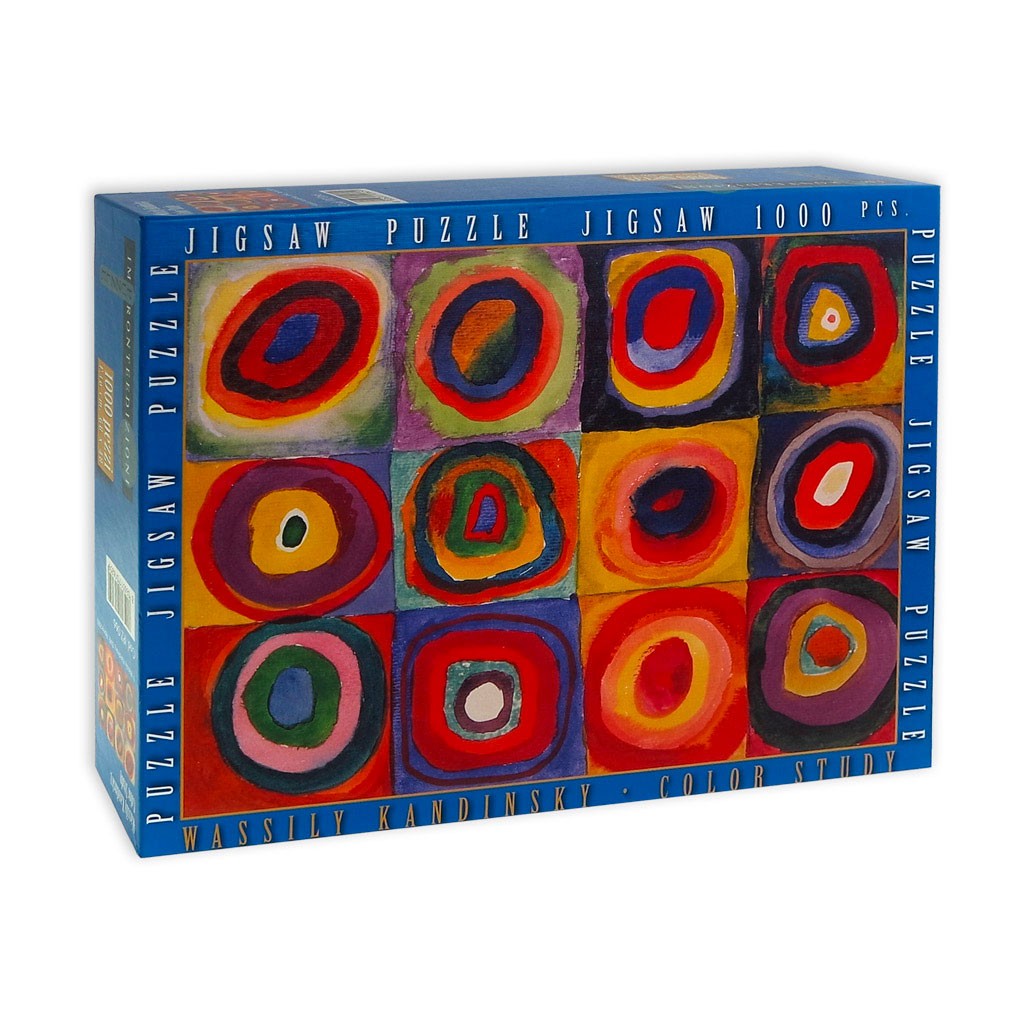
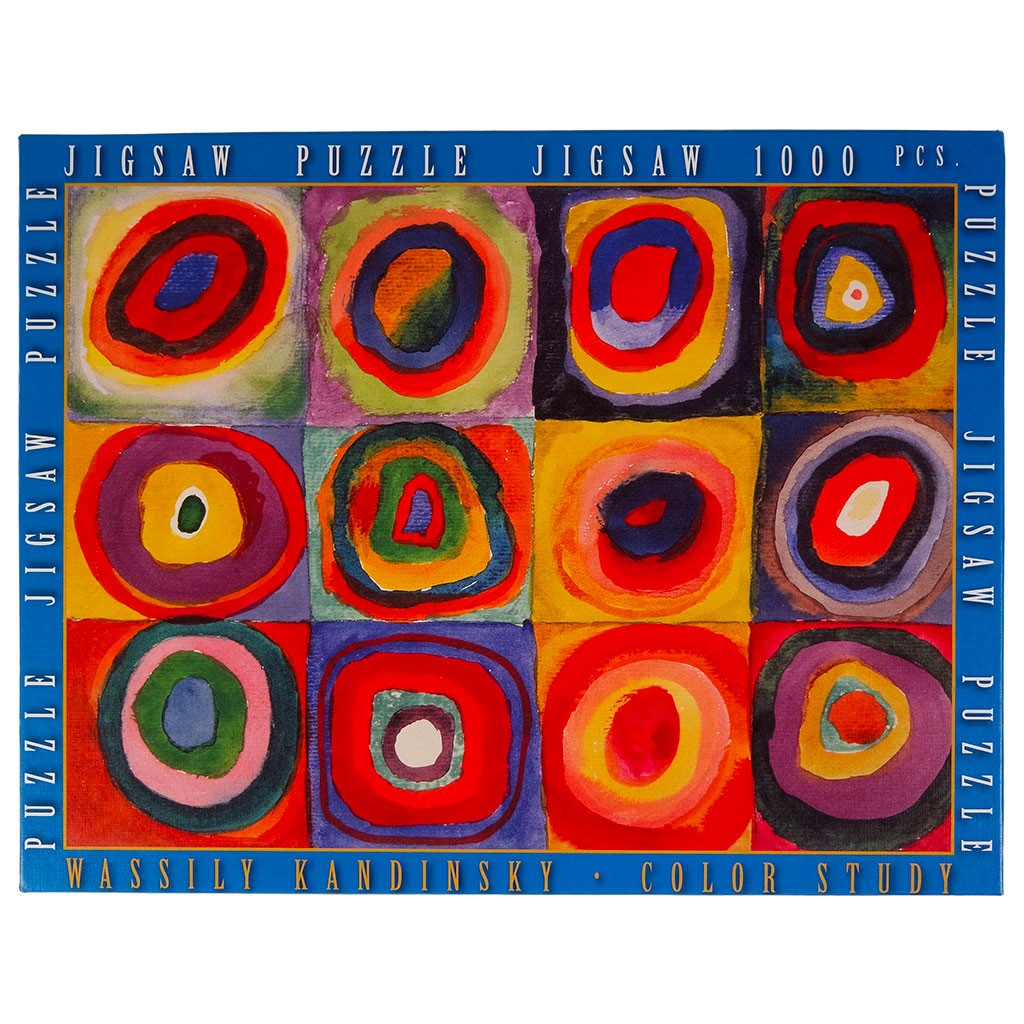
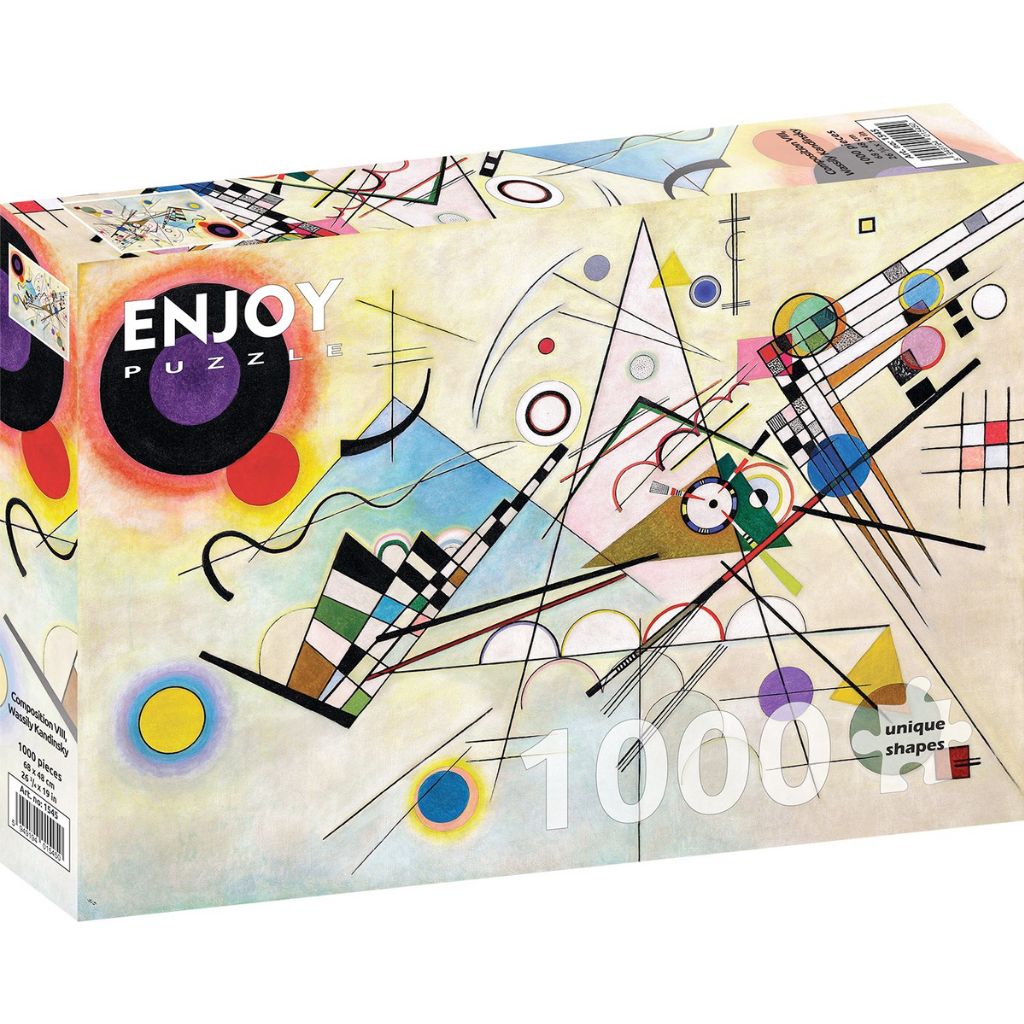
Assemble Kandinsky’s Colour Study in this 1,000-piece Impronte Edizioni puzzle, and explore the Russian master’s expressive use of colour.
This puzzle is currently out of stock.
In the meantime, discover some other art puzzles you might enjoy.
[vc_row layout=”wide”][vc_column css=”.vc_custom_1492834912211{padding-right: 0px !important;padding-left: 0px !important;}”][vc_column_text]
We chose the Kandinsky Color Study Puzzle to discover, piece by piece, the beauty of the abstract works of the great twentieth-century Russian painter.
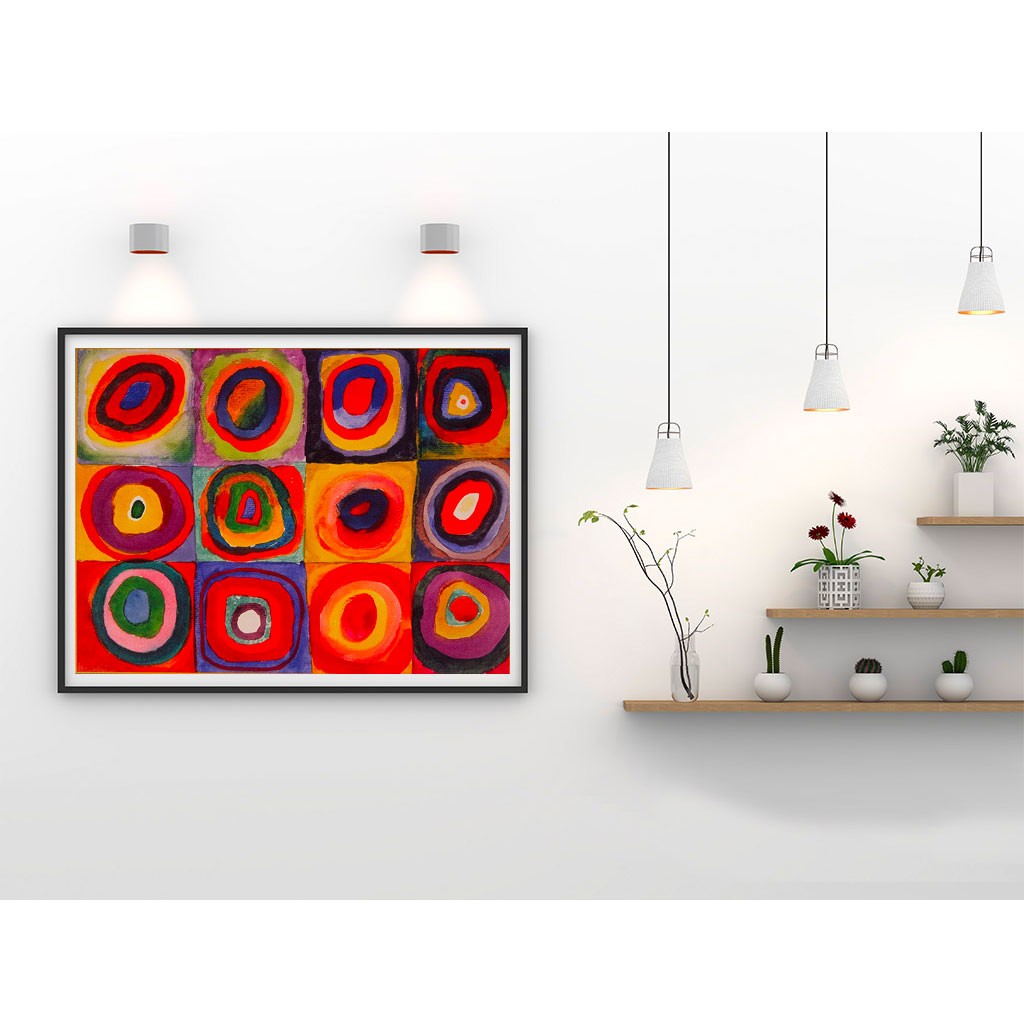
The Study of Color is one of Kandinsky’s paintings that best expresses the master of abstract art’s profound connection with the intimate relationship between color and emotion .
In fact, Kandinsky, in his paintings and in his artistic expression, seeks the profound and incisive relationship between the painter and his art.
Furthermore, freed from representation, abstract art expresses the true meaning of art: an incomprehensible force between the work and the artist.[/vc_column_text][/vc_column][/vc_row][vc_row layout=”wide” css=”.vc_custom_1572635558421{padding-top: 30px !important;padding-bottom: 30px !important;}”][vc_column][vc_row_inner][vc_column_inner width=”1/2″ offset=”vc_col-lg-5 vc_col-md-5″][vc_column_text css_animation=”fadeInLeft” css=”.vc_custom_1580981092227{margin-top: 30px !important;margin-bottom: 30px !important;}”]The Kandinsky Puzzle in detail
The 1000-piece Kandinsky ” The Study of Color ” puzzle by Impronte Edizioni is a truly fun and cheerful puzzle.
The subject expresses all the vital force of the Russian master in his use of colors and his great ability to combine them as if they were musical notes.
The image can be completed quite easily , perhaps with the help of your children .
The little ones could have fun finding and sorting all the tiles according to their color shades, thus helping dad and mom.
[/vc_column_text][vc_column_text]
 |
Number of pieces 1000 |  |
Impronte Edizioni brand |
 |
Puzzle dimensions (cm) 68 x 48 |
 |
Box dimensions (cm) 31 x 24 x 6.5 |
[/vc_column_text][/vc_column_inner][vc_column_inner width=”1/2″ offset=”vc_col-lg-7 vc_col-md-7″][yolo_banner layout_type=”style_3″ icon_hover=”[{“name”:”1500 pieces”,”price”:”Standard Grid”,”url”:”#”,”left”:”30%”,”top”:”70%”},{“name”:”Rare Art Image”,”price”:”Bright Colors”,”url”:”#”,”left”:”50%”,”top”:”25%”},{“name”:”Beautifully Finished Box”,”price”:”Gift Wrapping”,”url”:”#”,”left”:”80%”,”top”:”4%”}]” css_animation=”wpb_fadeInRight” image=”3359″][/vc_column][/vc_row][/][/][vc_row layout=”wide”][vc_column css=”.vc_custom_1492834912211{padding-right: 0px !important;padding-left: 0px !important;}”][vc_column_text]
Kandinsky was born on December 16, 1866 in Moscow, the son of a wealthy tea merchant.
In 1871, young Kandinsky moved to Odessa to stay with his aunt, where he received his first lessons in drawing and during a trip to Venice, he fell in love with the city’s night lights.
His paintings, from the early 1900s, are landscapes executed with a palette knife with fantastic themes derived from the Russian tradition.
Influenced by the European avant-garde, he began his experimentation with colors and techniques.[/vc_column_text][vc_custom_heading text=”Kandinsky’s Color” font_container=”tag:h3|text_align:left” use_theme_fonts=”yes” font_weight=”” css=”.vc_custom_1572888704085{padding-right: 0px !important;padding-left: 0px !important;}”][vc_column_text]In fact, the Fauve colors and the use of the evocative technique of tempera on dark paper created incredibly suggestive effects on the Russian painter’s canvases.
In 1912, with Kandinsky’s first Compositions , the figures become increasingly simplified, the colour is so arbitrary and the space so confused that it is impossible to distinguish the subjects that linked the artist to the representation.
In fact, it was during these years that the profound relationship between point, line and surface began, which would lead him to become one of the greatest masters of art of all time to the present day.
This is why Kandinsky puzzles are so fascinating.[/vc_column_text][/vc_column][/vc_row][vc_row layout=”wide”][vc_column css=”.vc_custom_1572638122321{padding-right: 0px !important;padding-left: 0px !important;}”][vc_custom_heading text=”Impression, improvisation, composition” font_container=”tag:h3|text_align:left” use_theme_fonts=”yes” font_weight=”” css=”.vc_custom_1572888713031{padding-right: 0px !important;padding-left: 0px !important;}”][vc_row_inner css=”.vc_custom_1572607600542{padding-right: 0px !important;padding-left: 0px !important;}”][vc_column_inner width=”1/2″][vc_column_text css_animation=”none”]Kandinsky addresses the theme of the relationship with art through three groups of works, which in their names indicate the link between intention and art: impressions, improvisations and compositions.
In the concluding paragraph of ” The Spiritual in Art “, a book written by Kandinsky, the artist had distinguished three stages of differentiation in the path of abstraction of his painting, characterised by what he himself calls “different sources”.
First, Impressions of “external nature,” the artist expresses himself through graphic pictorial form, calling these paintings “impressions.” Indeed, in these paintings, the tangibility of the subject is filtered through the artist’s subjectivity, creating an impression on the canvas.
The second, on the other hand, are Expressions , mostly unconscious, mostly sudden, of mental events, and therefore impressions of the “inner nature”. He called these paintings “improvisations”.
They arise from sudden and unconscious events and are dynamic signs in which the objects are still distantly recognizable, yet clearly distinct from visible reality. His aim is to communicate inner and spiritual content, rooted in the use of color and affinities with music.
Finally, the third type of abstraction: expressions that have the same genesis, and which, after the first drafts, are examined and reworked at length.
Reason, awareness, intention and purpose are key here.
These “ Compositions ” do not obey calculation and logic, but feeling.
Kandinsky’s Compositions represented the culmination of his efforts to create a “pure” painting, with its harmony and disharmony in the search to provoke a work with the same emotional power that a musical composition offers.[/vc_column_text][/vc_column_inner][vc_column_inner width=”1/2″ css=”.vc_custom_1572637038386{padding-right: 0px !important;}”][vc_single_image image=”3573″ img_size=”full” css_animation=”fadeInRight”][/vc_column_inner][/vc_row_inner][/vc_column][/vc_row][vc_row layout=”wide”][vc_column][vc_row_inner][vc_column_inner css=”.vc_custom_1572637227892{padding-right: 0px !important;padding-left: 0px !important;}”][vc_custom_heading text=”Kandinsky’s Color Study” font_container=”tag:h3|text_align:left” use_theme_fonts=”yes” font_weight=””][/vc_column_inner][/vc_column][vc_row_inner][vc_column_inner width=”1/2″ css=”.vc_custom_1572637425207{padding-left: 0px !important;}”][vc_single_image image=”3567″ img_size=”full” css_animation=”fadeInLeft” css=”.vc_custom_1573137292634{padding-right: 0px !important;}”][/vc_column_inner][vc_column_inner width=”1/2″ css=”.vc_custom_1572637249015{padding-right: 0px !important;}”][vc_column_text css_animation=”none” css=”.vc_custom_1573318871332{padding-left: 0px !important;}”]Kandinsky, in his works and during his long studies, sets out his theories on the use of colour .
His constant search for a very close connection between the work of art and the spiritual dimension.
The emotional effect of color is determined by its sensible, perceptible and sensorial qualities: color has a smell, a taste, a sound .
First, yellow : endowed with a vital, exuberant madness , a blind irrationality. It is compared to the sound of a trumpet. Yellow indicates excitement and joy.
Blue is the color of the sky , it is deep: when it is intense it suggests quiet , when it tends towards black it is highly dramatic, when it tends towards lighter tones its qualities are of reflection and inner research
Red , on the other hand, is warm , vital, lively, and restless. Energy is red, awareness, and strength. The lighter and more yellow it is, the more vitality and energy it has. Dark red is more meditative and profound. [/vc_column_text][/vc_column_inner][/vc_row_inner][/vc_row][/][vc_row layout=”wide”][vc_column css=”.vc_custom_1492834912211{padding-right: 0px !important;padding-left: 0px !important;}”][vc_column_text]
We find depth in blue. Blue’s vocation for depth is so strong that it becomes more intense and intimate precisely in the deepest shades. The deeper the blue, the more it evokes the idea of infinity, arousing a nostalgia for purity and the supernatural. Blue is the color of the sky; if it is very dark, it conveys a sense of calm. If it plummets to black, it acquires a note of poignant sadness, sinking into a drama that has no end and will never end. If it tends toward lighter tones, it becomes indifferent and distant. The lighter it is, the less eloquent it is, until it reaches a silent stillness: white.
If art can (or must) be abstract, it means that it must also be free from national pictorial traditions.
It is thus clear how Abstraction was able to present itself as a cosmopolitan, international and, therefore, universal art.
Kandnsdky art puzzles are not only a tool with which to enter the art of the Russian painter, but they are a magnificent means with which to discover a world of emotions and feelings.[/vc_column_text][/vc_column][/vc_row]
Show reviews in all languages (8)
Congratulations!
You have a passion for art!
You have made it this far, so here is a treat!
Get 10% off your next masterpiece! ✨
28,50€
24,90€
Reviews
There are no reviews yet.