Home / Puzzle guide: choose, complete and enjoy your puzzle / Storing and displaying a puzzle
A finished puzzle does not have to end in one particular way. You can take it apart and do it again, store it for another occasion, give it away or display it. Your choice depends on the image, your space and what the experience means to you. The best way to keep it respects both the result and the enjoyment of assembling it.
This guide does not recommend one universal technique. It helps you decide what you want to do first, so that backing boards, glue and frames become considered choices instead of hurried solutions after the final piece.
When deciding how to store a puzzle, separate four decisions: what will happen to the image, how the pieces will be held together, the backing and the location. Glue can make the assembly permanent, but it does not automatically provide the rigidity of a board or a suitable hanging system. A frame must accommodate the full thickness of the mounting, as well as the dimensions printed on the box.
The guides here distinguish choosing an approach from carrying it out. The guide to finished puzzles compares possible uses. The glue guide explains compatibility and finish, while the gluing guide organises the checks and refers you to the product instructions. Storing a completed puzzle and framing without adhesive explore ways to leave future choices open. Frames and decoration concern the relationship between structure, subject and space.
Think of a puzzle completed together to remember a journey. A photograph can preserve its story while you decide whether to display it. If you want to do it again, choose a method that does not make the attachment permanent. If you already have a wall in mind, measure the actual finished puzzle and consider the backing and frame before buying adhesive. Not every puzzle needs every step: some return to the box, others stay assembled for a while and others become wall art. This guide helps you choose a consistent approach and avoid irreversible changes made in a hurry.
Consider the criteria and adapt the approach to your project.
Weigh up the options and preserve what the experience means to you.
Gluing a puzzle is difficult to reverse. If you may want to do it again, lend it or store it without altering it, protect it with a mat, a board or another system that keeps it flat. If you chose it specifically to enjoy every day, displaying it can be a natural continuation of the project.
You do not have to decide immediately. Leaving the completed puzzle on its surface for a few days helps you see whether the image belongs in your home and whether you really want it to become a permanent feature.
Before choosing a frame, measure the finished puzzle and consider where it could go. A bright wall, a narrow passage or a room with strong existing colours affects how the image is perceived. An art puzzle can become a focal point or work more quietly within the room.
Consider whether the artwork needs a slim frame, space around it or a neutral backing. Look at the complete puzzle as you would a print or painting, rather than choosing from the box alone.
Glue is useful when you want to make the assembly permanent. Use it only after checking every fit and choosing a backing suitable for the finished size. A rushed application can make the puzzle harder to move or damage its surface.
The backing must be stable and proportionate. Its purpose is to prevent bending or movement without adding unnecessary weight. The existing guide How to frame a puzzle explains frames, backing and mounting in more detail. This page helps you decide which approach makes sense for you.
Let the finished image find its place in your own time.
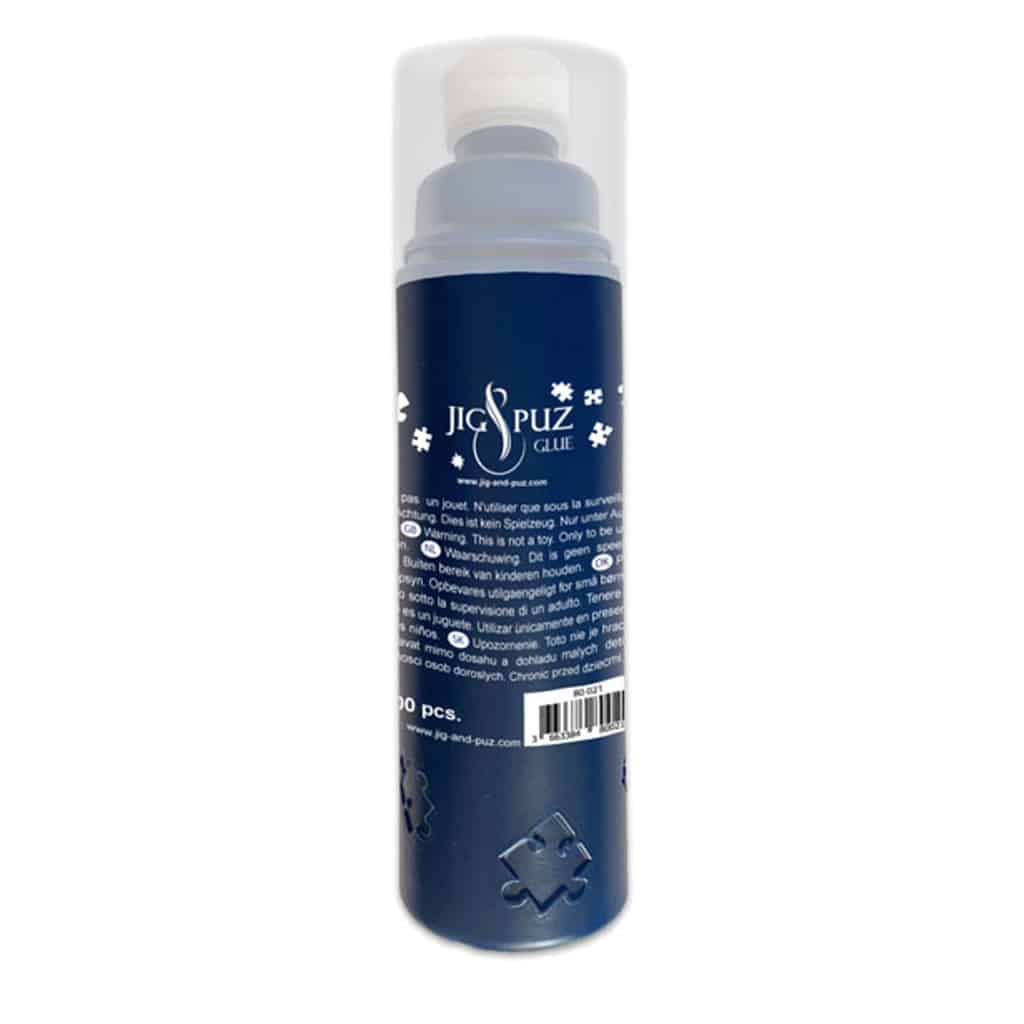
The 200 ml Jig & Puz puzzle glue is an option if you want to hold the pieces together permanently. Check compatibility and the intended finish on the packaging. If you want to take the puzzle apart or do it again, explore the reversible alternatives in the guide instead.
A finished puzzle does not need to imitate an original artwork to have presence. It may recall a journey, a shared moment, an artist you love or the pleasure of spending time with an image. A frame gives it context and protection.
The subject matters. A landscape can open up a room visually, an illustration can add rhythm and an art puzzle can bring a carefully studied composition to the wall. If you are still choosing an image, explore our art puzzles with its eventual place in mind.
If you prefer not to display it, store the assembled puzzle without compressing it or allowing pieces to slide. Boards, rigid cardboard and clean protective covers can help during transport or storage. Photograph it before putting it away: you will keep a record even if you eventually take it apart.
A puzzle can also return to its box so that you can enjoy the experience again. Taking it apart does not erase the achievement; it makes the puzzle available for another occasion or another person.
If you are unsure about permanent mounting, start with a reversible solution. Keeping the puzzle on a temporary backing or storing it flat leaves you time to decide whether you want to display it. This is especially useful for images that mean a lot to you: there is no need to rush a permanent decision.
When you choose a frame and location, consider care as well. Protection from knocks, moisture and direct sunlight makes it easier to enjoy the image over time. The best care is the approach that works with your home and how you want to enjoy the puzzle.
Displaying a puzzle works best when you give the placement some thought. Position it near your chosen wall, look at it from a distance and consider what the image adds to the room. The surrounding colours, viewing height and other pictures may suggest a lighter or darker frame, a simple design or a more textured finish.
If you completed it with others or chose it for a special occasion, you could add a short note to the back of the frame: the date, subject or names of those involved. This optional detail can make the object a meaningful keepsake years later. Keeping the puzzle then preserves both the pieces and the story around the image.
Continue the guide: explore Puzzles and art to consider a subject you will enjoy over time. Return to the Puzzle Guide for other approaches.
Before using glue, backing boards or accessories, check that they suit your puzzle and follow the instructions on the packaging.
Nessun termine trovato.
Nessun termine trovato.
Nessun termine trovato.
Nessun termine trovato.