

| Number of pieces | |
|---|---|
| Artist | |
| Atmosphere | |
| art museum | |
| Opportunity | |
| Dimensions of the work | 260 cm × 325 cm |
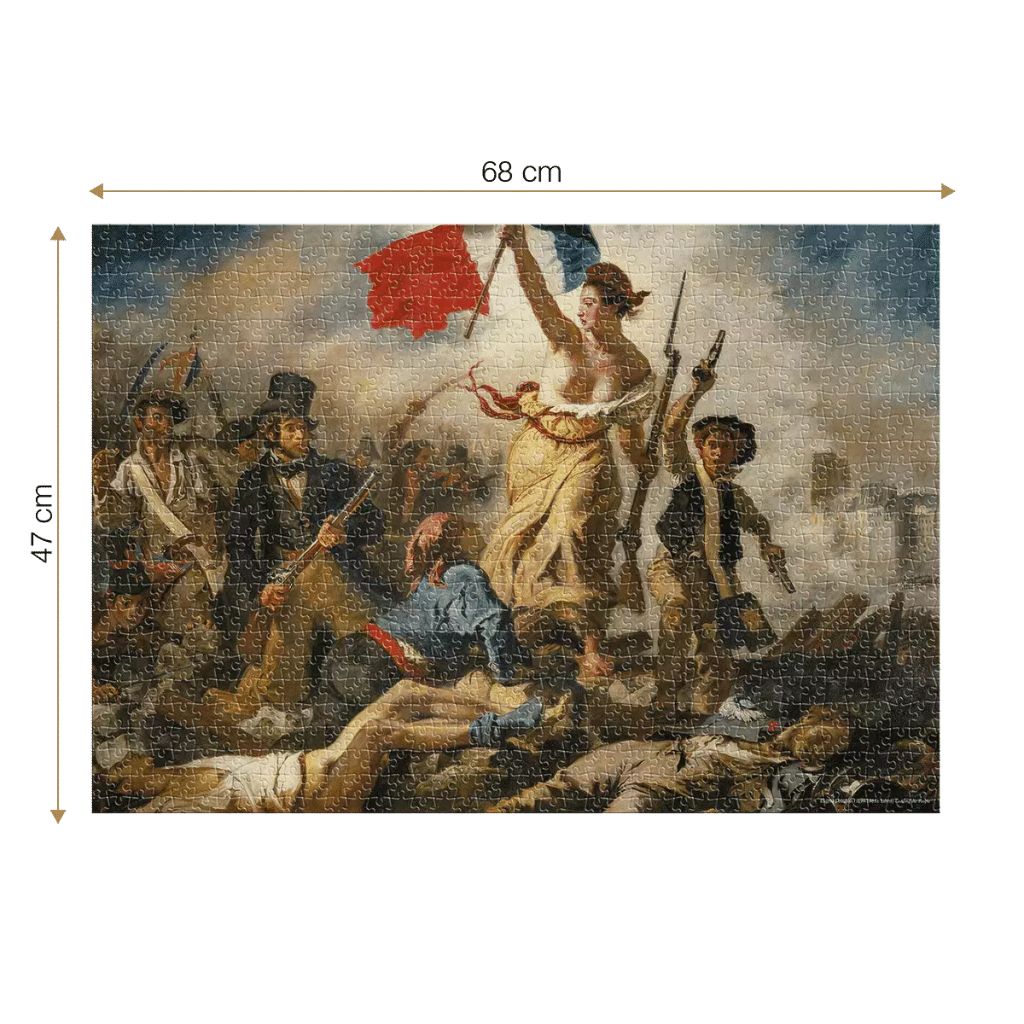
| Puzzle Dimensions | 68 cm x 47 cm |
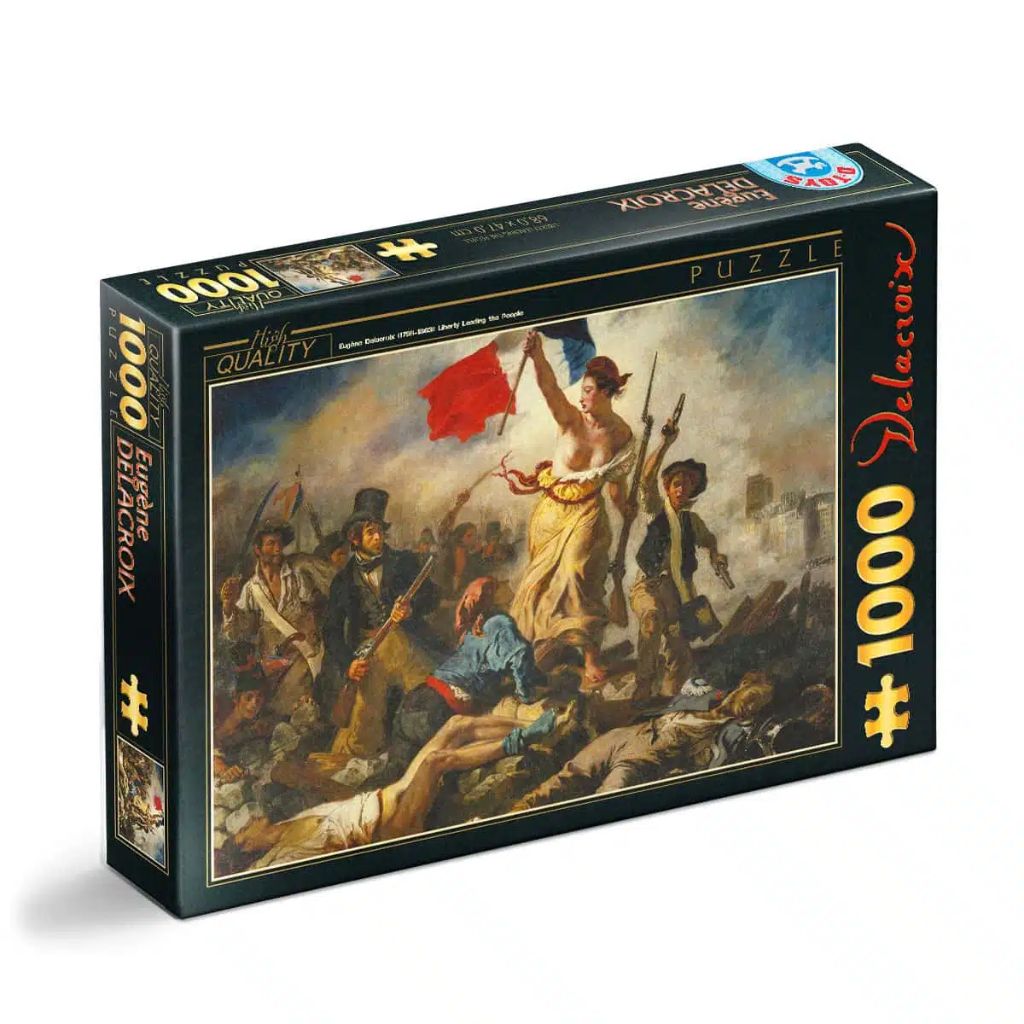
| Box Dimensions | 38 x 27 x 5.5 cm |
| Difficult | |
| Brand |
5 motivi per acquistare i nostri puzzle d'arte





23,90€
23,90€
2 in stock
Build piece by piece the puzzle of Delacroix Liberty Leading the People, one of the most famous paintings in the history of art and a hymn to freedom.
This fantastic 1000-piece Romantic Art puzzle from D-Toys represents one of the most famous masterpieces of the French painter
With each piece you will appreciate the details and particulars of this fantastic work .
Questo puzzle è momentaneamente esaurito.
Nel frattempo, ti suggeriamo alcuni puzzle d’arte che potrebbero piacerti!
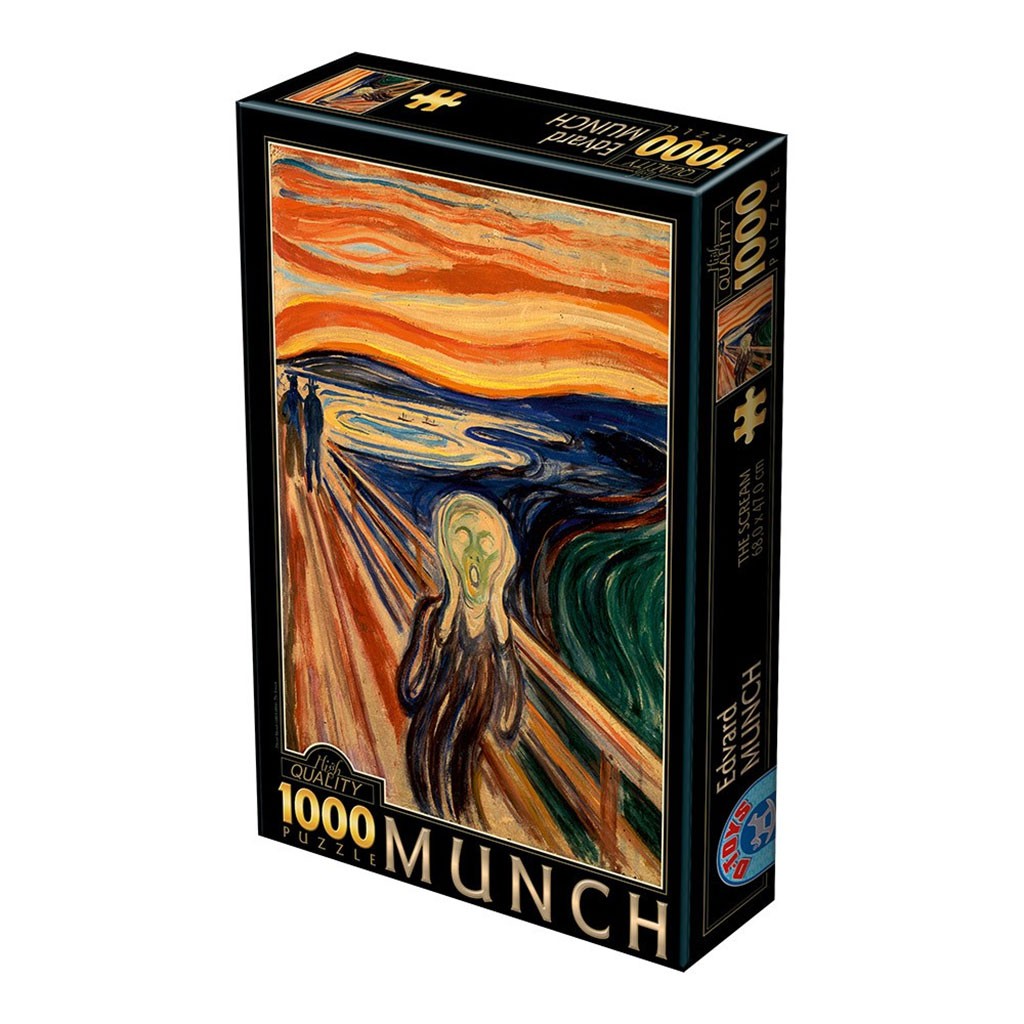

The Delacroix Puzzle Liberty Leading the People is a wonderful way to discover the story of one of the most famous works of European Romantic art.
Indeed, the 1000-piece puzzle from Clementoni depicts the emblem of liberty and the republic. This exclusive edition of Delacroix ‘s work is printed with vivid, vibrant colors and exquisite detail. The tiles are standard grids, making this 1000-piece puzzle a marvelous work of art waiting to be discovered.
The 1000- piece Clementoni puzzle “Delacroix Liberty Leading the People” is a splendid example of a romantic art puzzle.
This splendid painting depicts a hymn to freedom and the republic.
The puzzle’s colors are very bright and the details are extremely accurate and refined. The puzzle pieces are sturdy.
 | Number of pieces 1000 |  | Brand Clementoni |
 | Puzzle dimensions (cm) 50 x 69 |  | Box dimensions (cm) 37 x 28 x 6 |
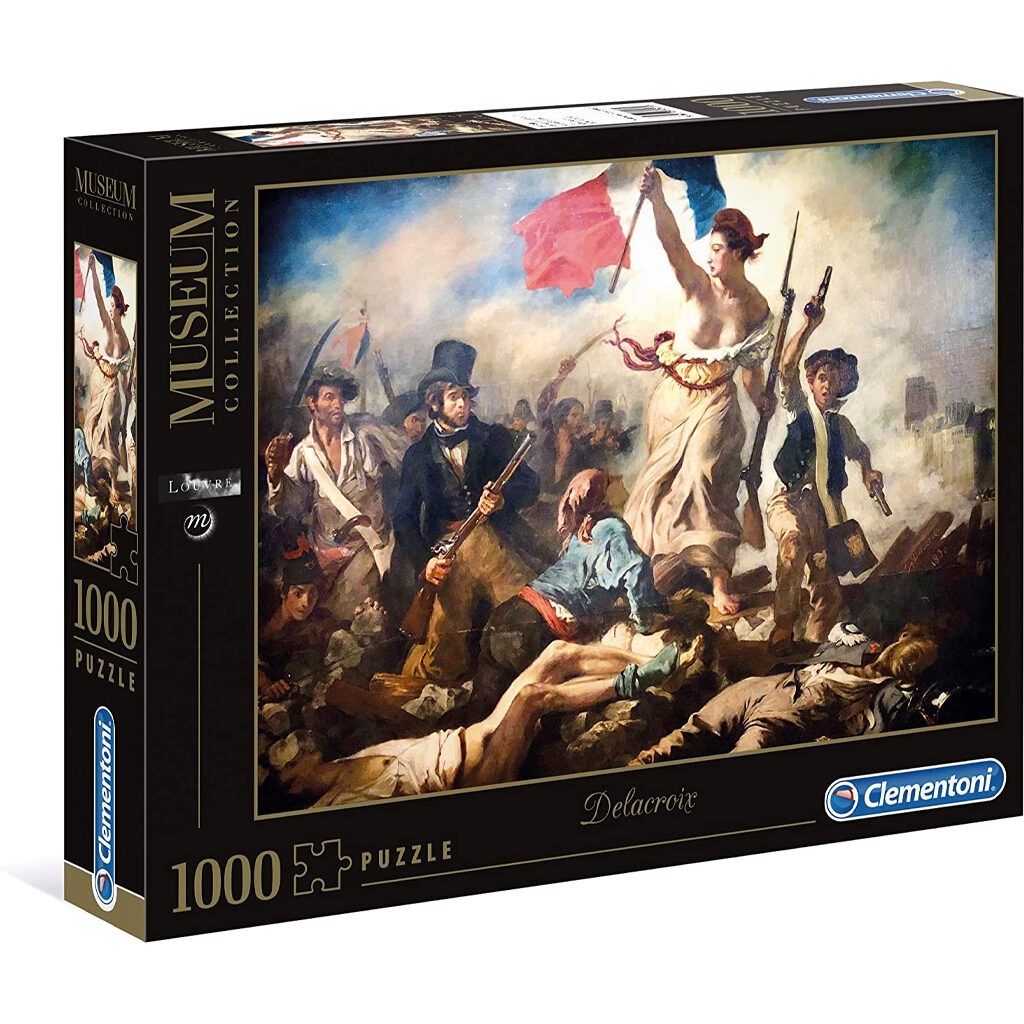
Well finished box
Wonderful gift idea
Famous work
Icon of freedom
1000 pieces
Standard grid
Liberty Leading the People is the work that Delacroix created in that same 1830, in just three months, and exhibited at the Salon the following year, to commemorate and exalt the Parisians’ fight for freedom.
Because of its allegorical aspect and its political meaning, the work has often been chosen as a symbol of the French Republic or of democracy.
In 1829, King Charles X of France (1824-1830), successor to Louis XVIII, installed a government led by Jules de Polignac, head of the Congregation, a sect linked to the Jesuits. Following the opposition’s victory in the elections, this government dissolved Parliament before it had even been convened, suspended freedom of the press, modified the electoral system to its advantage, and called new elections.
From 27 to 29 July 1830, during the so-called Three Glorious Days, the people of Paris rose up against these provisions, forcing the king to remove Polignac and revoke the ordinances issued.
On the barricades, a woman wearing a Phrygian cap, an ancient dress and bare-breasted, Liberty, clutching the tricolour in her right hand and holding a rifle in her left, incites the people to follow her, while an insurgent, at her feet, looks at her, as one looks at the only one capable of restoring dignity to a nation.
It comes towards us followed by the great mass of insurgents: it is a way of inviting those who watch to participate. It is as if we ourselves, part of the armed people, in an advanced position, abandoning our race for a moment, had turned back to look and regain strength and
impetus spurred by the awareness of having Freedom as a companion and guide.
It is very likely that the iconographic source from which Delacroix drew for the bare-breasted girl was the Hellenistic statue of the Venus de Milo, discovered in 1820 and exhibited at the Louvre in 1821.
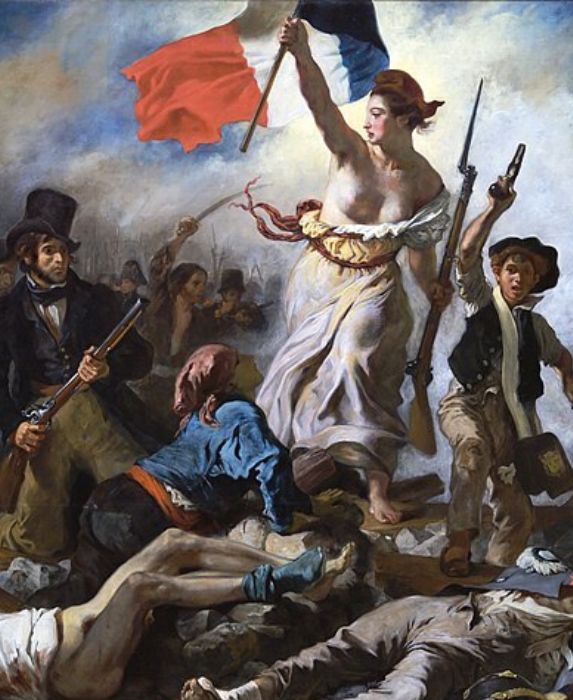
Liberty, with her head in profile, straight nose, red lips, raised right arm, and torso bent forward, is the natural evolution of a heroic and allegorical female ideal depicted only a few years earlier in the pathetic figure of Greece on the ruins of Missolonghi, a painting executed to honor the martyrs of the Greek War of Independence.
It should be noted, however, that the main character in Delacroix’s pictorial tale represents the first attempt to depict a female nude in a work depicting an episode of contemporary history. Until now, in fact, nudes had been accepted by the public and critics only when filtered through representations of mythology or ancient history. As early as 1794, for example, Antoine-Jean Gros (1771-1835) had depicted the personification of the Republic as a young woman with one breast exposed, but dressed in Greek style.
The subject, however, was too delicate and Delacroix overcame the problem, which would be addressed, with all the consequences that it entailed, by Manet in 1863 with The Luncheon on the Grass , a work that caused a scandal by attributing to the girl the allegorical function of Liberty.
The dark colours are made more vivid by the bright ones of the flag of Republican France, colours which are repeated, and certainly not by chance, also in the clothes of the figure at the feet of Liberty.
The smoke from the fires and gunshots and the dust raised by the insurgents let us imagine the existence of something even where it is prevented from doing so.
see. The twin towers of Notre-Dame Cathedral, on the right, suggest the geographical location of the event.
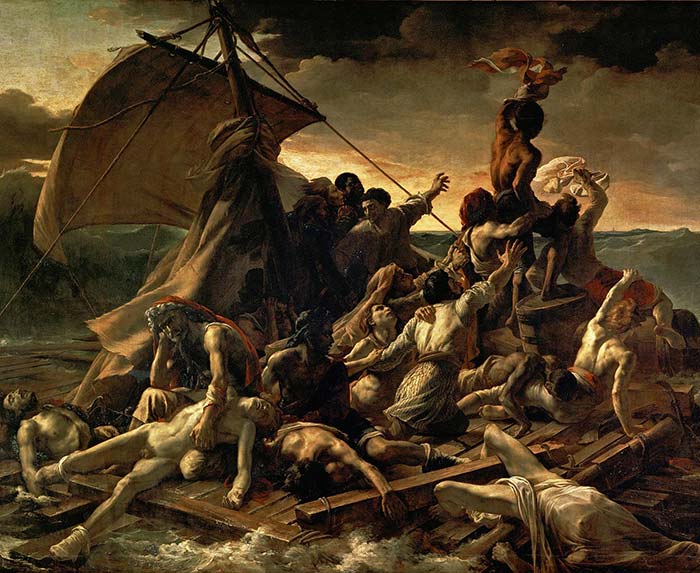
The formal references to Géricault’s The Raft of the Medusa , from a decade earlier, are undeniable, especially in the pyramidal composition, the arrangement of the two men lying prone in the foreground, and the realistic yet macabre detail of the fallen commoner’s sock on the left. The anatomical perfection that gives importance to each of the characters on the raft, however, has been replaced by the indistinct mass of the people, without any particular physiognomic connotations. Each person could thus see themselves or imagine themselves among the people.
who had fought for the good of his country.
Delacroix united the message that the various social classes and people of all ages in the common struggle: there are the commoner, the military,
the urchin and the bourgeois (the man in the top hat, perhaps a self-portrait of the artist ).
Complimenti!
hai una vera passione per l'arte!
Visto che sei arrivato fino a qui, meriti un premio!
Ecco uno sconto del 10% per il tuo prossimo capolavoro! ✨

Reviews
There are no reviews yet.