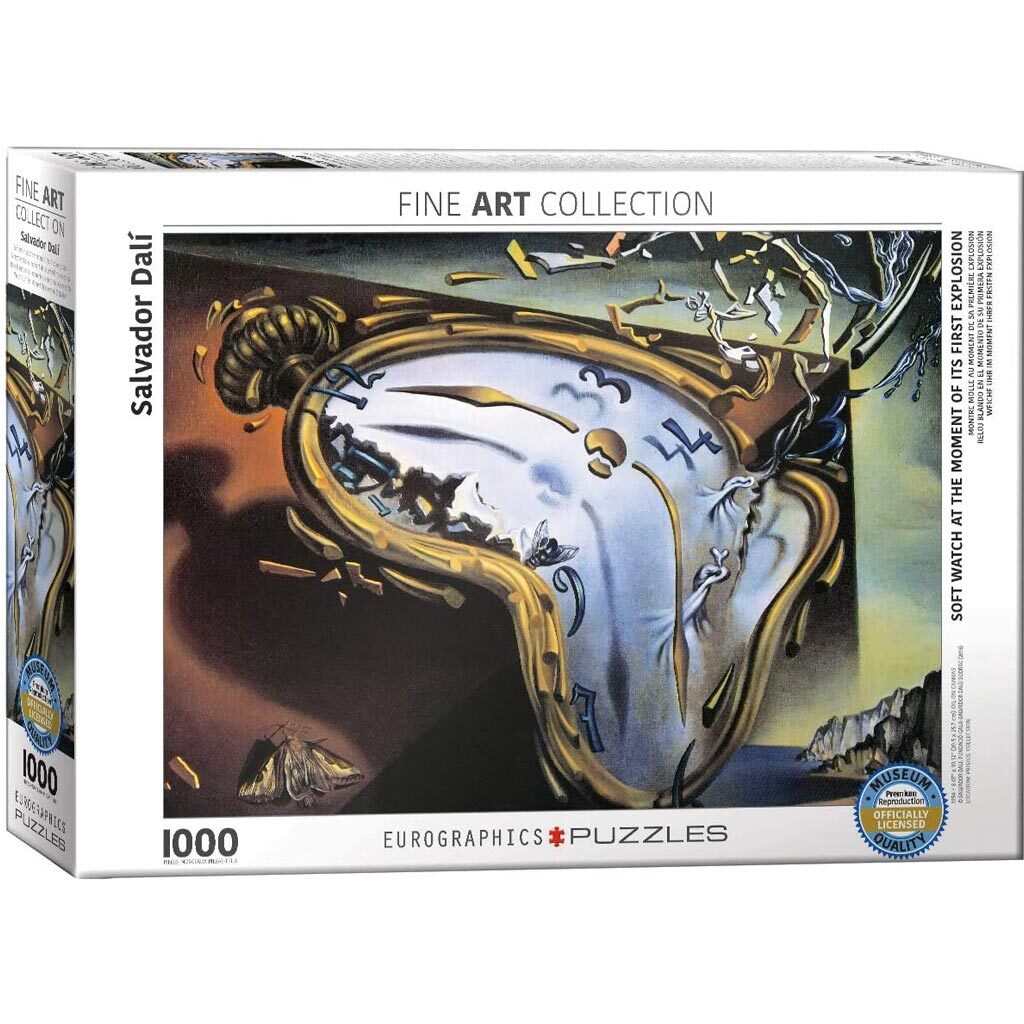



Discover with us our Salvador Dalì puzzles and dive into the history of the great 20th-century Surrealist painter. Dalì was not only a painter but undoubtedly one of the most skilled and innovative figures in all of art history, transforming the very role of the artist.
His art is a hymn to thought and the study of the human psyche.
For us at Puzzle Arte, Salvador Dalì puzzles are a wonderful tool to intimately explore the works of the great Spanish master.
Indeed, a puzzle is a silent dialogue between the artwork and the person assembling it. By finding each piece of Dalì’s works, you immerse yourself in his spectacular life.
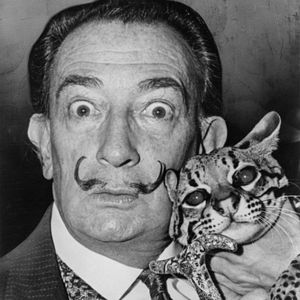
Salvador Domingo Felipe Jacinto Dalí i Domènech, first Marquis of Dalí de Púbol, was a renowned Spanish Surrealist artist known for his technical skill, precise drawing, and striking, bizarre imagery.
Born in Figueres, Catalonia, Dalí received formal training in fine arts in Madrid. Influenced by Impressionism and Renaissance masters from a young age, he became increasingly drawn to Cubism and avant-garde movements.
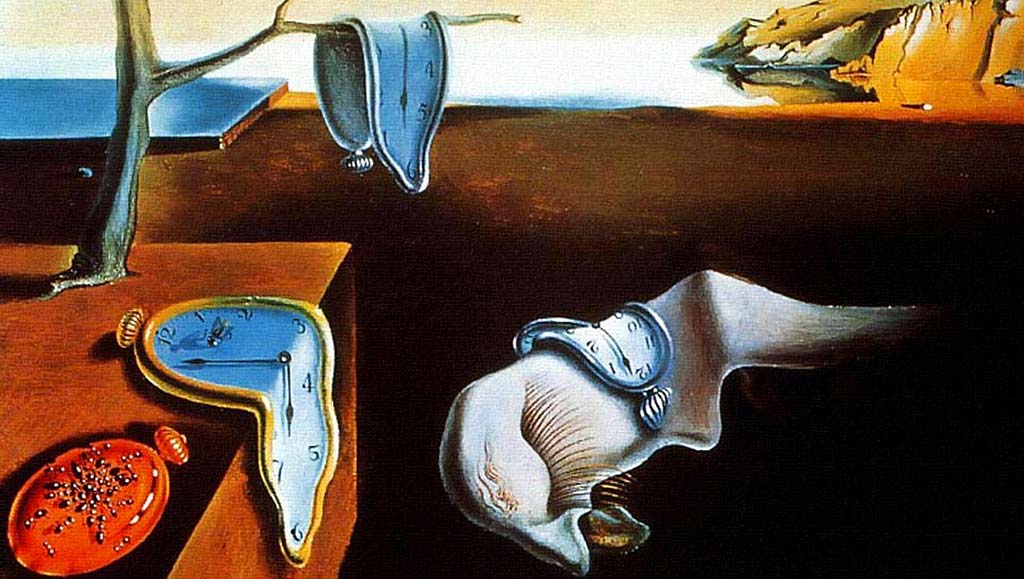
He approached Surrealism in the late 1920s and joined the Surrealist group in 1929, soon becoming one of its leading figures. His most famous work, The Persistence of Memory, was completed in August 1931 and is one of the most iconic Surrealist paintings.
Salvador Felipe Jacinto Dalí y Domenech was born in Figueres, Catalonia, on May 11, 1904.
In 1921, he attended the Real Academia de Bellas Artes de San Fernando in Madrid, where he befriended poet Federico García Lorca and filmmaker Luis Buñuel.
He held his first solo exhibition at the Galeries Dalmau in Barcelona. In the same year, he was expelled from the Academy, and the following year he traveled to Paris and met Picasso.
He later collaborated with Buñuel on the film Un Chien Andalou. At the end of that year, he returned to Paris and met Tristan Tzara and Paul Éluard. During this period, he created his first Surrealist paintings and met André Breton and Louis Aragon.
In the 1930s, Dalí contributed to several Surrealist publications, illustrated works of Surrealist writers and poets, and worked with Buñuel and Ernst on the film L’Age d’or.
In 1933, he held his first solo exhibition in the United States at the Julien Levy Gallery in New York.
In 1934, Dalì received severe criticism from the Surrealist group. Towards the end of that decade, he traveled to Italy to study 16th- and 17th-century art.
In the early 1940s, he moved to the United States, where he engaged in theatrical productions, writing, book illustration, and painting.
The Museum of Modern Art in New York organized a major retrospective of his work, which later toured across the U.S.
His first religious-themed paintings date to 1948–1949. Retrospectives of his work were held in 1954 in Rome at Palazzo Pallavicini and in 1964 in Tokyo, Nagoya, and Kyoto.
Finally, in 1980, he held a major retrospective in Paris at the Musée national d’art moderne, Centre Georges Pompidou.
Dalì passed away in Figueres on January 23, 1989.
The theme of the human body with drawers is a constant in Dalí’s work, recurring both in sculpture—such as in his sarcastic parody of the Venus de Milo—and in painting.
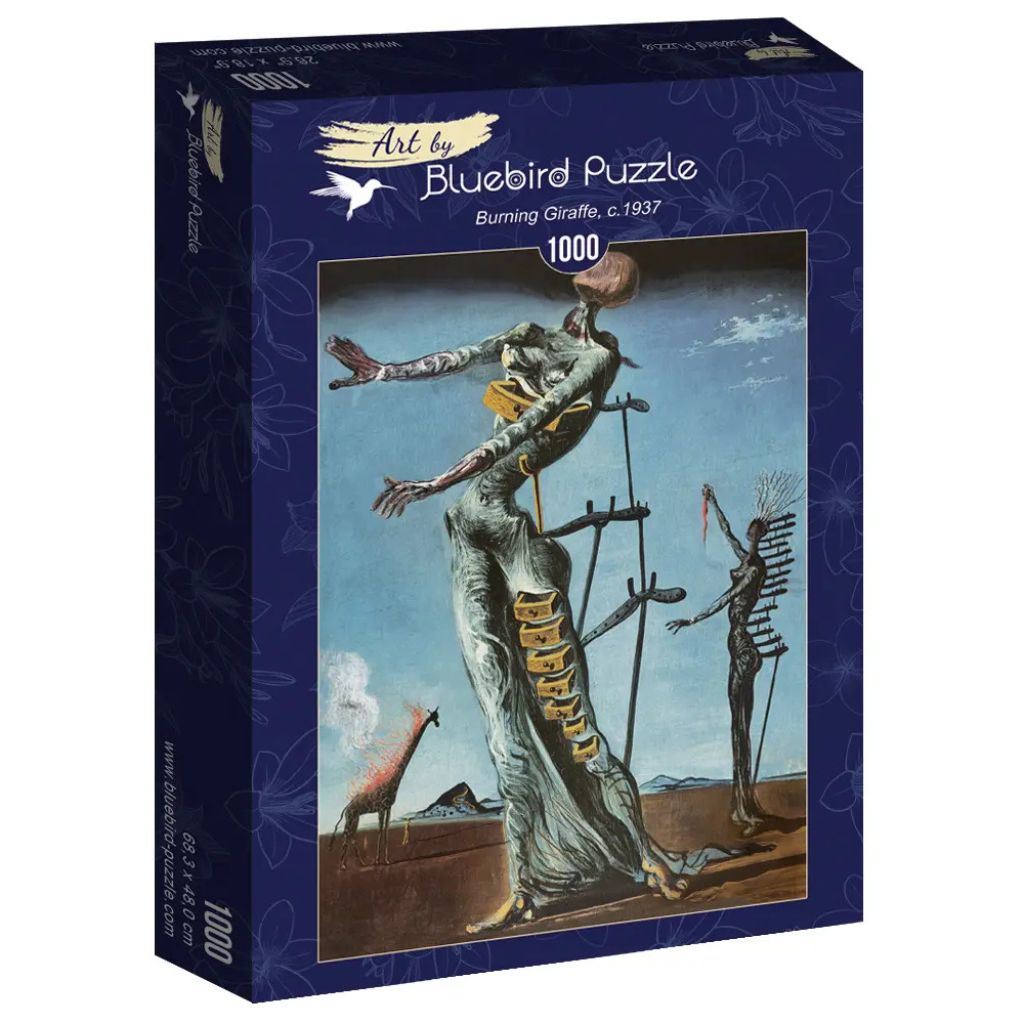
For example, in The Burning Giraffe, a small oil painting, the idea of drawers prominently returns.
The psychoanalytic symbolism is evident. The artist himself explained that after studying Freud:
“The human body today is full of secret drawers that only psychoanalysis can open.”
These drawers are often filled with our paranoias and taboos. It is the artist’s role, like that of a thief, to open them and search within for the true essence of man—the only “loot” that truly matters.
The painting depicts, against a desolate and primitive landscape, a large female figure in the foreground. Instead of a head, she has a shapeless mass, while her skeletal hands are also stained with blood.
The body is unnaturally twisted at the pelvis, supported by various crutches, and drawers open disturbingly along the chest and left leg.
Finally, on the left in the distance, the titular burning giraffe rises against the vast dark sky, an allegory of violence and death.
28
giugno
2026
e
26
luglio
2026
🎉 Gli Sherwood Days sono tornati 🎉
Due serate estive, una sfida da completare pezzo dopo pezzo.
28 giugno e 26 luglio: gara a coppie! 🔍🧩