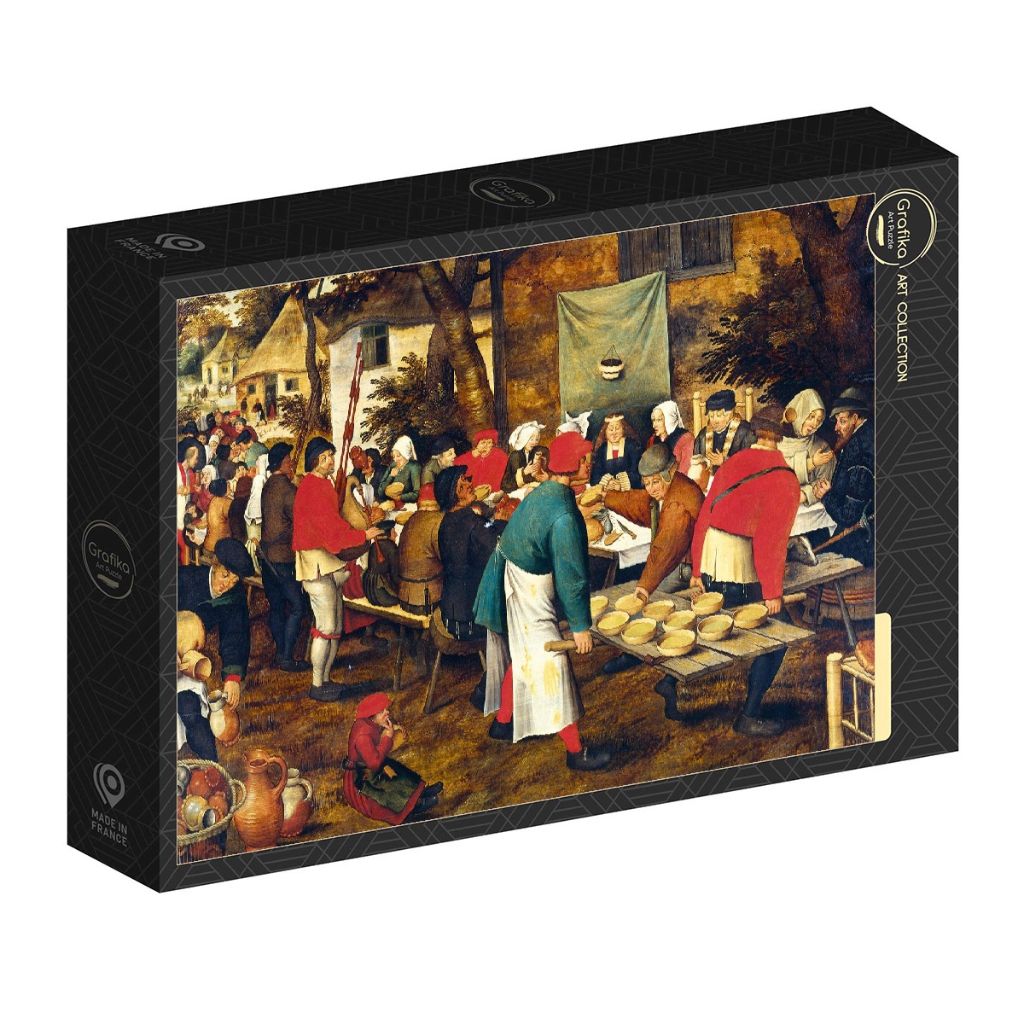


Pieter Bruegel the Younger (Brussels, 1564/1565 – Antwerp, 1637/1638) was one of the most important Flemish painters of the 17th century. Son of the famous Pieter Bruegel the Elder, he is best known for the numerous versions of his father’s works and for his lively peasant scenes, which helped spread the Bruegel family’s artistic tradition throughout Europe.
Pieter Bruegel the Younger was born into an artistic family. His father, Pieter Bruegel the Elder, was already a recognized master, while his mother, Mayken Coecke, was the daughter of another artist, Pieter Coecke van Aelst. Orphaned as a child, he was raised by his grandmother Mayken Verhulst, a noted miniaturist, who provided him with his first artistic foundations. Later, he trained in Antwerp in the workshop of Gillis van Coninxloo, a landscape painter who influenced his technique and attention to detail.
In 1585, Pieter Bruegel the Younger registered as an independent master with the Guild of Saint Luke in Antwerp. From that moment, his workshop became one of the most active centers in the city, producing an impressive quantity of paintings. Records mention hundreds of works, with over 1,400 paintings attributed to him or his workshop. This success was due not only to quality but also to the ability to meet the high market demand for popular subjects and scenes drawn from his father’s works.
Pieter Bruegel the Younger’s style follows the models of his father but is distinguished by the use of brighter colors and a direct, decorative narrative, suited to the taste of contemporary collectors.
In addition to faithfully copying and reinterpreting Pieter Bruegel the Elder’s works, he also created original compositions, maintaining the narrative and moral spirit typical of Flemish genre painting.
For a long time, Pieter Bruegel the Younger was considered a “copyist” of his father, but recent studies have reassessed his role. Thanks to his extensive production, he allowed a wider audience to become familiar with Bruegelian style and themes, contributing to the spread of Flemish painting at a time of high demand.
Today, Pieter Bruegel the Younger’s works are appreciated in major museums and private collections worldwide. His art is not only a testimony to Flemish popular culture but also a valuable historical source documenting daily life, festivals, rituals, and society of the 17th century.
28
giugno
2026
e
26
luglio
2026
🎉 Gli Sherwood Days sono tornati 🎉
Due serate estive, una sfida da completare pezzo dopo pezzo.
28 giugno e 26 luglio: gara a coppie! 🔍🧩