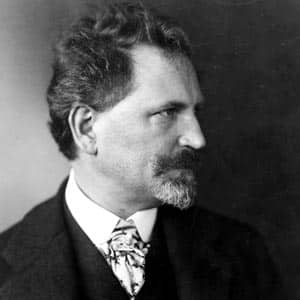

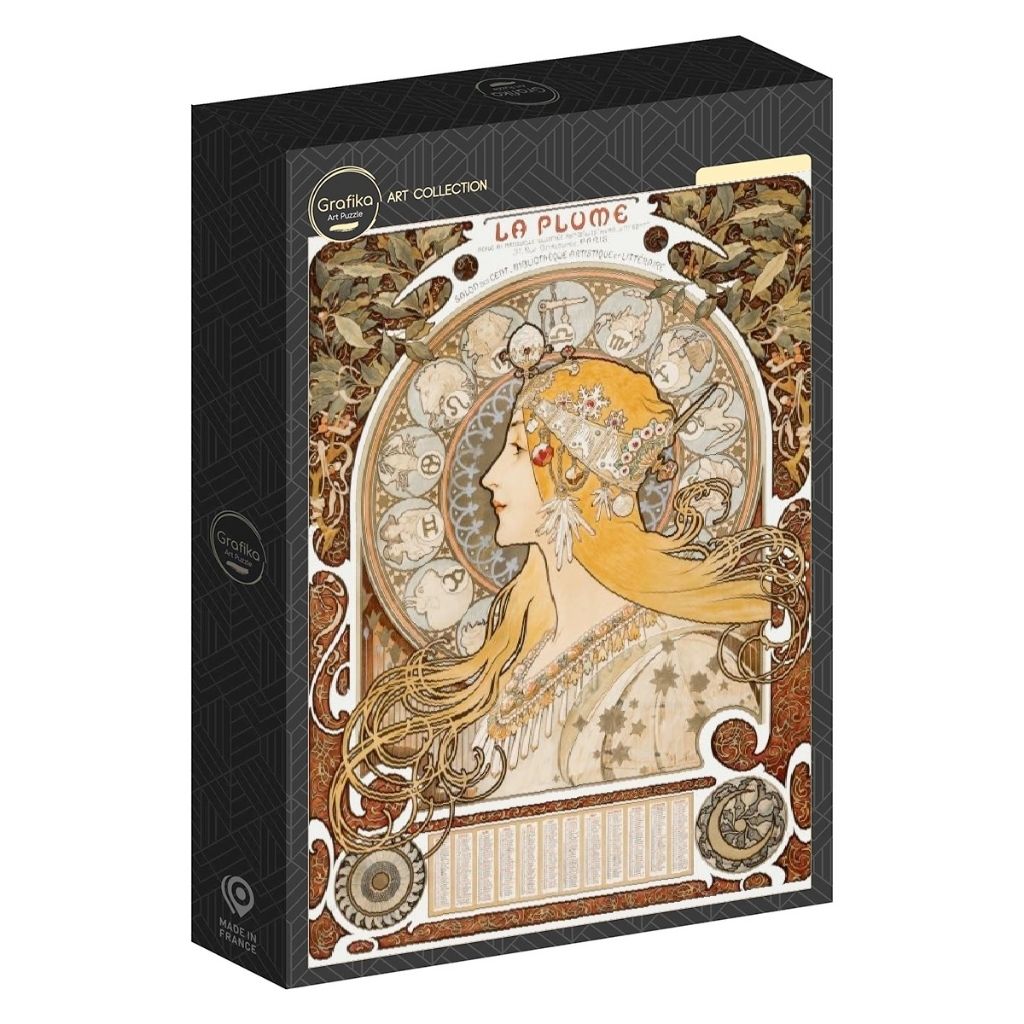
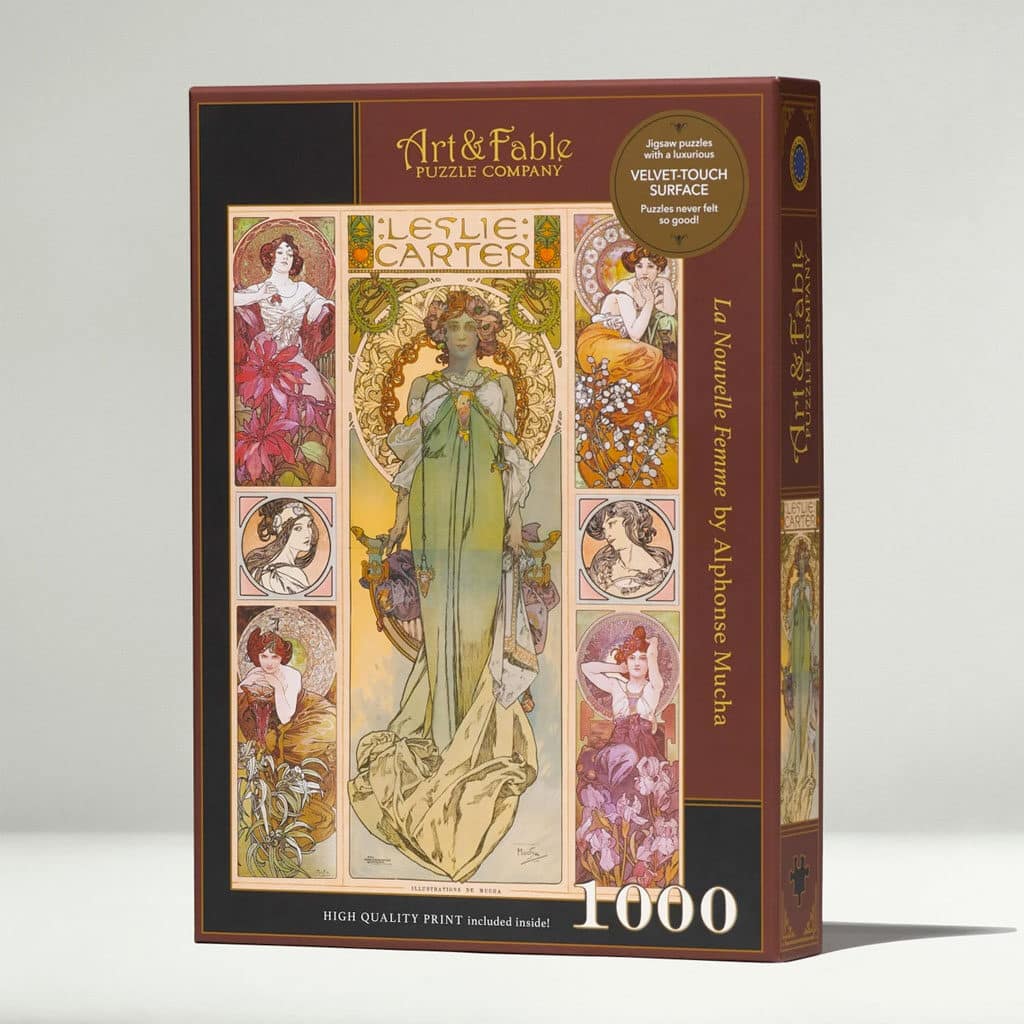
Alfons Maria Mucha was born in Ivančice in 1860 and was a Czech painter and sculptor, among the main exponents of Art Nouveau.
The son of a court usher, Alfons showed his artistic vocation at a very young age, which manifested in his multiple drawings of the world around him.
From early childhood, flowers, horses, and monkeys all captured his keen attention, becoming recurring subjects in his early sketches.
In the autumn of 1878, he submitted an application to the Academy of Fine Arts in Prague.
However, he was not admitted, and at only nineteen he moved to Vienna, where he worked for the Kautsky-Brioschi-Burghardt company as a painter for theatrical scenery.
Mucha dedicated himself entirely to the Slavic Epic starting in 1911. The cycle included twenty large-scale paintings designed to cover the entire panorama of Slavic peoples’ historical events.
The cycle sparked strong criticism, with critics accusing Mucha of promoting nationalism that had lost its relevance after Czechoslovakia gained independence in 1918.
These were very dark years for the artist. A sense of deep unrest spread through Czechoslovakia, threatened by Adolf Hitler’s rise to power in 1933.
Fearing the outbreak of a new war, Alfons Mucha embarked on a new project: the creation of an unfinished triptych depicting three ages: The Age of Reason, The Age of Love, The Age of Wisdom.
In 1939, Mucha was promptly arrested by the Gestapo and interrogated: he was not imprisoned, but both his health and spirit were shattered.
Alfons Mucha finally died in Prague on July 14, 1939, succumbing to a lung infection.
Alfons Mucha is the undisputed master of Art Nouveau and one of the many artists of his time who experimented with lithography, mastering its use.
The term Art Nouveau was first defined by Salvador Dalí.
Observing the artistic and philosophical movement that emerged between the 19th and 20th centuries, Dalí recognized a style both liberal and innovative, influencing all arts, from figurative to architectural, and even applied arts.
It is the ability to draw inspiration from nature and translate it into flowing, wavy forms with a clear dynamic line. In painting, this technique is called whip stroke.
Art Nouveau figures come to life and evolve effortlessly into shapes reminiscent of plants and flowers. This is why Art Nouveau artists were so inspired by Japanese prints, finding in them curvilinear forms, illustrated surfaces, and contrasting voids.
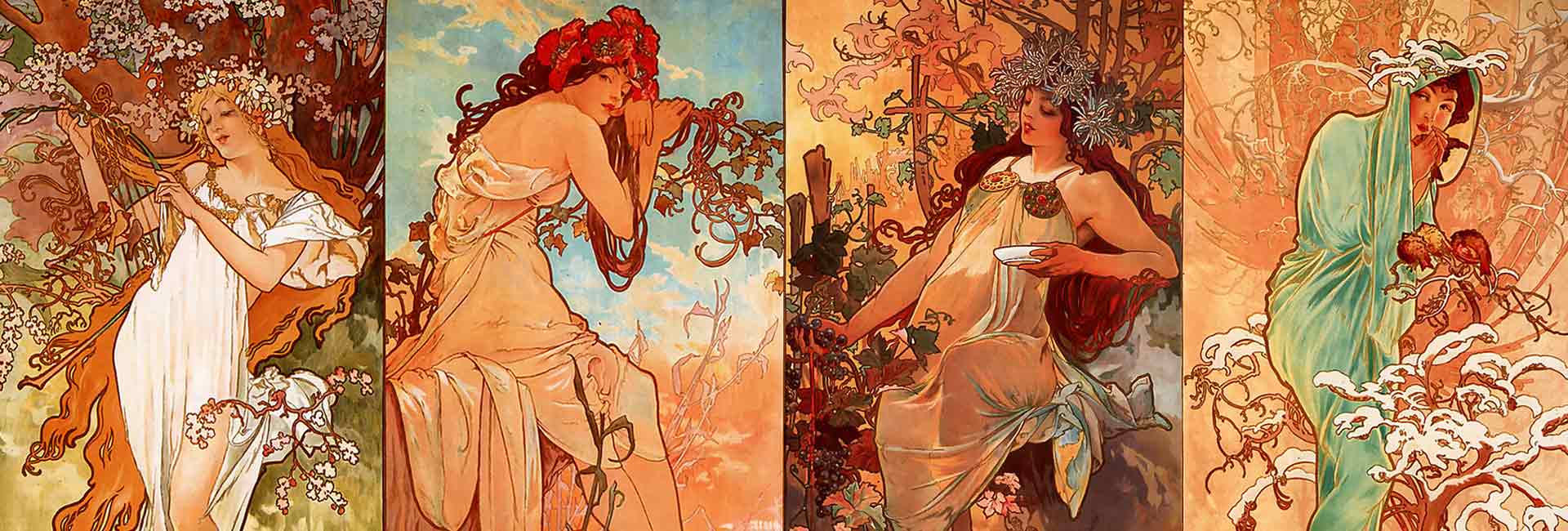
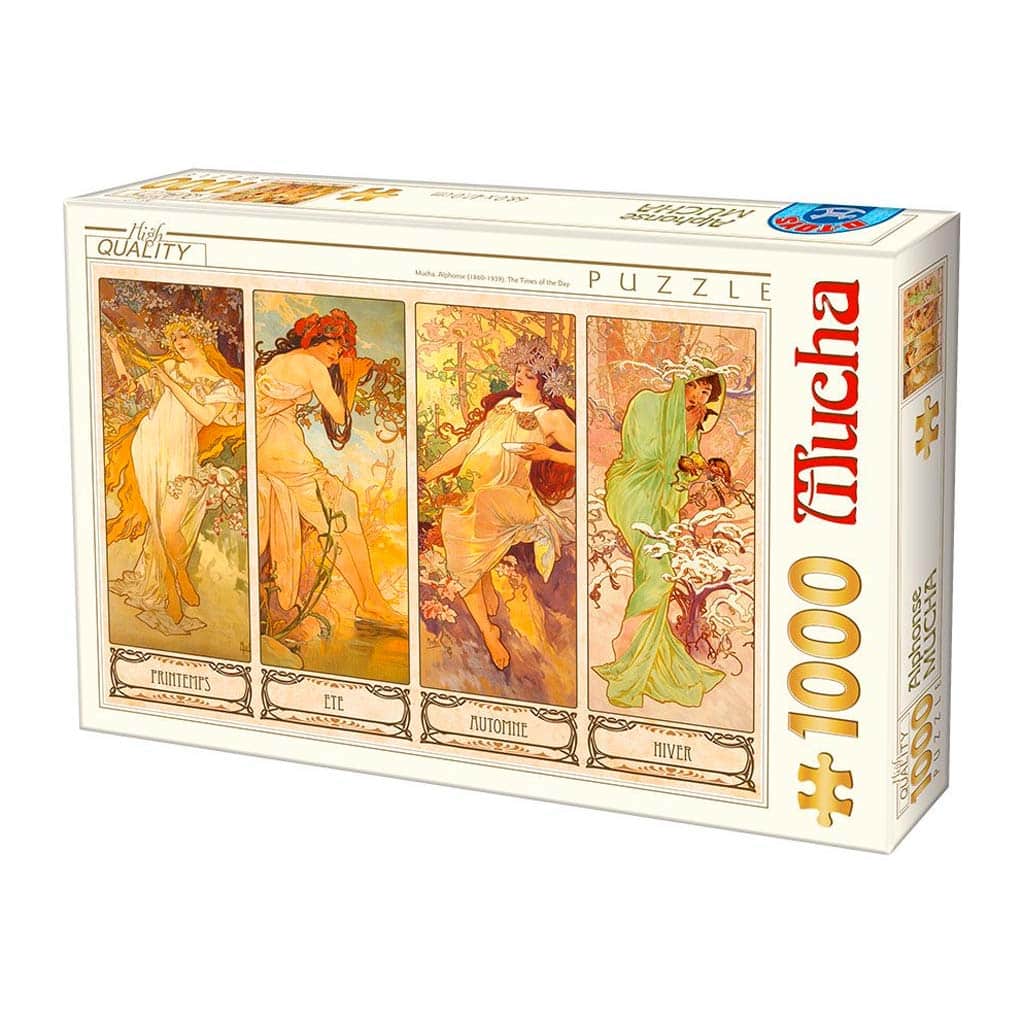
One of Mucha’s masterpieces is from 1896: The Four Seasons. In this Mucha puzzle, his elegance in depicting women truly shines.