
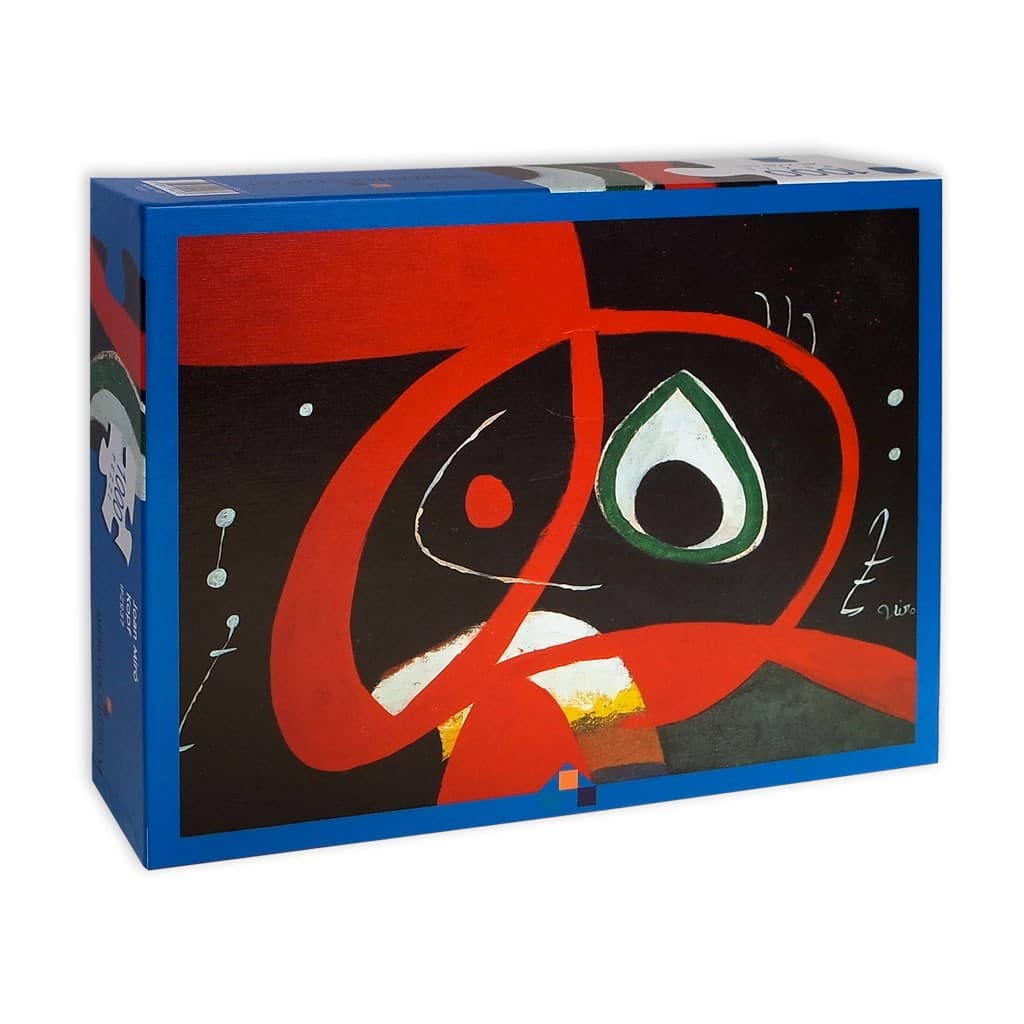
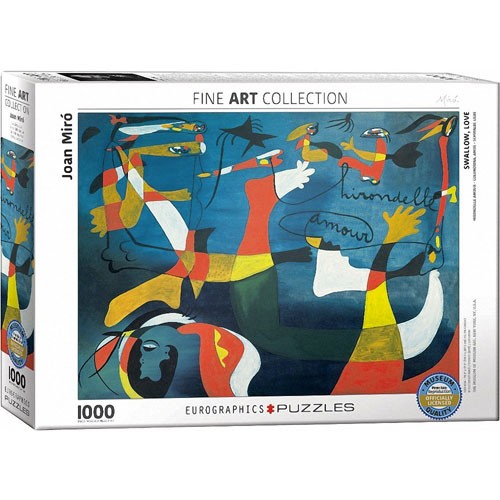
Discover our Mirò puzzles with us and immerse yourself in the history of 20th-century art. Mirò was one of the most important artists of the twentieth century, bringing artistic innovations from abstractionism to surrealism.
His pictorial ability led Mirò to become a great explorer of modern artistic techniques and styles.
His art is transformation. A continuous search among styles and forms of execution.
For us at Puzzle Arte the Mirò puzzles are a wonderful tool to intimately enter the artworks of the twentieth century
In fact the puzzle is a tool of silent relationship between the artwork and you who are building it. By searching for every piece of Mirò’s works you will immerse yourself in his spectacular artistic form.
Try the Mirò puzzles yourself and relive the surrealist movement in all its expressive power.
«When I paint, I caress what I create»
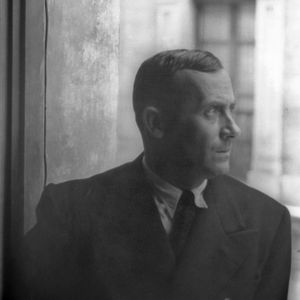
Joan Miró was born in Barcelona on April 20, 1893. After studying to become an accountant, he attended the Academy of Fine Arts in his hometown and from 1912 to 1915 he took courses at Galí’s art school.
Miró went to Paris for the first time — the long-desired destination of every artist in those early years of the new century — after the end of the First World War, in March 1920.
From 1921 he began spending winters in Paris and summers in Montroig in Spain. In 1924 he met André Breton and the poets Aragon and Eluard and joined Surrealism.
In 1932 he settled in Barcelona where he remained until 1936 when, at the outbreak of the civil war, he left for Paris.
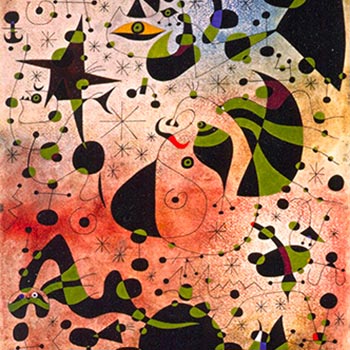
During the first months of the Second World War he managed to find a reason to live only in the creation of a series of twenty-three paintings called the Constellations. About this he said:
I was very pessimistic. I had no more hope. With the Nazi invasion in France and the victory of the Francoists I was certain that they would never allow me to paint again, that I would only be able to go to the beach to draw in the sand or trace figures with cigarette smoke.
Very famous, he died on December 25 1983 at the age of ninety in Palma de Mallorca.
The first influences Miró experienced were divisionist. Later he was fascinated by the Fauves, by Cubism and by Expressionism.
In 1917 he wrote:
For me the art of the future, after the great French impressionist movement and the liberating post-impressionist movements, cubism, futurism, fauvism, all tend to emancipate the artist’s emotion and grant it absolute freedom.
However already in 1918 Joan Miró had found his own path which was the negation of Impressionism and an approach to classicism.
Miró’s particular «classicism» consisted in taking reality as a model and paying attention to detail with meticulous care (the exact opposite of what Impressionism had preached).
In “The Farm” by Mirò, executed in 1919, from the church to the village, nothing is left to chance.
From the choice of the viewpoint, to the geometry of the fields surrounding the Catalan town so loved by the painter, which give order to the painting. The sunny and warm Mediterranean colors define the volumes of the houses. Open or closed windows, balconies, terraces, arches, chimneys and even the stones are depicted with light precision.
The colors of the fields, from pink to yellow to green, meet on the canvas. Trees of the most varied shapes form a crown between the town and the cultivated countryside that surrounds it.
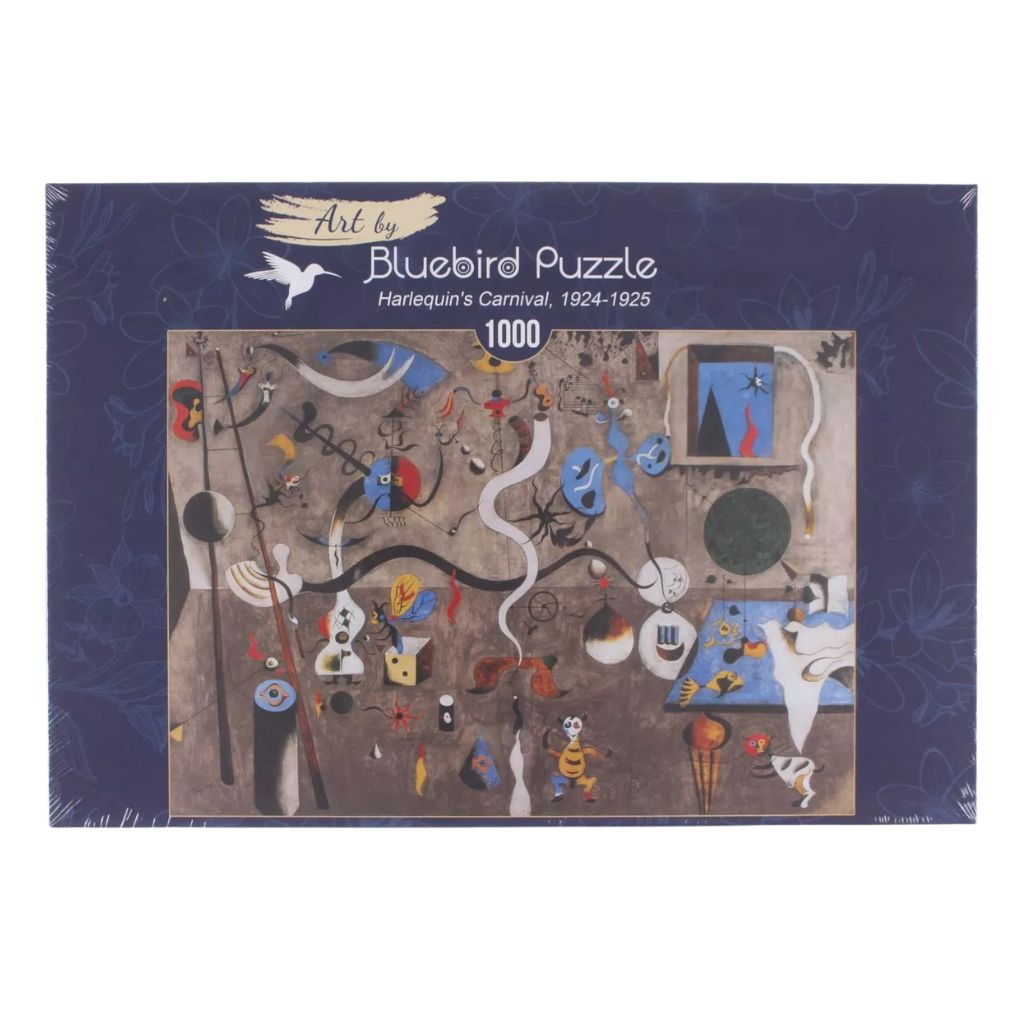
I painted it in the studio on Rue Blomet. My friends at that time were the surrealists. I tried to shape in it the hallucinations caused by the hunger I suffered. I did not paint what I saw in dreams, as Breton and his followers claimed at that time, but hunger provoked in me a sort of trance similar to that experienced by Eastern mystics.
Thus in 1978 Joan Miró recalled the mental state in which he found himself when in 1924-1925 he painted “Harlequin’s Carnival”, a work contemporary with the publication of the first surrealist manifesto by André Breton.
Reality, no longer taken as a model, becomes instead the starting point that inventive freedom transforms into something different, into a system of signs. His mark remains recognizable, but it is the imagination that takes over, although ordered within a geometric structure.
In 1929 the art of Joan Miró underwent a turning point. In fact the artist was seized by the “refusal to make beautiful things”:
I denied my gifts and turned against the ease I encountered, rejecting the “miracle” to show that I despised success.
It is the moment of the assassination of painting, according to an expression coined by others but adopted by Mirò himself.
The artist then dedicated himself to what he himself called “anti-painting”, a form of collage that uses unusual materials and often unpleasant to smell and touch. For example tar paper and sandpaper.
Miró’s desire was to cancel the pleasure of color in order to investigate the most hidden recesses of expressive possibilities, before feeling ready again for painting.
The return to color, at the beginning of the 1930s, still shows, in the deliberately clumsy lines, in the colored spots drawn quickly or according to a rotating movement of the brush, in the signs that seem like scratches, the memory of his annulment.
Automatism becomes, finally, a liberating process. Pictorial automatism was sought by Miró also through the transition from collage to painting. In this way the transformation of a known form (that of the collage created, for example, with cut-out figures representing real objects) into an unknown form is produced.
Once the collages were finished, I used them as the starting point for paintings. I did not copy the collages. I simply allowed them to suggest forms to me.
Painting is a work created according to this method, one of the eighteen in the series completed in 1933.
In this painting the stimuli of the collage — a little horse’s head, a steering wheel and a part of a car engine, rulers, a number, a vase of flowers — were translated into rounded forms of several flat colors, edged spots or closed lines floating on a background previously prepared in tones of red and green.
Between abstractionism and surrealism Blue III, the third of a large-format series, represents the highest level of essentiality achieved by Miró in the 1960s.
Essentiality of forms and color, the large blue canvas gives the sense of the infinite sky where masses — a black one below and a red one above surrounded by a dark halo — balance each other.
The red body in its blocked movement (all immobile things according to Miró produce an effect of motion) drags with it a filament that divides the canvas into two parts, one empty of forms, the other welcoming the dark soft figure.
The spectacle of the sky overwhelms me. I am overwhelmed when I see, in an immense sky, a quarter moon or the sun. Moreover, in my paintings there are small forms in large empty spaces. Empty spaces, empty horizons, empty plains — everything that is bare has always impressed me greatly.