
Novità!
 Hot
Hot
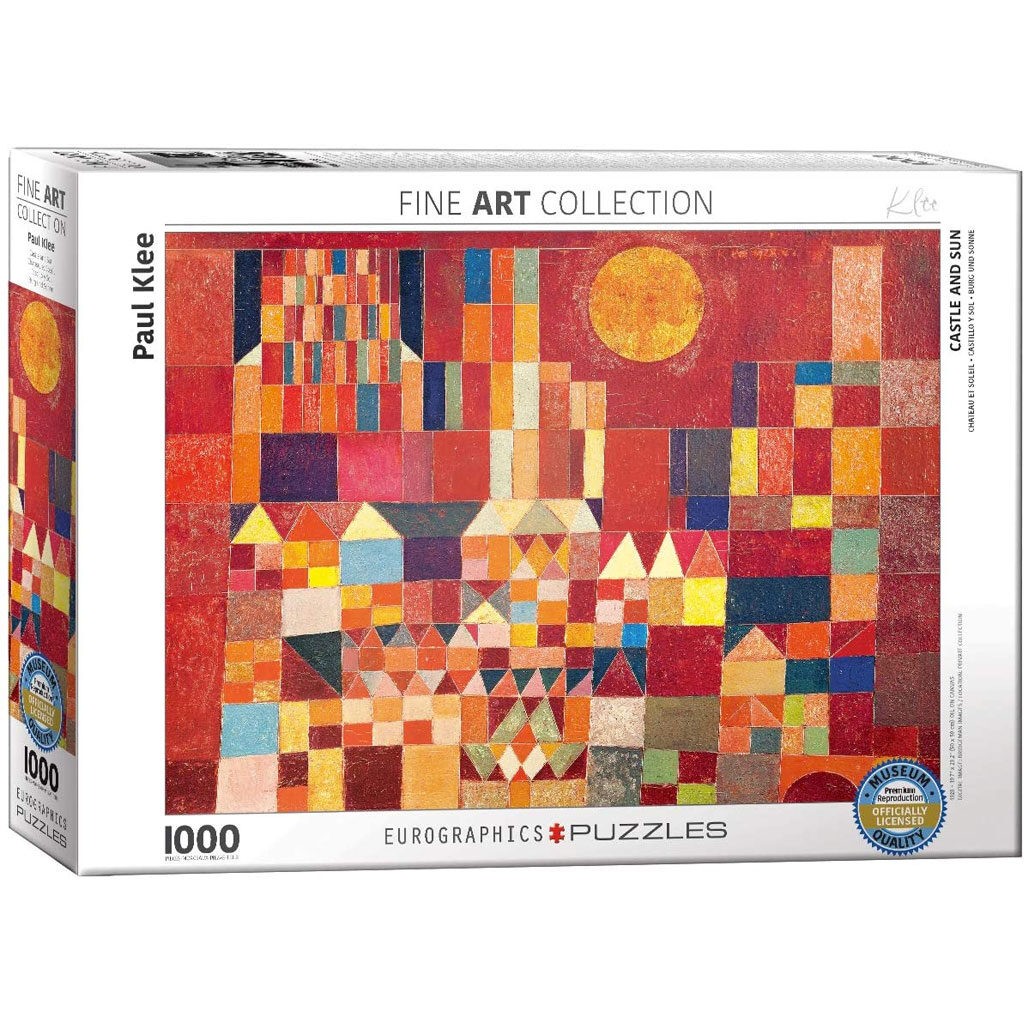
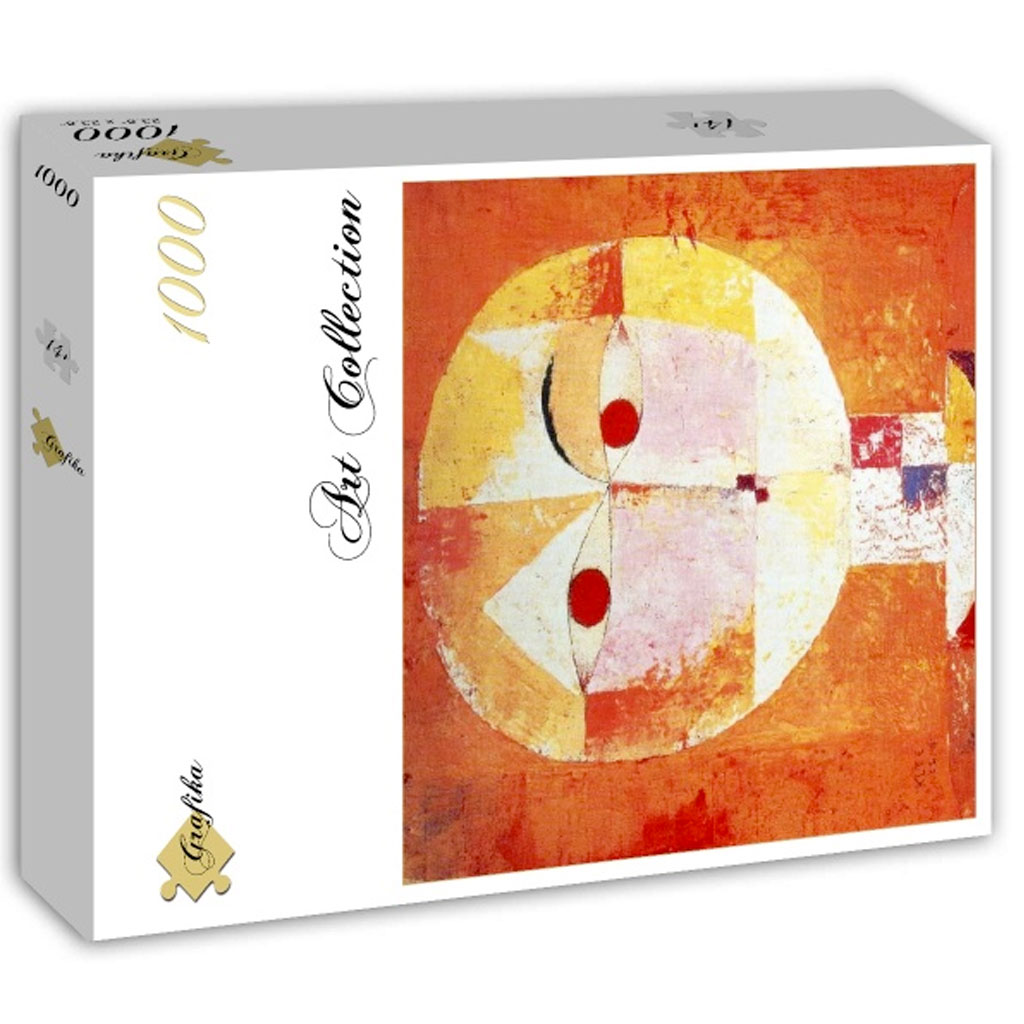
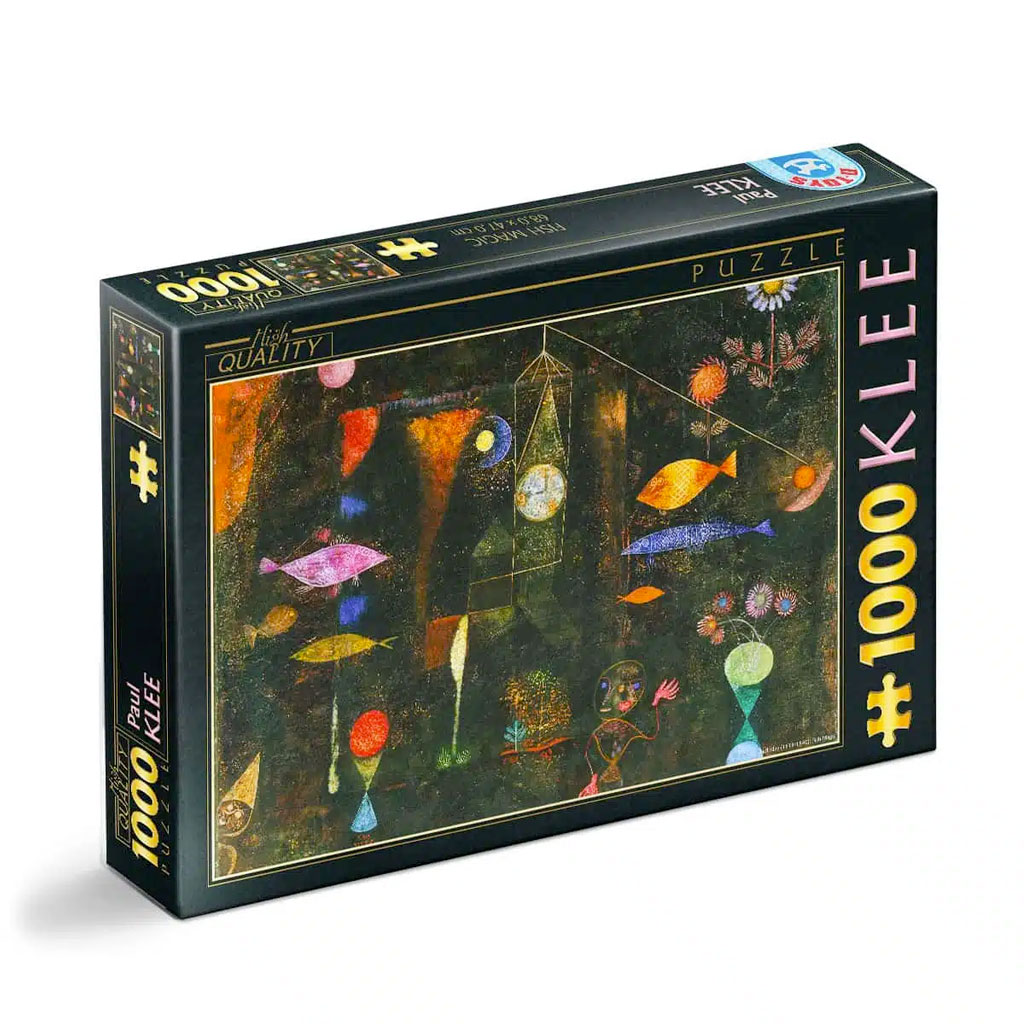
Discover with us our Puzzle Klee and immerse yourself piece by piece in the color revolution of abstract art puzzles.
Klee’s art is characterized by the intimate relationship between the artwork and emotional experience, between color and discovery.
We have chosen Puzzle Klee to allow you to enter the deep intimacy of a work of art, in the ecstasy of color and the depth of the journey.
Indeed, what strikes about Paul Klee’s paintings is the continuous pursuit of communicating and expressing inner identity through art. His works are imbued with a musical sense. For this reason, like musicians in search of the perfect note, we at puzzle arte want to let you discover Klee’s works through his Klee puzzles.
Observing the works in Puzzle Klee in all their details and discovering them piece by piece means embarking on a journey into your emotions, among colors and shapes.
Paul Klee was born to a German father and a Swiss mother: for this reason, despite attempting to obtain Swiss citizenship, he remained a German citizen even after being expelled by the Nazis.
From 1891 to 1901, he studied in Munich at the Academy of Franz von Stuck. Later, he spent a year in Italy, four in Bern, and a period in Paris before returning again to Munich.
His figure, sacred and silent, was present in all the groups and key moments of the Avant-garde: from Abstractionism to Dadaism, from Surrealism to the group of Bauhaus teachers.
But his vast production, about nine thousand works including drawings, watercolors, engravings, oil paintings, masks, puppets, and reliefs, cannot be assigned to any of these trends: he was invited to exhibit with everyone but chose to remain isolated, happy to paint in the kitchen on small sheets while taking care of his son Felix and while his wife earned a living giving piano lessons.
He was willing to recognize influences, including the decisive influence of the Italian Futurists, but he always fled from the competitive dynamics within the groups: also for this reason, he abandoned teaching at the Bauhaus, where he had been unanimously called in 1921 and where he had taught passionately.
His debut on the avant-garde art scene coincided with the second exhibition of the Blue Rider in 1912, in which he participated without, however, sharing the mystical tone of his companions: Jawlensky, Kandinsky, Marc and Macke.
These relationships guided him on the path most his own, that of color, which he later sought in Tunisia: a memorable journey he undertook in 1914 with Macke.
The dazzling colors of the Mediterranean and the modulations of Southern light, so bright compared to the northern one, left him in a state of wonder for days.
Two weeks after arrival he wrote in his diaries:
Color possesses me. I no longer need to chase it: it possesses me forever, I know. Color and I are one. I am a painter.
Klee sought a way out of the danger of being only a successor to the great artists of the past.
I passed in front of the Pietà in St. Peter’s Basilica without it leaving any impression on me, while I remain enchanted before any old Savior.
The territories to explore to break free from a too-heavy legacy were different: not the classical and Christian Mediterranean, but the Arab and wild one. Not the refined art of the late 19th century, but popular painting with all the colors and painters who use art as a primordial language.
Why is music allowed not to represent anything except moods, while visual arts are required to produce external objects? Isn’t it on this supreme level of abstraction that the historical superiority of music, in the scale of the arts, over painting is founded?
The passion for music that characterizes his childhood deeply marked his life and work.
Even the philosopher Worringer, in his essay Abstraction and Empathy argued that music offered the most suitable model for a kind of art capable of interpreting not so much the external forms of nature, but its internal mechanisms: rhythm, variations of intensity, chords.
During this same period, studies on the analogy between the scale of colors and that of notes intensified. It is no coincidence that the greatest of the Abstract artists had significant musical training.
Many scholars attribute the first truly abstract paintings to the Lithuanian
Indeed, Paul Klee was born into a family of musicians and he himself was an exceptional violinist. His studies on musical harmony are reflected in various series of works, for example in the Magic Squares of 1936, where the quantitative relationships between colors are systematically studied.
Moreover, in Spiritual in Art, Kandinsky conducted a precise analysis of the relationships between the colors of the spectrum and the sound of particular instruments: resulting pairs included yellow-trumpet, vermilion-tuba, blue-flute, blue-cello.