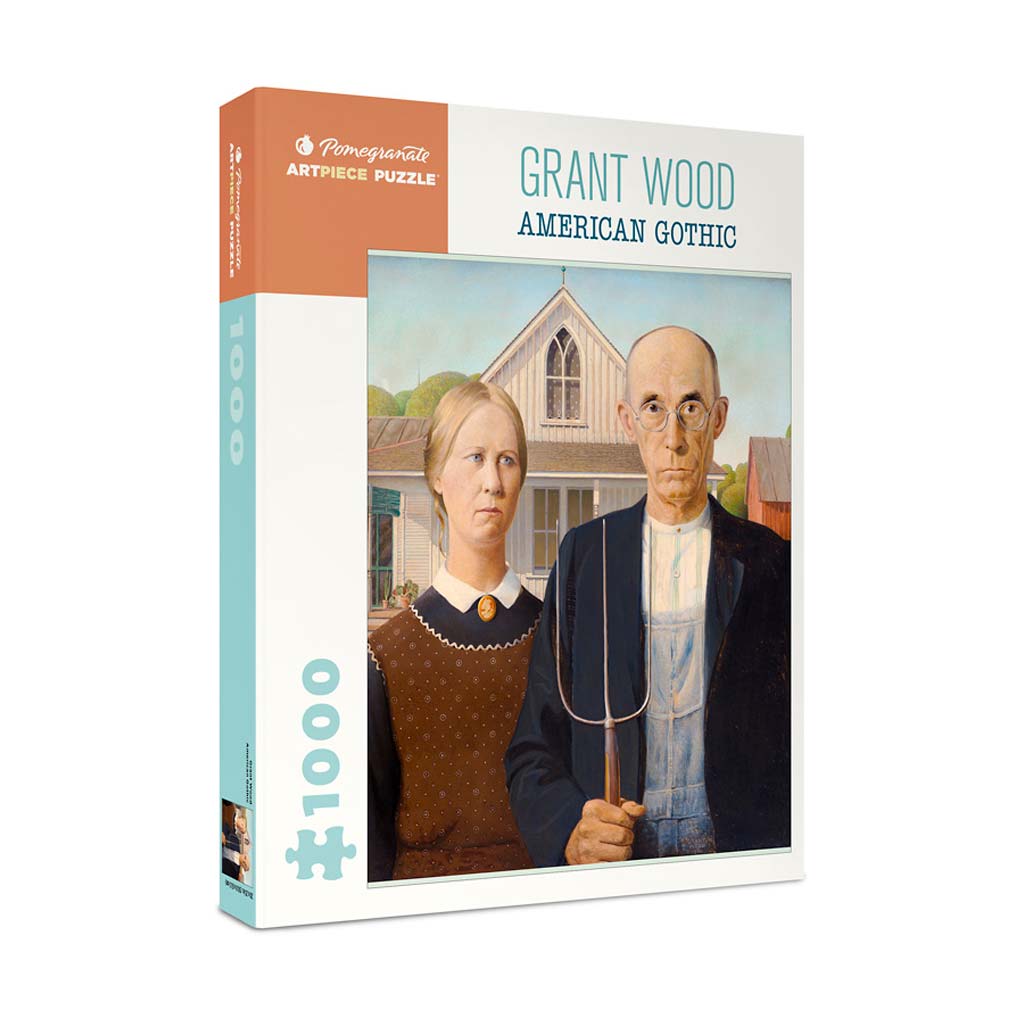


Discover our Grant Wood puzzles with us and immerse yourself in the history of the great American Regionalist Grant Wood.
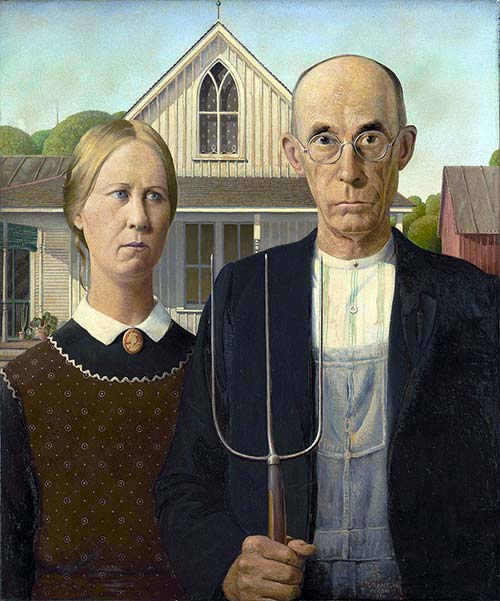
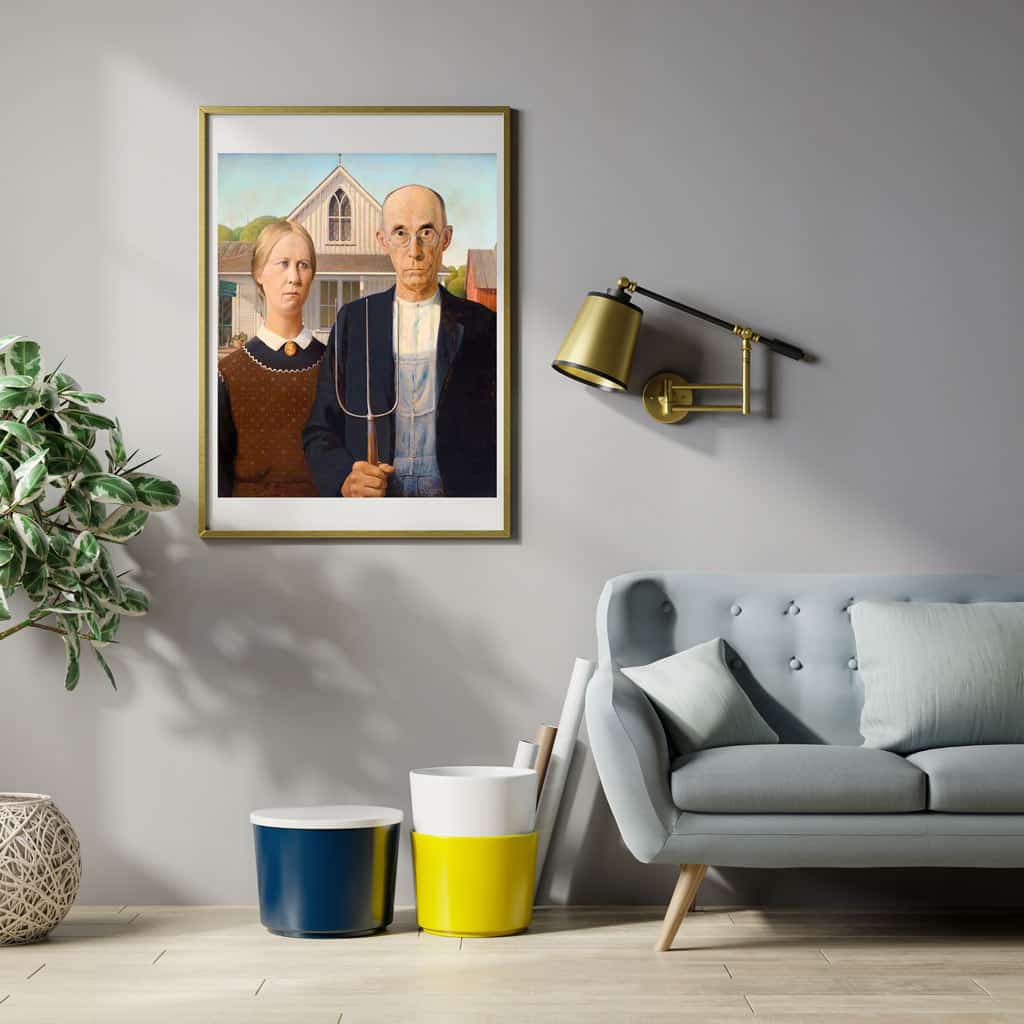
His art is a celebration of rural life and the lifestyle of the American Midwest. American Gothic, created in 1930, has become an iconic example of 20th-century American art.
For us at Puzzle Arte, Grant Wood puzzles are a wonderful tool to intimately explore the works of this great American master.
Wood was born in rural Iowa near the town of Anamosa, in 1891, son of Hattie and Francis Maryville Wood.
In 1901 Wood began as an apprentice in a local metal shop. After graduating from Washington High School, he enrolled in The Handicraft Guild, an art school in Minneapolis, in 1910.
In 1913 he enrolled at the School of the Art Institute of Chicago and did some work as a silversmith.
From 1922 to 1928, Wood made four trips to Europe, where he studied many painting styles, particularly Impressionism and Post-Impressionism.
However, it was the work of the 15th-century Flemish artist Jan van Eyck that influenced him to adopt the clarity of this technique and incorporate it into his new works.
In 1932, Wood helped found the Stone City Art Colony near his hometown to help artists survive the Great Depression. He became a strong advocate of Regionalism in the arts, giving lectures on the subject across the country.
The day before his fifty-first birthday, Wood died of pancreatic cancer at the university hospital and is now buried at Riverside Cemetery, Anamosa, Iowa.
When Wood died, his estate went to his sister, Nan Wood Graham, the woman depicted in American Gothic. When she died in 1990, her estate, along with Wood’s personal effects and various artworks, became property of the Figge Art Museum in Davenport, Iowa.
In 2009, Grant received the Iowa Prize, the state’s highest civic honor.
Wood was an active painter from an extremely young age until his death, and although best known for his paintings, he worked in many media including lithography, ink, charcoal, ceramics, metal, wood, and found objects.
Wood is associated with the American Regionalism movement, which was primarily based in the Midwest, and with figurative painting focused on American rural themes in an assertive rejection of European abstraction.
Wood was one of the three artists most associated with the movement. The others were John Steuart Curry and Thomas Hart Benton.
Together with Benton, Curry, and other Regionalist artists, Wood’s work was marketed for many years through Associated American Artists in New York.