

Home / Spanish Painters: Puzzle Arte’s Favorites
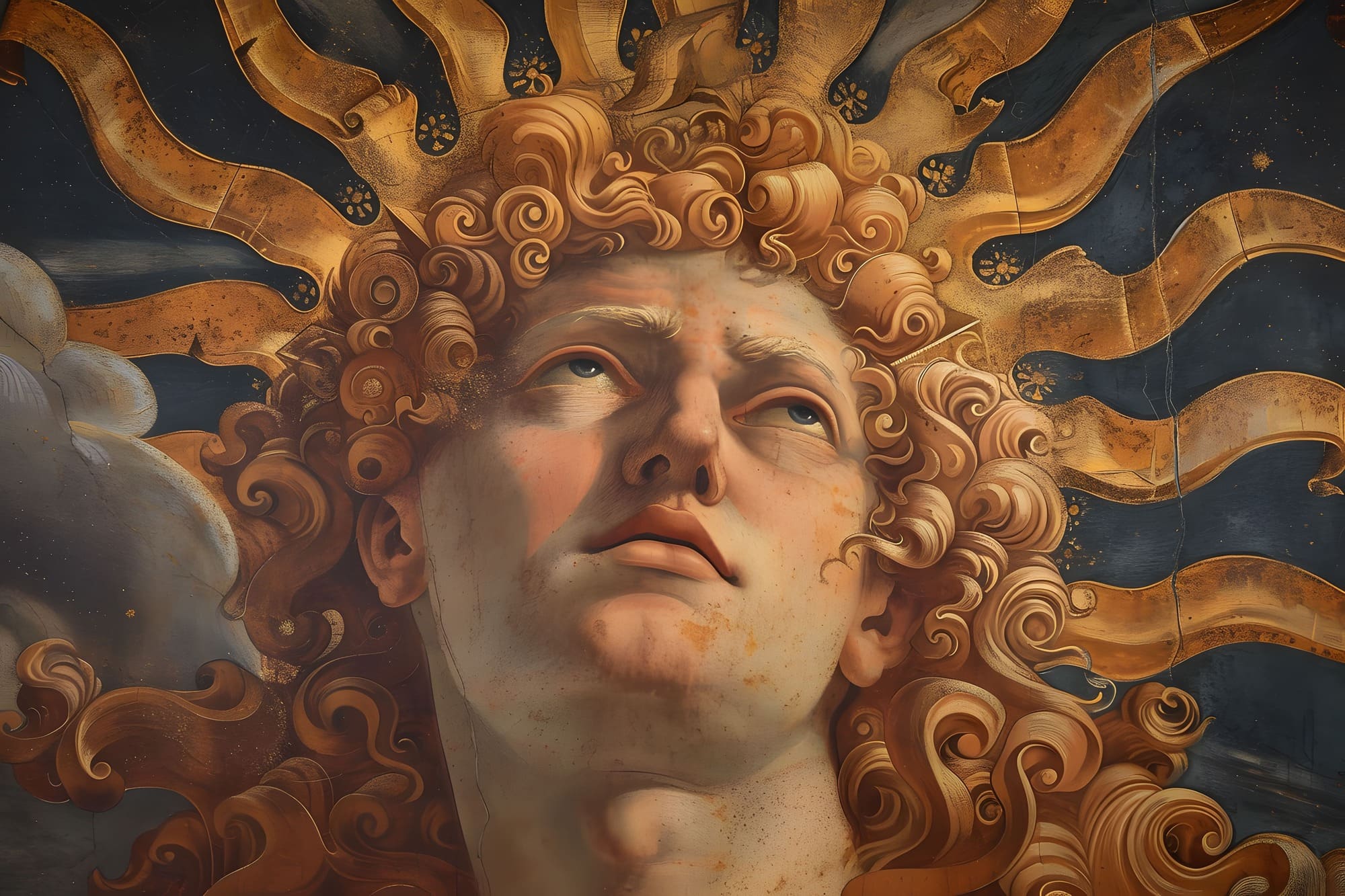
Puzzle Arte’s favorite Spanish painters are Salvador Dalí, Francisco Goya, Joan Miró, and Pablo Picasso. These illustrious names in Spanish art have left a significant mark on the global cultural landscape. The influences of Italian and French art, combined with major events, have given rise to an unprecedented output.
Spanish painters and Spanish figurative art refute the Marxist thesis of art being subject to the market. The most advanced art is not the product of advantageous economic conditions. But it can also emerge in less affluent contexts. The history of Spanish art demonstrates that political decadence did not coincide with artistic decadence.
Spanish painters are known for their naturalism. They pay attention to detail in their depictions and to representing the world as it is. From this perspective, every setting becomes concrete and real.
This is why artistic personalities characterized by passion and violence emerge. The enlargement of the figures relative to the other elements of the depictions creates interplays of light and shadow. This technique, derived from Caravaggio, amplifies the impact of artistic production. Indeed, most painters of the sixteenth and seventeenth centuries used palettes based on earthy greens, dark reds, and black. Gilded frames completed the artistic work. We are, of course, referring to the heyday of the Golden Age, which produced great artists.
Another period of great artistic flourish was the twentieth century. The Spanish Short Century was marked—like all of Europe—by wars and famines. First came the Civil War, dictatorship, and economic backwardness. Many Spanish artists frequented other European capitals during this period. Here they developed a cultural and artistic awareness that they translated into their works. Their output spread throughout Spain, with prominent artists representing the country.
Among the famous Spanish painters, a list of names has elevated Spain’s reputation. El Greco, considered a true master, influenced the Impressionist artists and depicted slender yet highly expressive figures. His most important works are “The Healing of the Blind Man” and “Purification of the Temple.” Another celebrated artist is Joan Miró, considered one of the most talented in the world art scene. Celebrated for his surrealism and expressionism (or Fauvism), published narratives suggest that he underwent strenuous fasting before painting.
Another well-known name is Diego Velázquez, representative of the Spanish Golden Age. His most celebrated works are “Las Meninas” and “The Surrender of Breda.” Among the celebrated Spanish painters, Pablo Picasso could not be left out. He is one of the greatest exponents of Cubism, which also influenced sculpture, drawing, engraving, and other arts. Finally, among the most celebrated is Salvador Dalí, considered the genius of Surrealism. His most notable works include “The Temptation of Saint Anthony” and “The Persistence of Memory.”
Contemporary Spanish painters stand out for their creative flair. John Gray is cited as an expert in Cubism and plastic art. He is credited with inventing the papier collé technique, which involves adding magazine or newspaper clippings to boxes. His most important works include “Portrait of Picasso,” “Guitar and Pipe,” and “Still Life with a Venetian Blind.” Add to this Antoni Tapies, who passed away in 2005 at the age of 88. His artistic output was characterized by abstract expressionism. His most notable works include “Grande Grigio Vernice” and “Grattage Rosso.”
We can also mention Bartolomé Esteban Murillo, one of the leading exponents of the Spanish Baroque. He pioneered the use of Rococo and his most famous work, “The Kitchen of the Angels.” Finally, we find Antonio Lopez, still alive, celebrated for his worldwide fame. Among his works, “Antonio and Mari” and “Gran Vía” are particularly noteworthy.
Francisco Goya ‘s talent dominated Spanish painting throughout the 19th century. His works are considered a pure expression of modernity. Indeed, he is cited as the last of the great masters and the forerunner of modernity. At the end of the 19th century, Goya became a court painter. This position allowed him to depict court nobles, establishing himself as a portraitist. At court, he also created decorative art in the Rococo style for the royal residence. His painting style became dark and pessimistic following a serious illness. After a career studded with success, his production changed.
He depicted the war and the French occupation of Spain in the work known as “The Disasters of War.” He also created the infamous “black paintings” in his home, the “Quinta del Sordo,” macabre and terrifying depictions.
Among the world’s best-known Spanish painters is Pablo Picasso . His art has embraced diverse facets, transcending the realm of art. Picasso is the emblem of the twentieth century and therefore of the contemporary artist. He has been called a Bohemian, but also an avant-garde artist. He denounced the horrors of war and the world’s injustices. In fact, between the beginning of the century and the Second World War, he was responsible for placing artistic production at the center of culture. He was an exponent of Cubism and experimented with the collage technique, which he also brought to painting and the art world.
Most accredited critics distinguish his work into several phases. They are classified as the Blue Period, the Rose Period, and the period influenced by African art. Then came the periods of Analytical Cubism and Synthetic Cubism. His artistic production was also influenced by Surrealism. The works that made his art famous worldwide are “Les Demoiselles d’Avignon” from 1907, “The Dream” from 1932, and ” Guernica ” from 1937.
Among Spanish painters, Salvador Dalí ‘s artistic output is considered provocative. Born to a wealthy family in Catalonia, he studied art from a young age. He moved first to Madrid and then to France. There, he met Spanish director Luis Buñuel, with whom he formed a significant artistic partnership. He embraced Dadaism, but also developed an interest in Cubism. His friendship with the director led to his filmmaking, citing the creation of films such as “An Andalusian Dog” and “L’âge d’or.” His passion for cinema also led him to collaborate with Alfred Hitchcock.
His frequenting Parisian salons led him to adopt provocative attitudes. This sentiment spilled over into his artistic production and celebrated his success. Dalí is considered a dandy and an innovator. His paintings narrated the great historical events of his time. His works depicted political events, scientific advances, and social changes. Examples include “The Persistence of Memory” from 1931, “Soft Construction with Boiled Beans: Premonition of Civil War” from 1936, and “Swans Reflecting Elephants” from 1937. He was no stranger to political passion. He refused to side with the anti-fascist front and returned to Spain after Franco’s rise.