Additional information

Number of pieces

Brand

Atmosphere

Artist

Opportunity

art museum

Difficult

Puzzle Dimensions

73.7 x 50.8 cm

Box Dimensions

33 x 25 x 4.5 cm

EAN

9780764946172

5 motivi per acquistare i nostri puzzle d'arte

Puzzle Ricercati Puzzle Arte

Puzzle d’arte rari e ricercati

Spedizione Gratuita Puzzlearte

Spedizione gratuita sopra i 50€

Consulenza Puzzlearte

Consulenza e assistenza da veri esperti

Progetti Rimboschimento Puzzlearte

Progetti di rimboschimento

Bambini Puzzlearte

Progetti educativi per i più piccoli

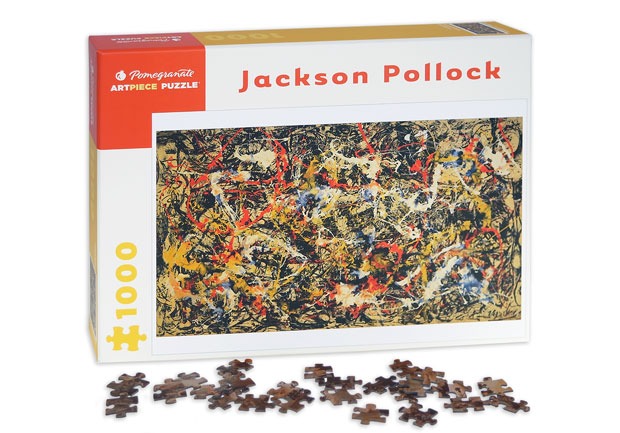
Pollock Convergence – 1000-piece puzzle

(4 customer reviews)
Hot Hot

29,90

29,90

48 in stock

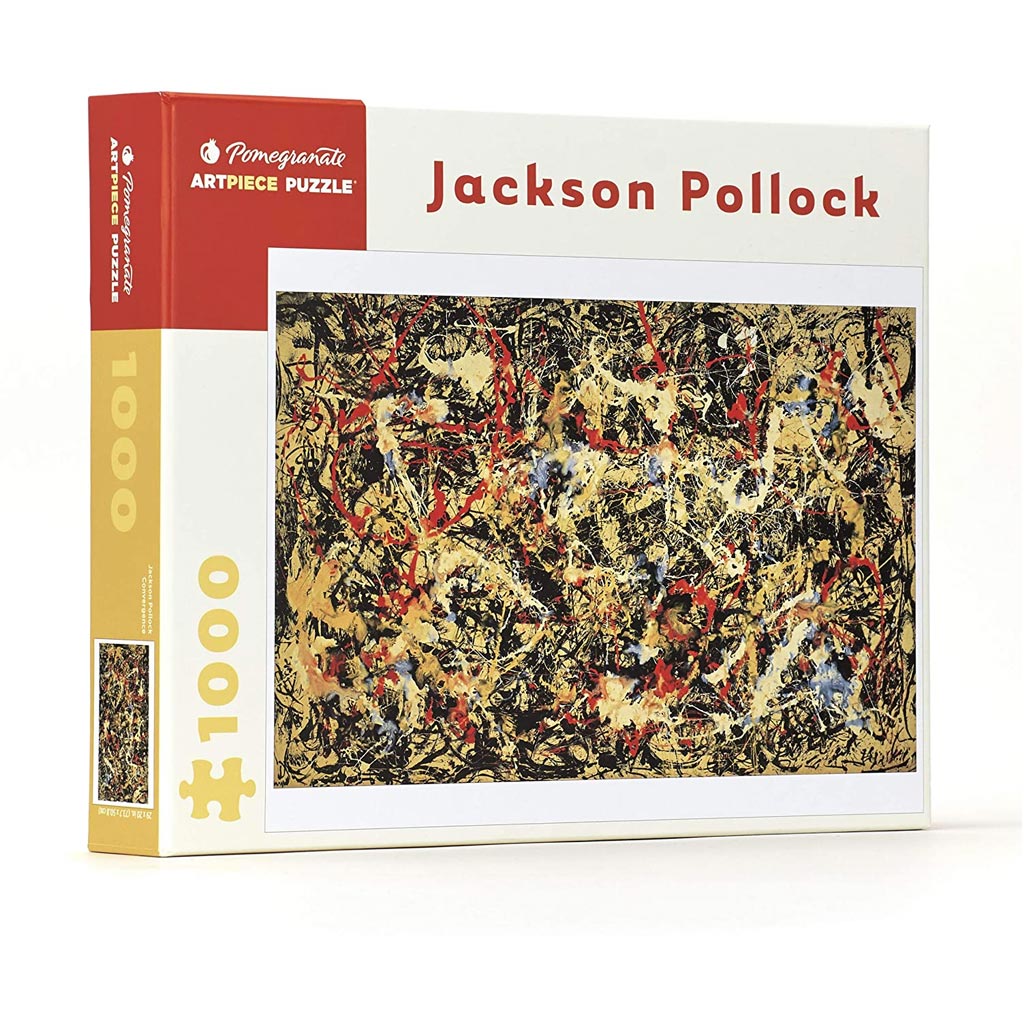
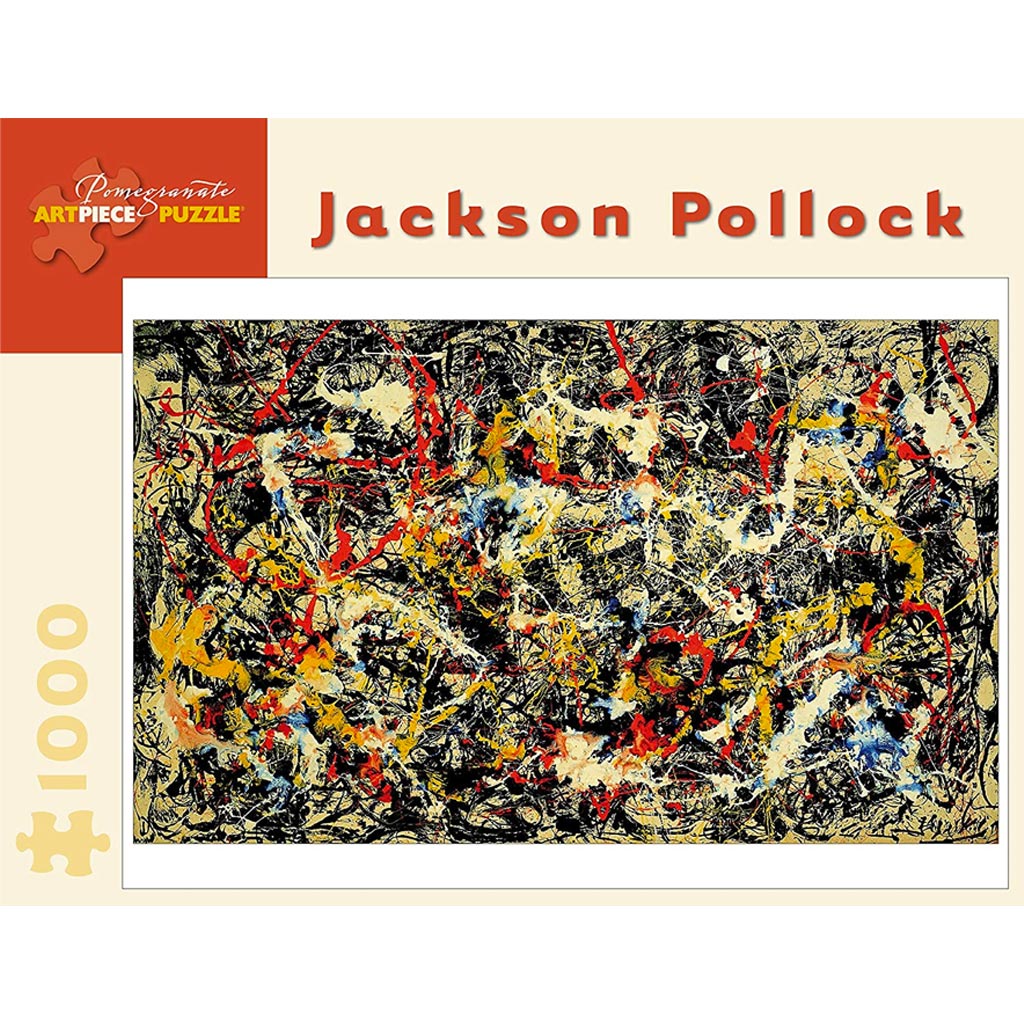
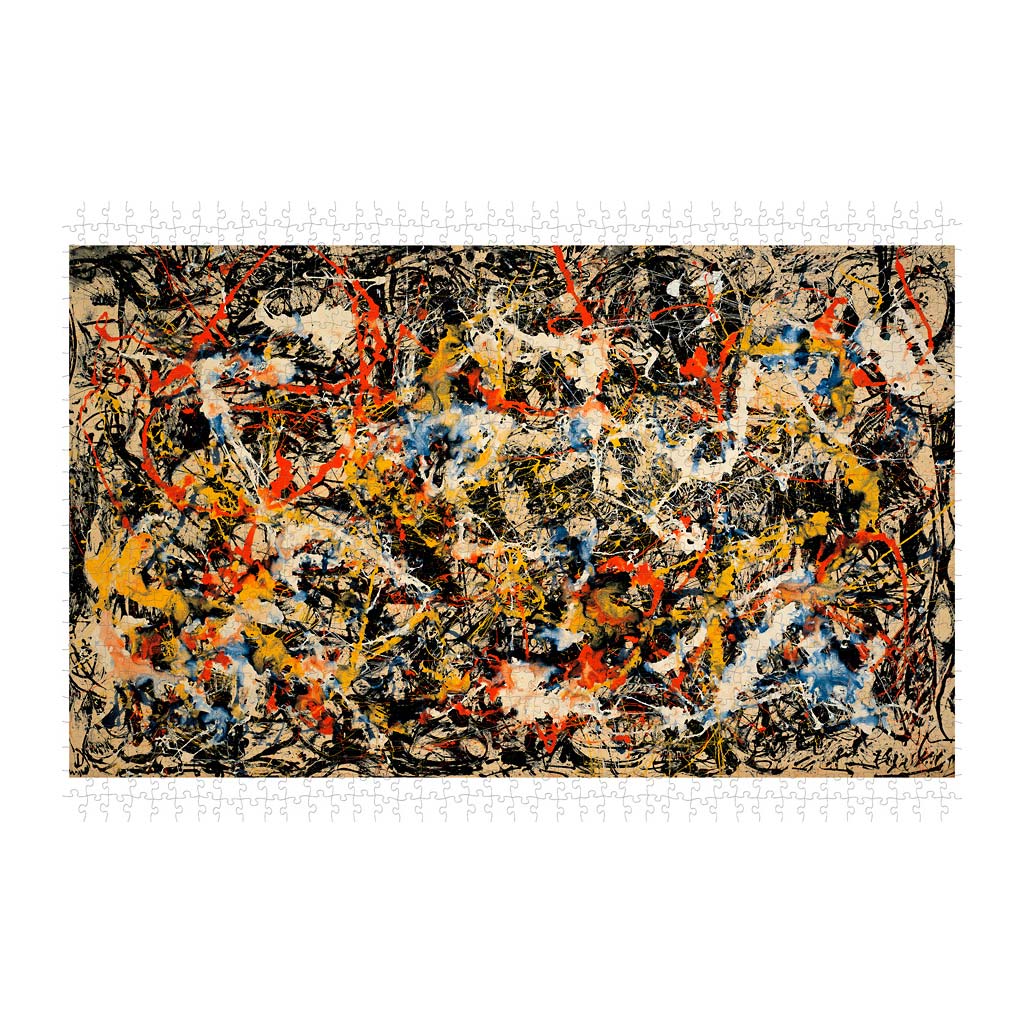
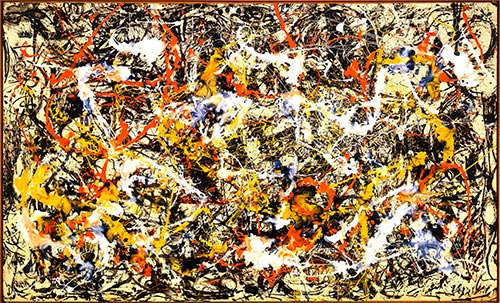
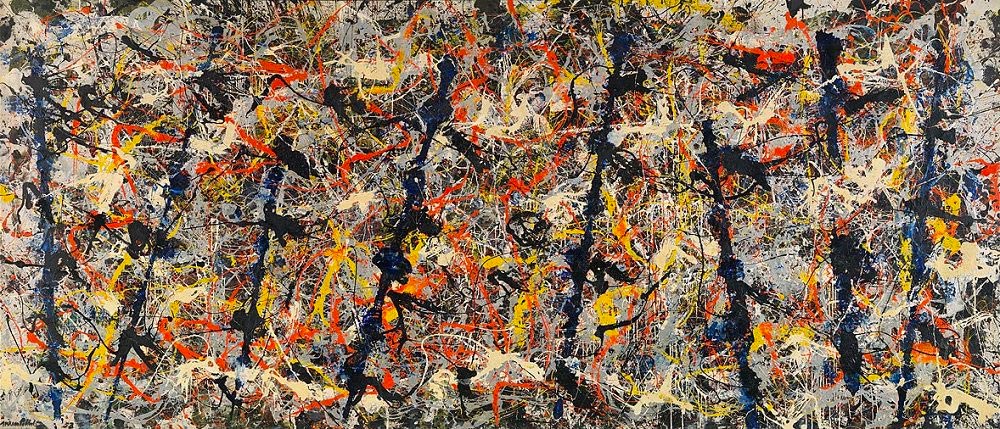
Discover the style of contemporary art and challenge yourself with one of the most difficult puzzles ever, the 1000-puzzle Pollock Convergence .
Puzzle Art thanks to the new splendid edition of the brand Pomegranate Communications Inc. is pleased to offer you this art puzzle that for over 50 years has fascinated puzzle enthusiasts all over the world.

Questo puzzle è momentaneamente esaurito.

Nel frattempo, ti suggeriamo alcuni puzzle d’arte che potrebbero piacerti!

Altri puzzle della stessa marca

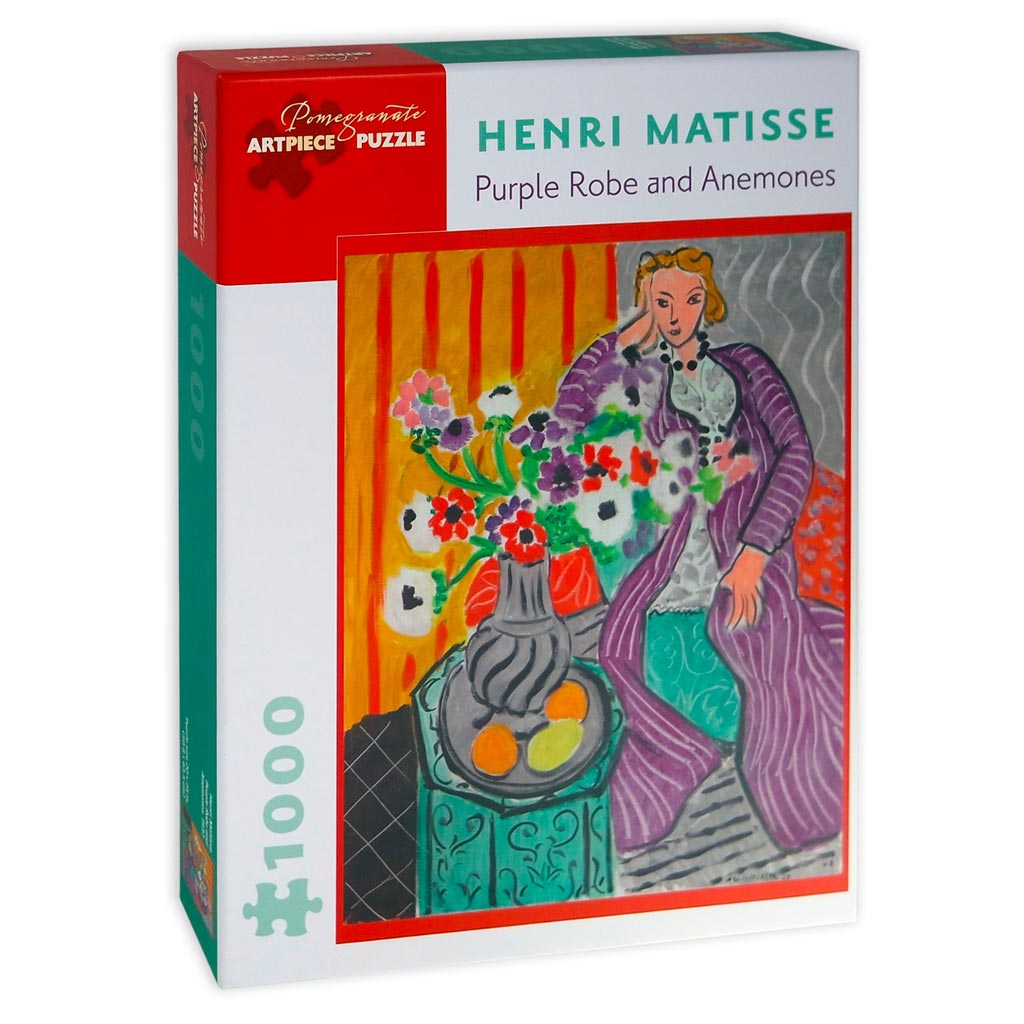
Matisse Purple Robe And Anemomes Puzzle 1000 Pezzi
Matisse Purple Robe and Anemones – 1000-piece puzzle
21,90
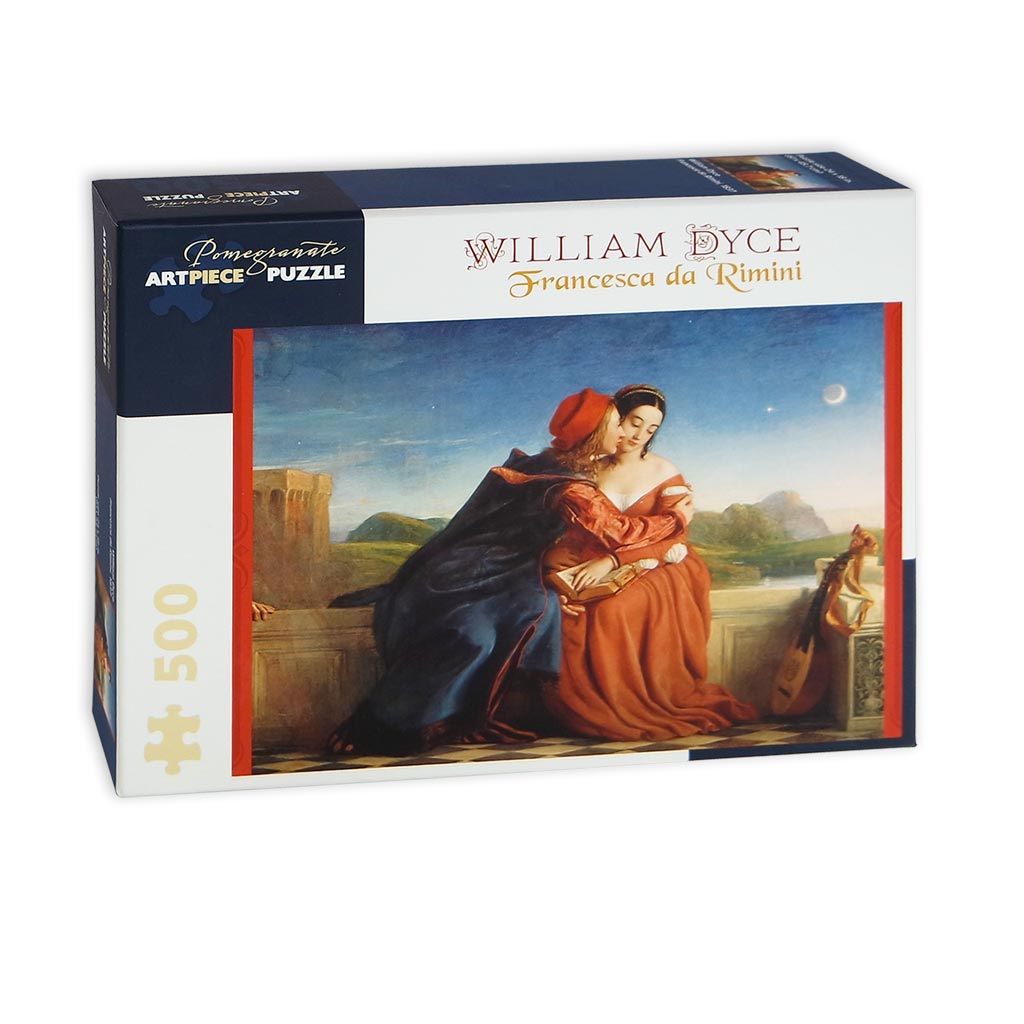
Francesca Da Rimini William Dyce Puzzle 500 Pezzi
Francesca da Rimini by William Dyce – 500 piece puzzle
19,50
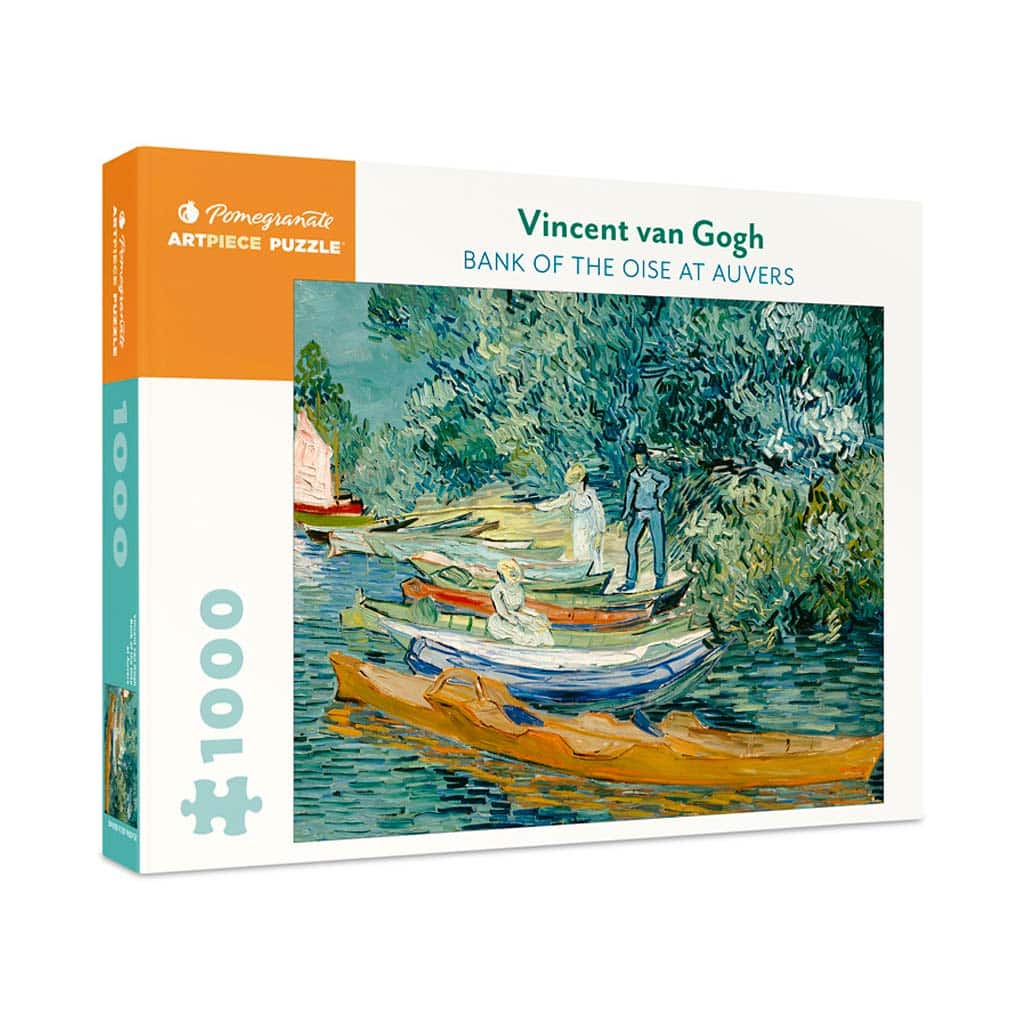
Riva Dell'oise Ad Auvers
Banks of the Oise at Auvers, Van Gogh – 1000-piece puzzle
25,00

Puzzle Features

The “ Pollock Convergence ” puzzle is a wonderful example of contemporary art and a challenge for true puzzle enthusiasts.

In fact, this puzzle has been, for over 50 years, one of the most difficult and fascinating puzzles ever produced in the world.
The first production of this subject dates back to the 1960s by the American company Springbok . Katie Lewin , the owner of the Springbok company, selected numerous art subjects for the production of puzzles, including Pollock’s work. This puzzle was an unexpected success, and officials at the Albright-Knox Gallery in Buffalo , where the original painting was located, were surprised by the constant flow of museum visitors who came to admire it, after having spent so many hours putting it together.

Katie Lewin herself commented on this event: “You understand a Jackson Pollock better after you’ve done the puzzle.”

The Pollock Convergence Puzzle in detail

The 1000-piece “Convergence” puzzle from Pomegranate is a stunning example of contemporary art puzzle design.
The subject is very rare and particularly challenging even for the most experienced puzzle builders.
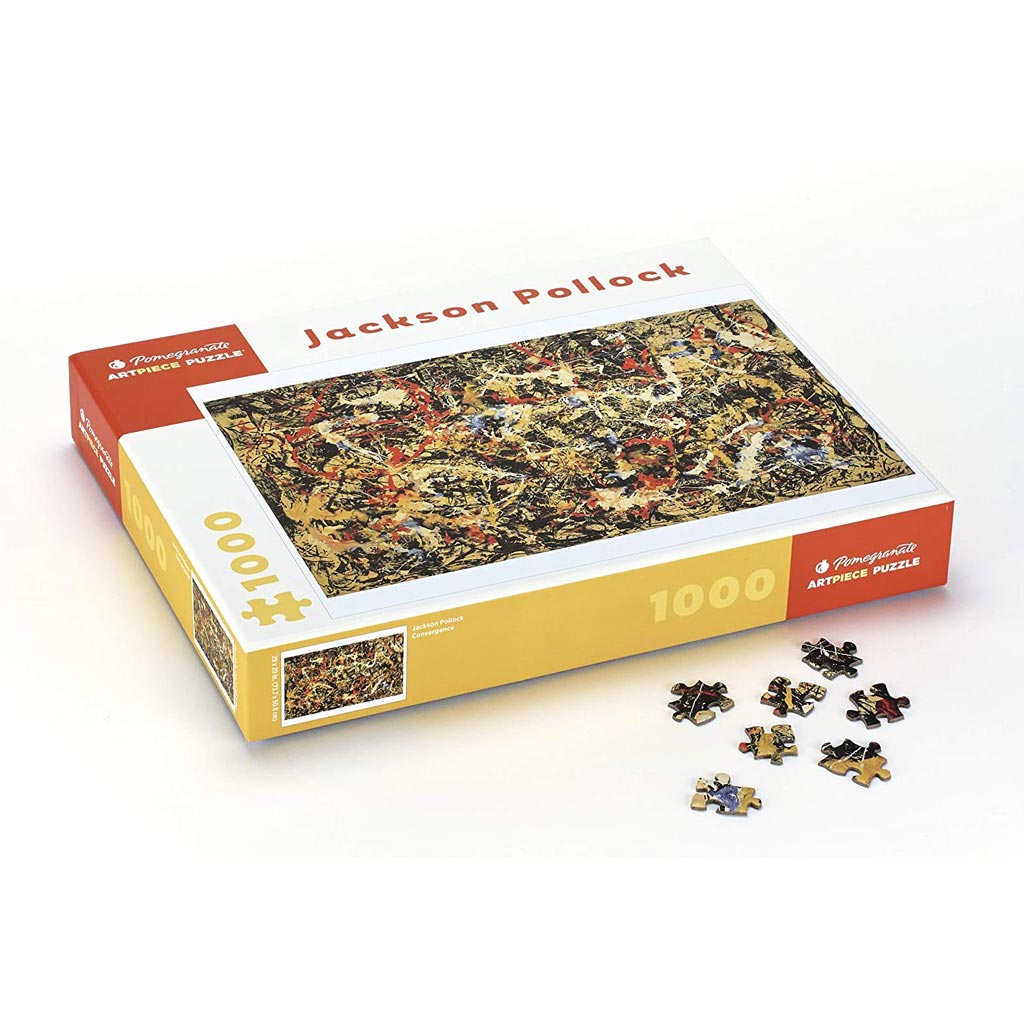
The colors of the puzzle are very bright and the details are extremely accurate and refined. The puzzle pieces are sturdy and fit together well.

Number of Puzzle PiecesNumber of pieces
1000
Puzzle BrandsBrand
Pomegranate
Puzzle DimensionsPuzzle dimensions (cm)
73.7 x 50.8
Puzzle Box DimensionsBox dimensions (cm)
33 x 25 x 4.5

Well finished box
Wonderful gift idea

Famous work of art
Impossible puzzle

1000 pieces
Standard grid

Description of the artwork

Jackson Pollock’s Convergence is the most famous Abstract Expressionist painting of the twentieth century. This painting, composed of circles, swirls, lines, and dots sketched on the canvas, represents one of the most important examples of contemporary American art.

Behind these lines and colors, a gigantic struggle was unfolding across the United States and shaping contemporary history. Indeed, Pollock can be considered one of the most important artists of the last 70 years, not only for his significant contribution to art, but also for his ability to convey a precise and powerful message through his work. Indeed, Jackson Pollock was directly challenging the conventions, both artistic and political, of press and opinion bans. Therefore, his was a fight for freedom of speech at a time when many in the United States felt this fundamental right was under threat.
The painting Convergense features dark, orange, red, yellow, and white tones that battle for attention as Pollock’s drips converge in a rebellious, chaotic painting.

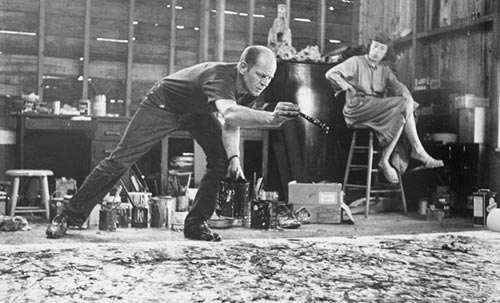
Pollock produced his drip paintings by throwing paint onto raw canvases laid out in his Hampton studio. Using poles, he could better control the paint lines than relying on his brushes. This particular drip painting is enormous and striking, catching your eye as soon as you enter the room and gaze at it.

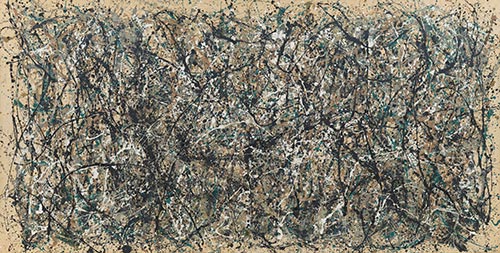
The chaos of this style was controversial at the time of Pollock’s career, but drip painting is now an artistic style that allows for a great form of expression and communication, placing attention on the artist’s gesture and his feeling.
This process is not a rational dialogue between painter and observer, but an emotional conversation that allows you, the observer, to enter into the intimacy of your emotions.
Many viewers of this painting might find their own meaning in this aspect. Indeed, the artist himself was deliberately raising more questions than answers by creating this work.
Furthermore, Pollock very often titled his works with neutral names to avoid distorting the opinions and feelings of one of his paintings.

Convergence, Pollock's most famous work

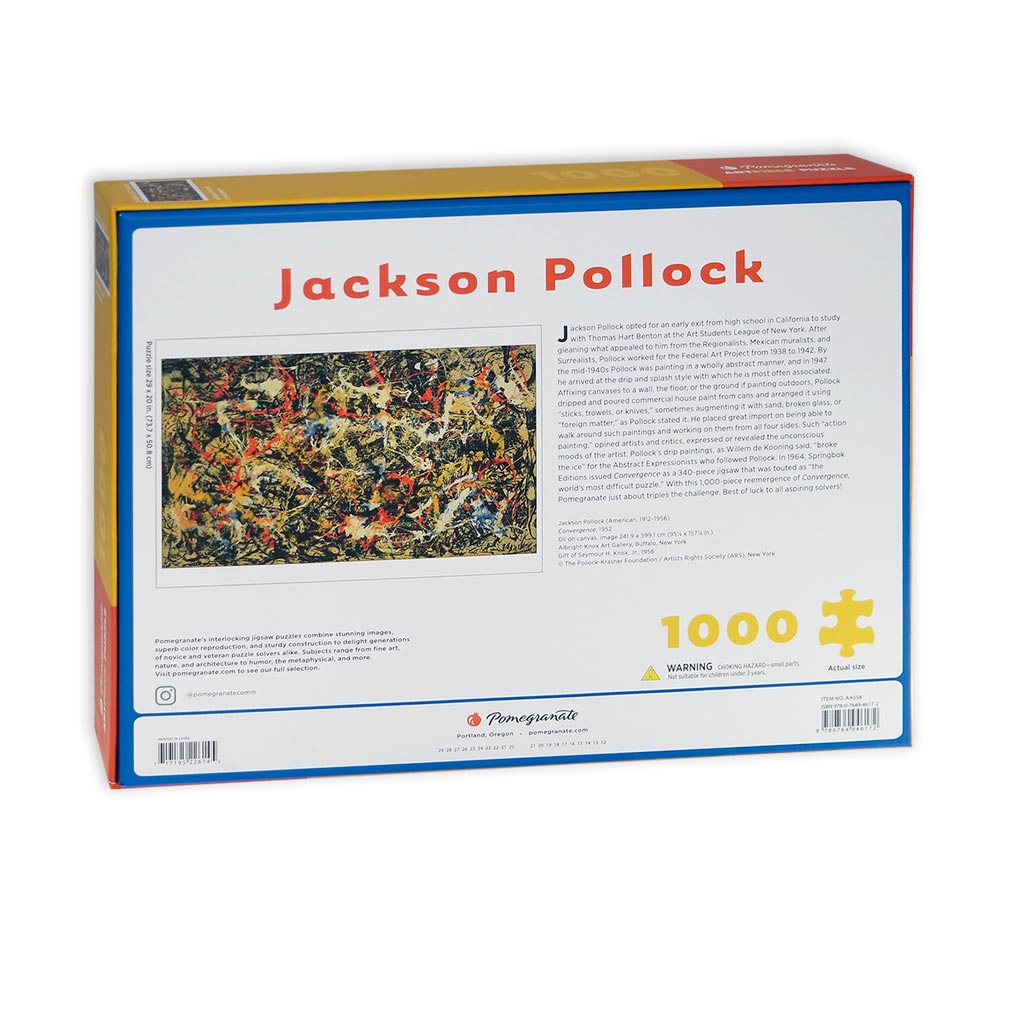
Convergence was created by Jackson Pollock in 1952 and is now on display at the Albright-Knox Art Gallery .

This particular painting measures 2.35 meters by 3.90 meters , a fairly standard size for this artist. Large canvases allowed him to express himself with great freedom. Indeed, for him, art was about the expression of emotion rather than the direct reproduction of what the eye can see.

Soon after Convergence and Pollock’s other key paintings, the artist began to find himself feeling too pressured, with galleries always wanting new works.

The artist also began to feel frustrated by the public, who constantly tried to find figures and shapes in his paintings that weren’t there, nor intended to be. For this reason, Pollock later chose to number his paintings rather than name them, to avoid misleading anyone into thinking beyond what they could simply see with their immediate eyes.

However his most famous work is still Convergence , which was a collage of colors splashed onto a canvas creating masterful shapes and lines that evoked emotion and attacked the eye.

With his brushstrokes, Pollock was able to use contrasting colors, lines, textures, lights, and shapes at his fingertips. This painting is enormous, and its scale can only be truly appreciated in person.

In 1964, the puzzle company Springbok Editions released the Pollock Convergence puzzle. It was a 340-piece puzzle that they promoted as “the most difficult puzzle in the world.” The impact of the Pollock Convergence was evident in 1965 when hundreds of thousands of Americans purchased the puzzle.

The abstract expressionism of Action Painting

Art, almost as if to redeem itself from having almost always been an expression of power, attempted in the post-war period to represent one of the most severe elements of criticism towards power itself.

To this end, it does not spare irony and provocations of all kinds, even going so far as to debase and deny itself in order to intentionally delegitimize the society that produces it by crudely highlighting its injustices and contradictions.
In fact, from the post-war period to today, art has been segmented into a thousand streams.

On the one hand, this has forcefully reaffirmed its extraordinary and renewed vitality, but on the other, it has sometimes squandered its potential, preventing the formation not only of schools, but also of movements or simple trends, whose existence was little more than transitory and ephemeral.
Just as many of its manifestations are ephemeral, they often end in staged actions or performances of which, at most, a film or a few photographs may remain.

Moreover, the speed with which contemporary art is produced and consumed reflects in many ways society itself.

Thanks to the ever-increasing diffusion of the media, works of art, news, and ideas now have the theoretical possibility of spreading in near-real time—that is, at the very moment of the occurrence of events, which, as soon as they occur, are immediately disseminated to everyone.

But since what is known soon ends up no longer interesting the public, the latter will increasingly greedily require ever new and different events and stimuli.

In the famous Pali blu created by the artist in 1953 , we have an even more precise idea of ​​what “ dripping ” really is.

In fact, working frantically around the canvas laid out on the floor in his large and chaotic New York studio on Long Island, Pollock prepared it by initially sketching it with cotton balls, painter’s brushes and pieces of wood.
At this point, thin threads of color (synthetic enamels at different dilutions) are poured over it which, depending on the movement of the hand, spread out or thicken, creating areas of greater or lesser concentration.

What emerges is a chaotic labyrinth of color-signs within which everyone is free to imagine what they most desire or, conversely, fear. From the monstrous American megalopolis, where men and skyscrapers are concentrated in a reckless manner, to the deepest regions of our unconscious, where nightmares and taboos are tangled with the same mysterious and inextricable complexity.

The blue poles in the title correspond to the eight differently inclined segments that run through the entire painting, giving it a sort of scansion that is both spatial and temporal, as if it were a pentagram.
In fact, they represent the last remaining geometric elements, around which the convulsive siege of multi-colored drips gathers. It is the desperate cry of reason overwhelmed by the scream of the irrational .

Finally, to better understand this imaginative artist, it is enough to read his own words in the most tragic testimony of the intimate torment of Pollock, the eternal rebel who loved to repeat: “every good artist paints only what is.”


4 reviews for Pollock Convergence – 1000-piece puzzle

  1. Italian

    Marco

    Puzzle molto difficile, molto divertente ma a volte molto frustrante 😉
    Mi ci è voltuo un po’ prima di finirlo ma poi il risultato finale è stato uno spettacolo!
    Qualità ottima, lo consiglio a chi ama i puzzle difficili.

  2. Italian

    Doriana Marino

    Uno dei migliori puzzle che io abbia mai fatto!
    Ottima qualità, ottimi incastri, colori vivaci.
    Lo consiglio tantissimo, specie a chi è amante dei puzzle d’arte e a chi vuole provare il brivido della sfida!

  3. Italian

    Giovanni

    Il puzzle appartiene ai puzzle impossibili, in effetti è molto difficile, ma per i veri appassionati non è MAI impossibile!!!!! 🙂 Ottima qualità, uno dei migliori fatti finora. Complimenti anche per il sito, davvero ricco di informazioni e ben curato

  4. Italian

    Elena

    Puzzle moooolto complicato ma sfidante! di ottima qualità e resistenza dei pezzi

Show only reviews in English (0)

Add a review

Your email address will not be published. Required fields are marked *

Complimenti!

hai una vera passione per l'arte!

Visto che sei arrivato fino a qui, meriti un premio!
Ecco uno sconto del 10% per il tuo prossimo capolavoro! ✨

Cosa se ne pensi di questi puzzle d'arte simili...

Hot Hot
29,90