On the one hand, this has forcefully reaffirmed its extraordinary and renewed vitality, but on the other, it has sometimes squandered its potential, preventing the formation not only of schools, but also of movements or simple trends, whose existence was little more than transitory and ephemeral.
Just as many of its manifestations are ephemeral, they often end in staged actions or performances of which, at most, a film or a few photographs may remain.
Moreover, the speed with which contemporary art is produced and consumed reflects in many ways society itself.
Thanks to the ever-increasing diffusion of the media, works of art, news, and ideas now have the theoretical possibility of spreading in near-real time—that is, at the very moment of the occurrence of events, which, as soon as they occur, are immediately disseminated to everyone.
But since what is known soon ends up no longer interesting the public, the latter will increasingly greedily require ever new and different events and stimuli.
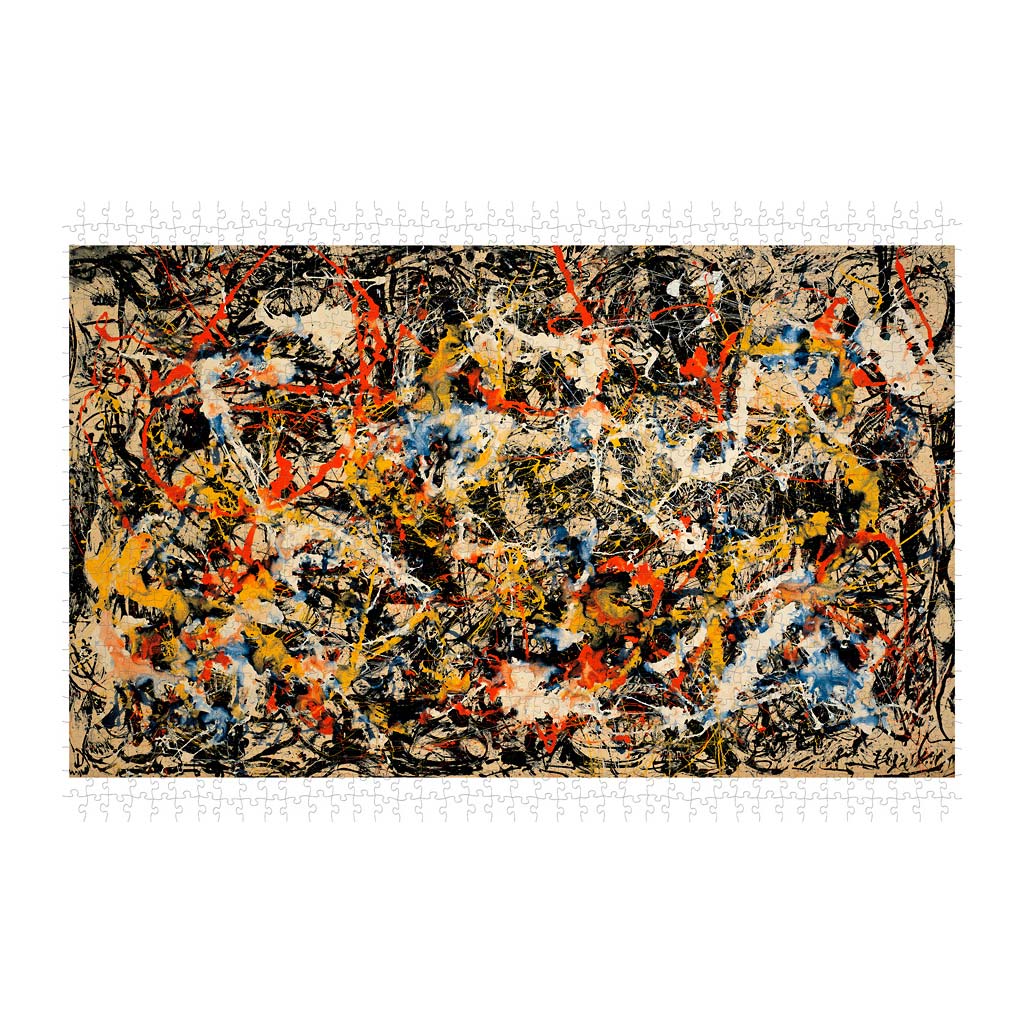
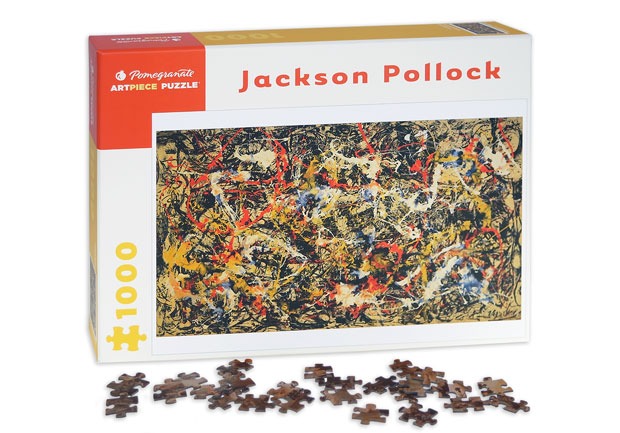
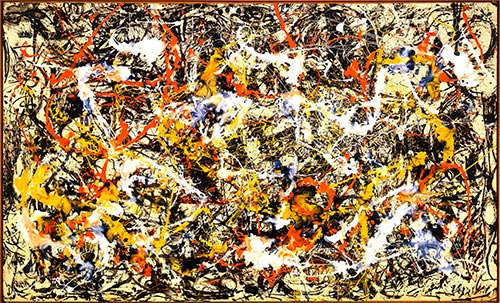
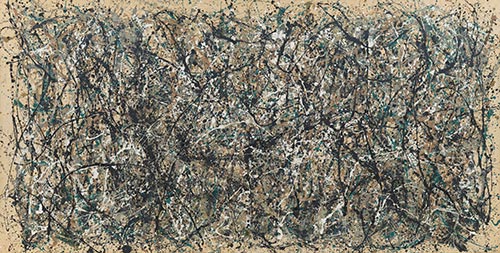
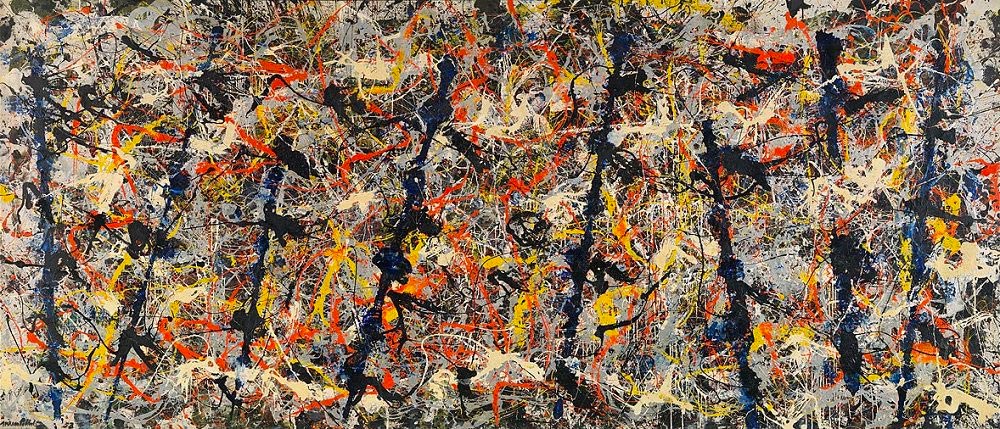
In the famous Pali blu created by the artist in 1953 , we have an even more precise idea of what “ dripping ” really is.
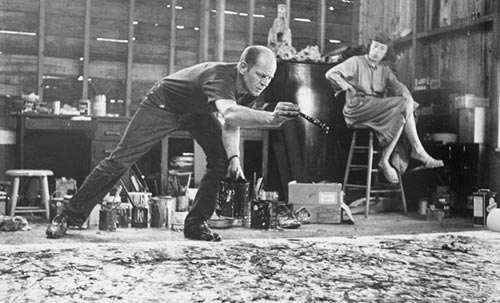
In fact, working frantically around the canvas laid out on the floor in his large and chaotic New York studio on Long Island, Pollock prepared it by initially sketching it with cotton balls, painter’s brushes and pieces of wood.
At this point, thin threads of color (synthetic enamels at different dilutions) are poured over it which, depending on the movement of the hand, spread out or thicken, creating areas of greater or lesser concentration.
What emerges is a chaotic labyrinth of color-signs within which everyone is free to imagine what they most desire or, conversely, fear. From the monstrous American megalopolis, where men and skyscrapers are concentrated in a reckless manner, to the deepest regions of our unconscious, where nightmares and taboos are tangled with the same mysterious and inextricable complexity.
The blue poles in the title correspond to the eight differently inclined segments that run through the entire painting, giving it a sort of scansion that is both spatial and temporal, as if it were a pentagram.
In fact, they represent the last remaining geometric elements, around which the convulsive siege of multi-colored drips gathers. It is the desperate cry of reason overwhelmed by the scream of the irrational .
Finally, to better understand this imaginative artist, it is enough to read his own words in the most tragic testimony of the intimate torment of Pollock, the eternal rebel who loved to repeat: “every good artist paints only what is.”






 Hot
Hot




Marco –
Puzzle molto difficile, molto divertente ma a volte molto frustrante 😉
Mi ci è voltuo un po’ prima di finirlo ma poi il risultato finale è stato uno spettacolo!
Qualità ottima, lo consiglio a chi ama i puzzle difficili.
Doriana Marino –
Uno dei migliori puzzle che io abbia mai fatto!
Ottima qualità, ottimi incastri, colori vivaci.
Lo consiglio tantissimo, specie a chi è amante dei puzzle d’arte e a chi vuole provare il brivido della sfida!
Giovanni –
Il puzzle appartiene ai puzzle impossibili, in effetti è molto difficile, ma per i veri appassionati non è MAI impossibile!!!!! 🙂 Ottima qualità, uno dei migliori fatti finora. Complimenti anche per il sito, davvero ricco di informazioni e ben curato
Elena –
Puzzle moooolto complicato ma sfidante! di ottima qualità e resistenza dei pezzi