
 Hot
Hot
Home / Egyptian Museum in Cairo
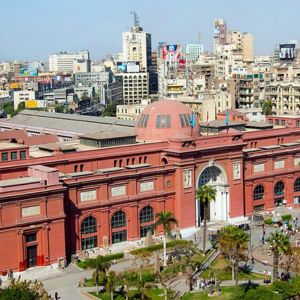
The Egyptian Museum of Cairo is one of the most important cultural institutions in the world, dedicated to the preservation and exhibition of artifacts from ancient Egypt. Located in the heart of the Egyptian capital, in Tahrir Square, the museum houses the largest collection of Pharaonic antiquities in existence, with over 136,000 objects on display and many hundreds of thousands more stored in its warehouses.
The history of the Egyptian Museum of Cairo begins in 1835, when the Egyptian government established the Antiquities Service to stop the uncontrolled export of archaeological finds. The first core of the museum was opened in 1858 thanks to the French archaeologist Auguste Mariette, with headquarters in the Bulaq district. However, due to a severe flooding of the Nile in 1878, it became necessary to move the collection. After a period in the Giza Palace, in 1902 the museum found its definitive location in the neoclassical building designed by the French architect Marcel Dourgnon, built by the Italians Giuseppe Garozzo and Francesco Zaffrani.
The museum is organized over two floors. On the ground floor, the rooms are arranged in chronological order, covering the periods of the Old Kingdom, Middle Kingdom, New Kingdom and the Greco-Roman age. The first floor is organized into thematic areas, including the Royal Mummy Room and the one dedicated to the treasures of Tutankhamun.
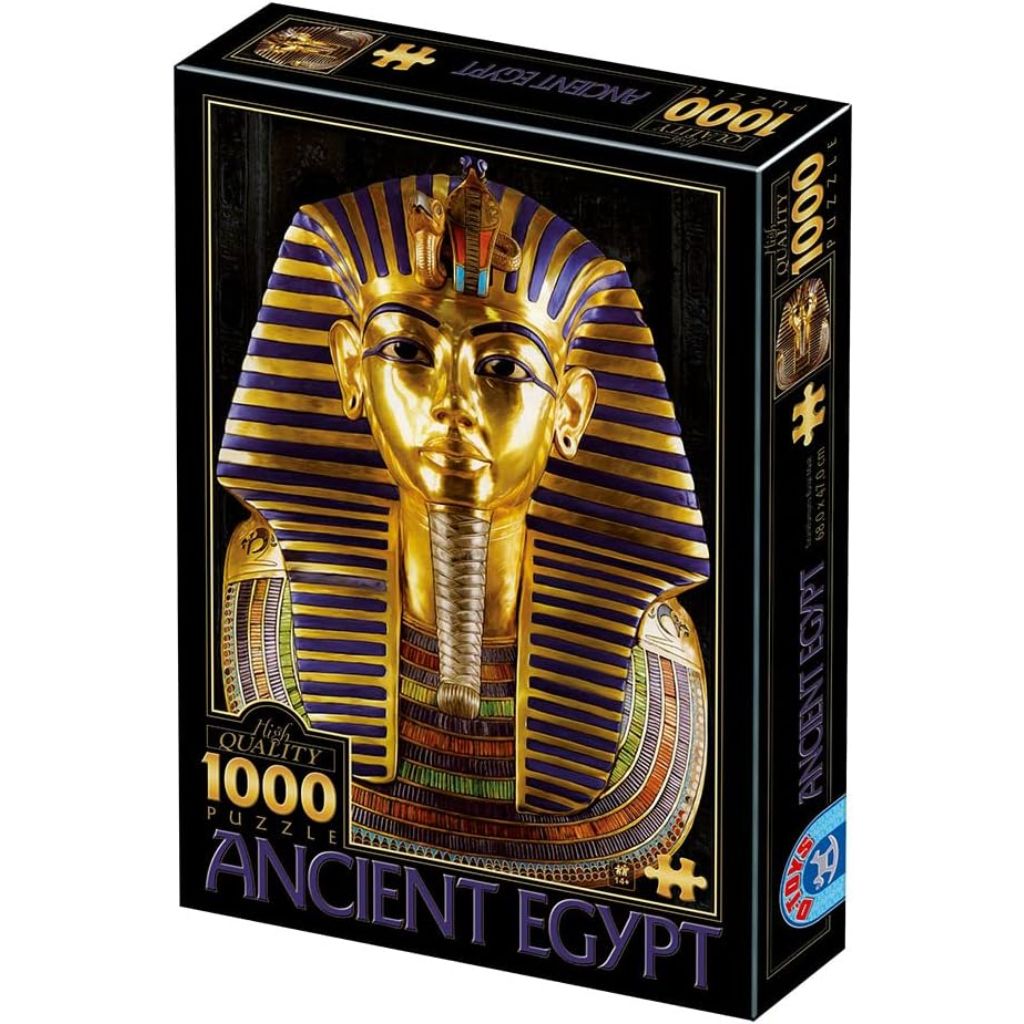
One of the focal points of the museum is the collection of artifacts from the tomb of Tutankhamun, discovered intact in the Valley of the Kings by archaeologist Howard Carter in 1922. Among the most famous pieces is the funerary mask of Tutankhamun, made of solid gold and decorated with semi-precious stones, an iconic symbol of ancient Egypt. Other notable objects include Tutankhamun’s golden throne, finely decorated with scenes depicting the young pharaoh and his wife Ankhesenamun, and the gilded sarcophagus, which demonstrates the craftsmanship of the ancient Egyptians.
Other Significant Artifacts
This room houses the mummies of some of the greatest pharaohs of ancient Egypt, including Ramses II, Seti I and Thutmose III. The mummies are displayed in climate-controlled cases that allow visitors to closely observe the faces of the rulers who governed Egypt millennia ago.
For enthusiasts of Egyptian history and puzzles, the Puzzle Arte website offers a selection of puzzles inspired by the works and artifacts of the Egyptian Museum of Cairo. Among these:
These puzzles not only offer a recreational activity, but also represent a way to deepen knowledge of Egyptian civilization and its treasures.