





Additional information

Number of pieces

Brand

Atmosphere

Artist

Opportunity

art museum

Difficult

Size

Puzzle Dimensions

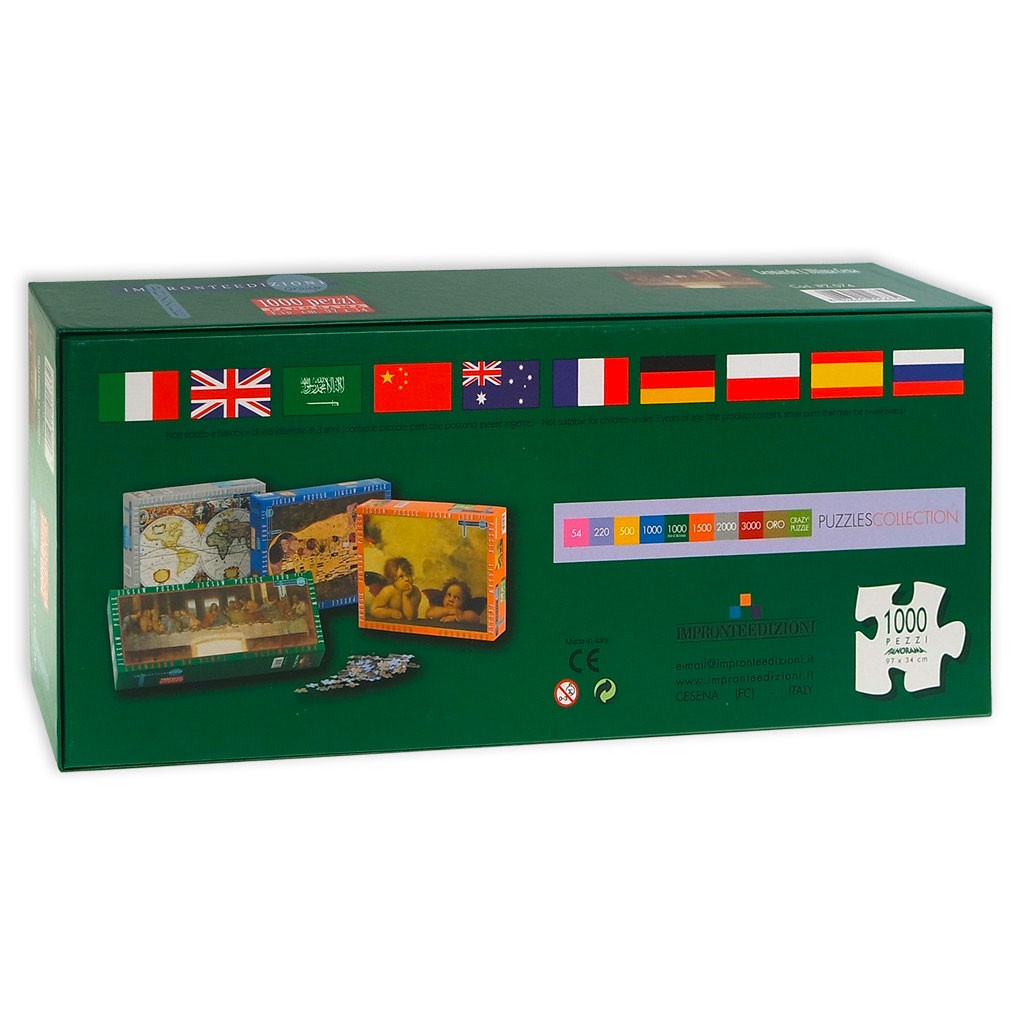
97 cm x 34 cm

Box Dimensions

39 cm x 16 cm x 6.5 cm

EAN

8026311016334

5 motivi per acquistare i nostri puzzle d'arte

Puzzle Ricercati Puzzle Arte

Puzzle d’arte rari e ricercati

Spedizione Gratuita Puzzlearte

Spedizione gratuita sopra i 50€

Consulenza Puzzlearte

Consulenza e assistenza da veri esperti

Progetti Rimboschimento Puzzlearte

Progetti di rimboschimento

Bambini Puzzlearte

Progetti educativi per i più piccoli

Last Supper Puzzle – Leonardo

(0 customer reviews)
Hot Hot

25,00

25,00

12 in stock

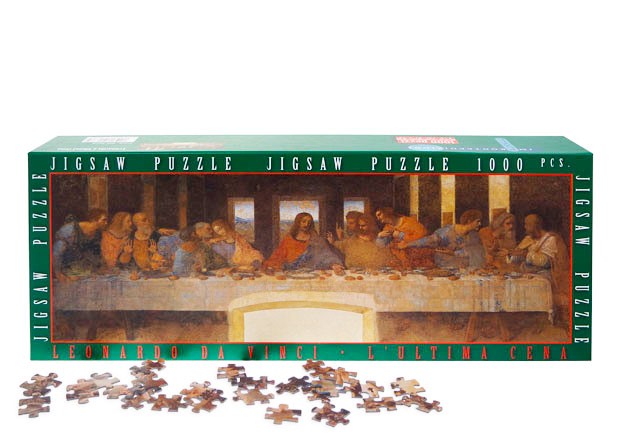
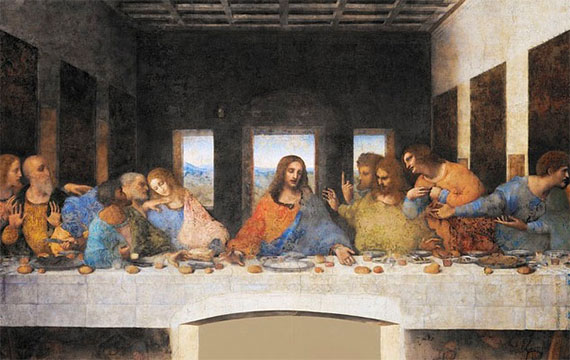
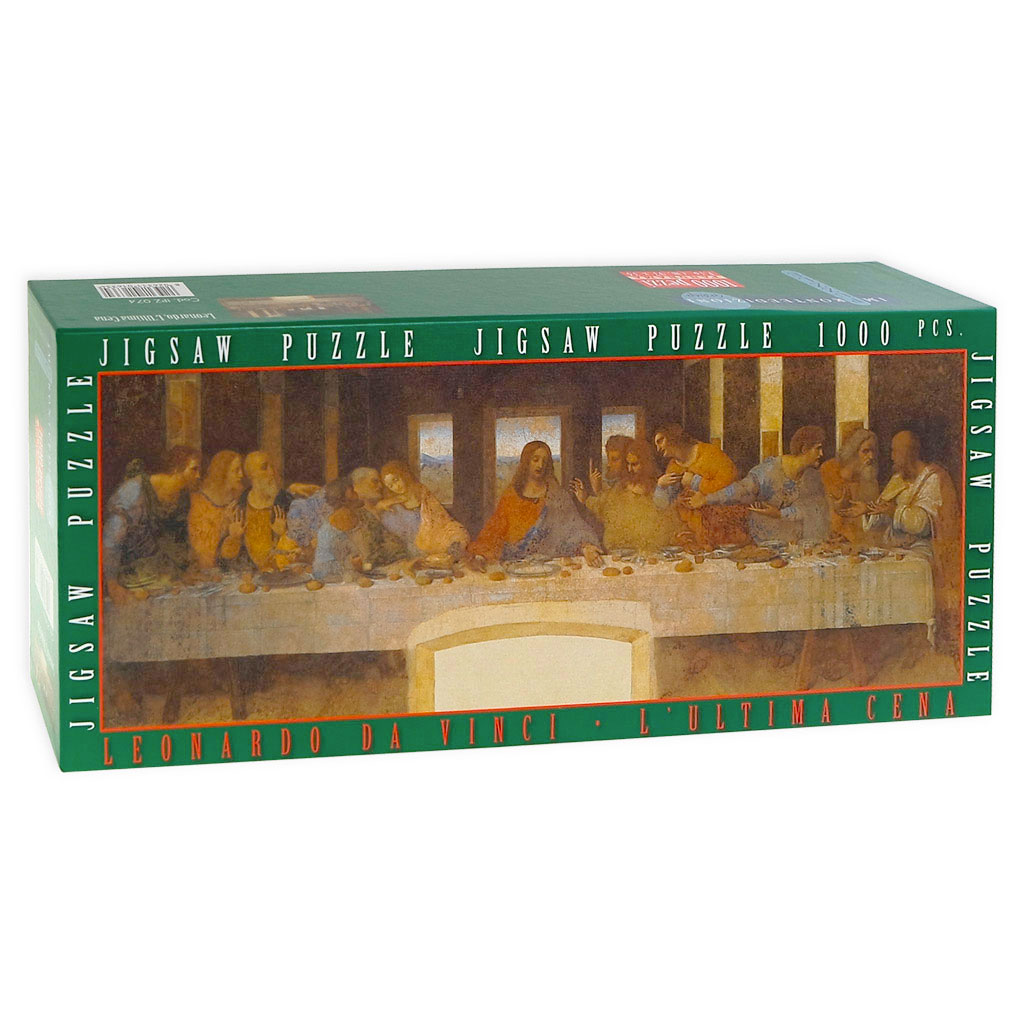
Leonardo da Vinci’s Last Supper puzzle is truly a classic of Renaissance art.
By putting this puzzle together piece by piece, you can relive one of the most important scenes in Catholic culture: Jesus’ announcement of his impending betrayal by one of his Apostles.
Discover this masterpiece in the 1000-piece edition from Impronte Edizioni

Questo puzzle è momentaneamente esaurito.

Nel frattempo, ti suggeriamo alcuni puzzle d’arte che potrebbero piacerti!

Altri puzzle di Leonardo da Vinci

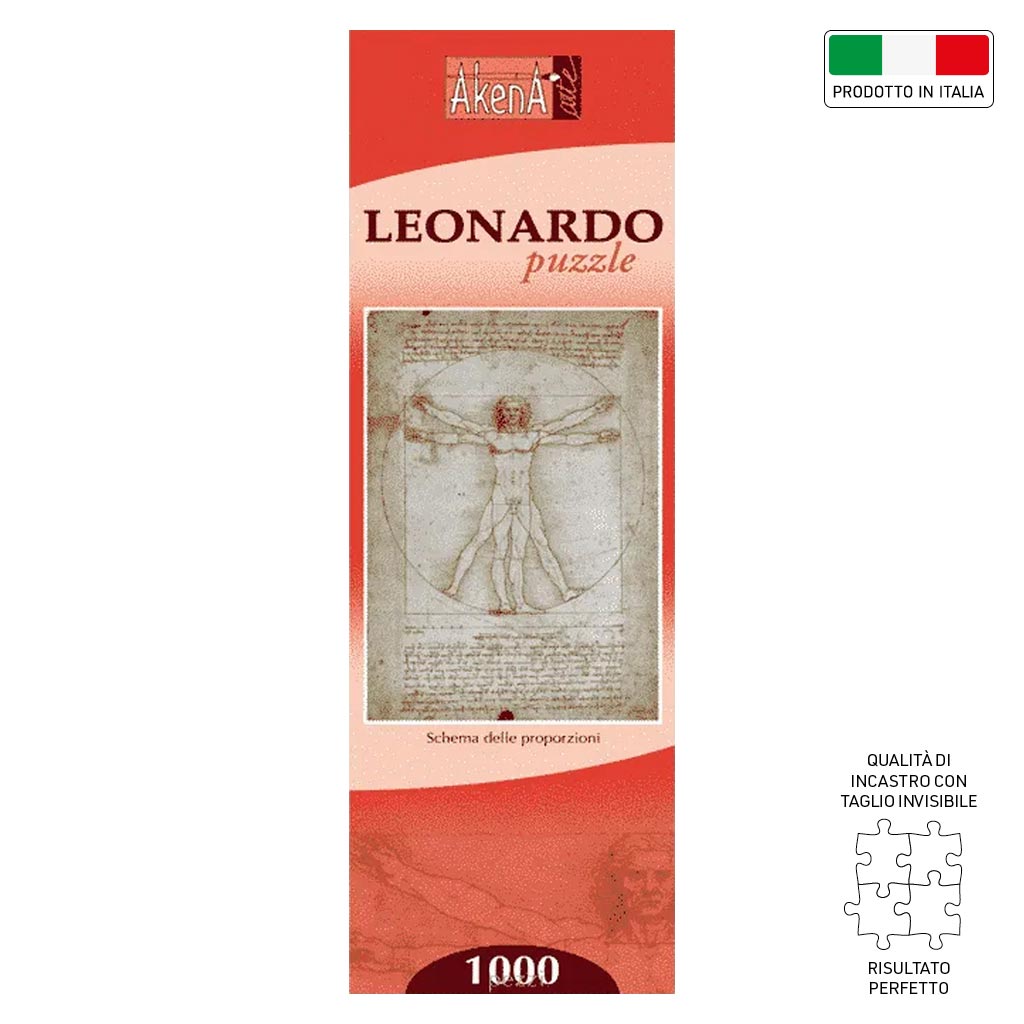
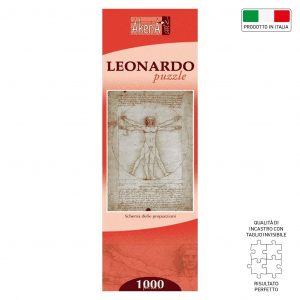
Puzzle Uomo Vitruviano
Leonardo da Vinci’s Vitruvian Man Puzzle – 1000 Pieces
23,99
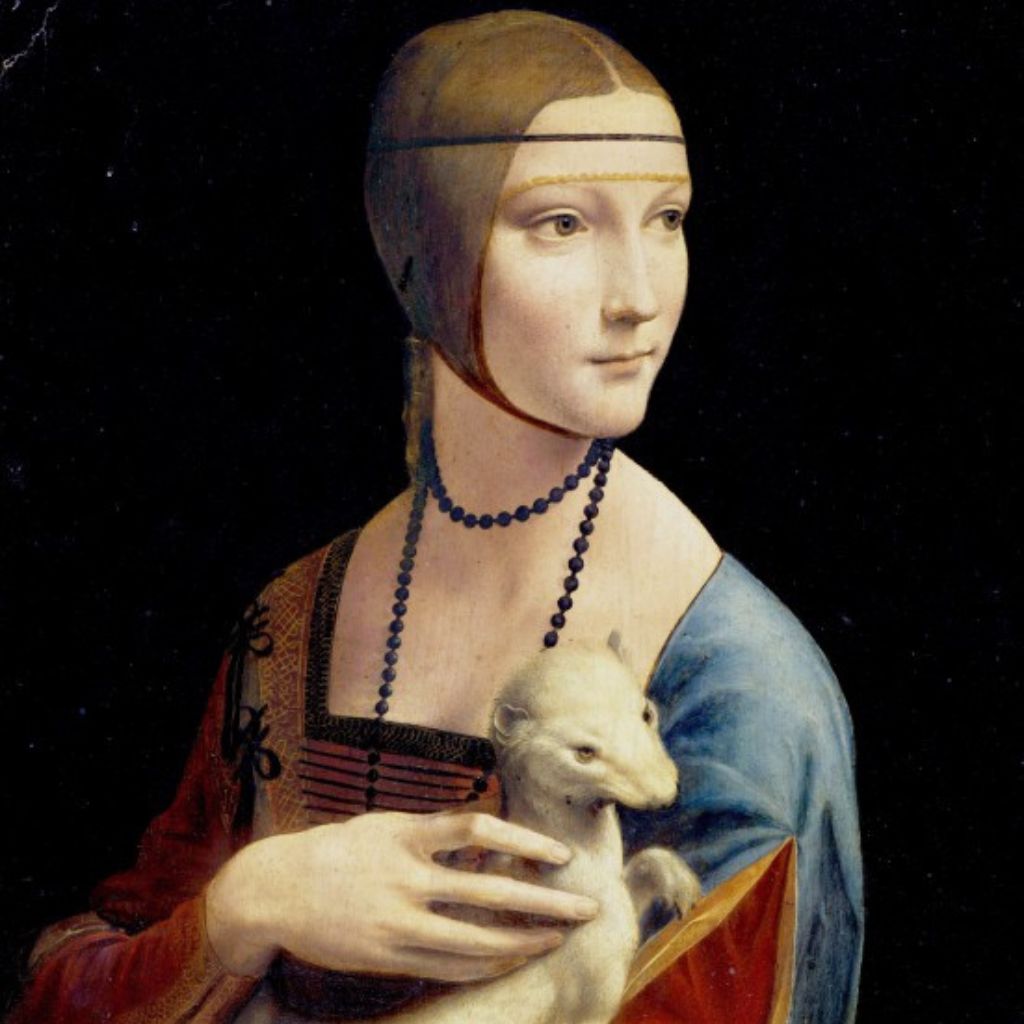
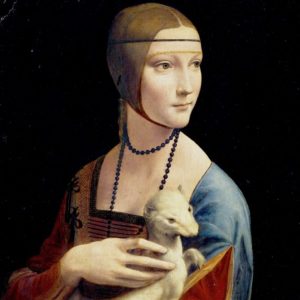
Puzzle Dama Con L'ermellino
Leonardo da Vinci’s Lady with an Ermine Puzzle
25,00€ – 45,00€Price range: 25,00€ through 45,00€
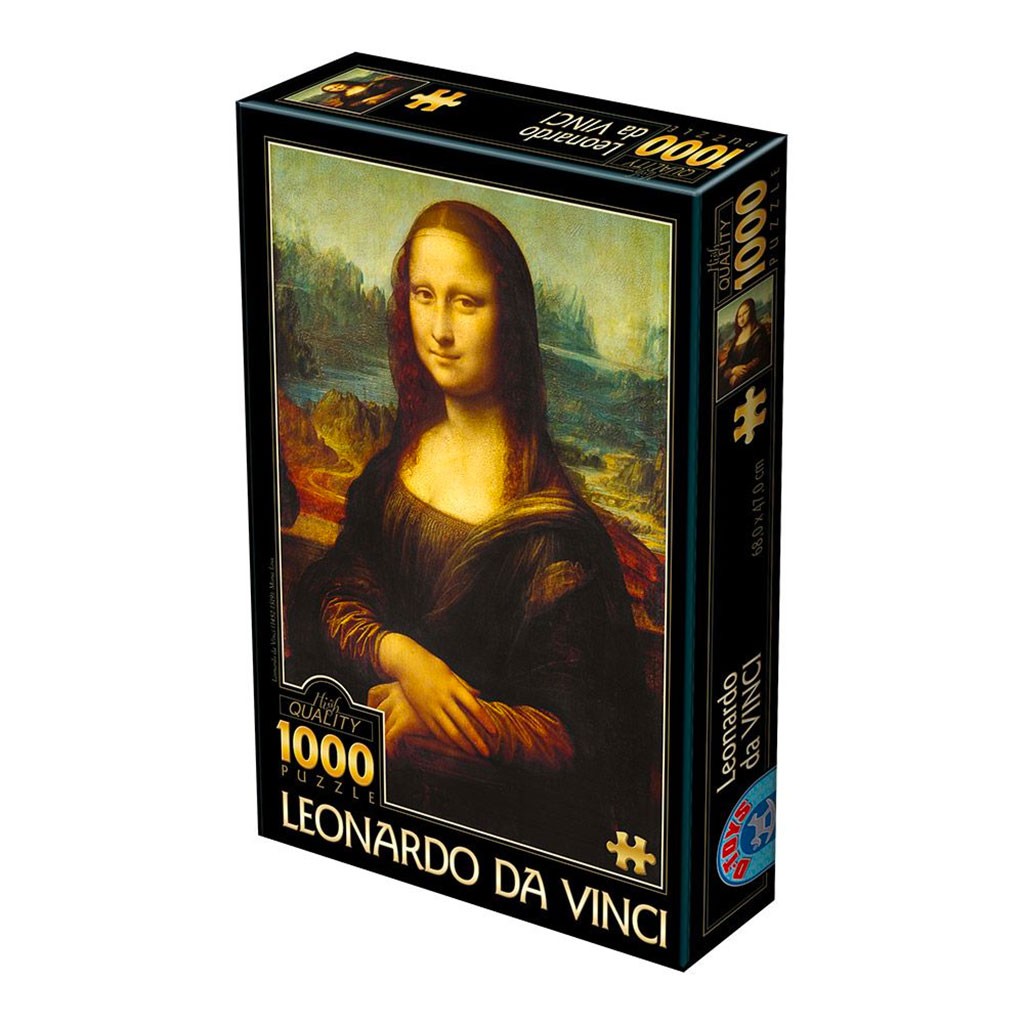
Puzzle Gioconda Arte Dtoys 1000 Pezzi
Leonardo da Vinci’s Mona Lisa Puzzle – 1000 Pieces
25,00

Puzzle Features

Leonardo da Vinci ‘s “Last Supper” puzzle is a wonderful way to discover the fascinating world of the great Renaissance scholar.

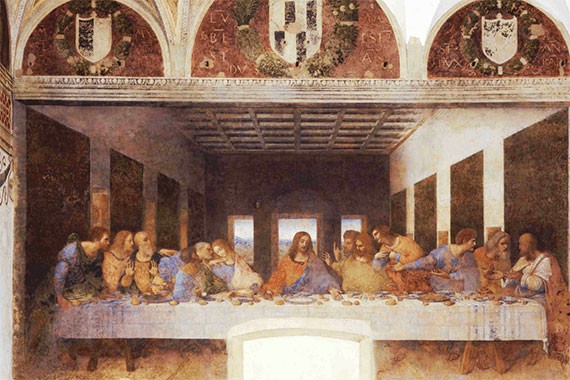
In fact, thanks to the detailed study of the Last Supper fresco , one can discover, piece by piece in this Leonardo Da Vinci puzzle, every little detail and every brushstroke of the Tuscan master.
The colors and shapes of the work encapsulate all the beauty of a troubled and difficult history, including restorations and bombings.

The Last Supper Puzzle in Detail

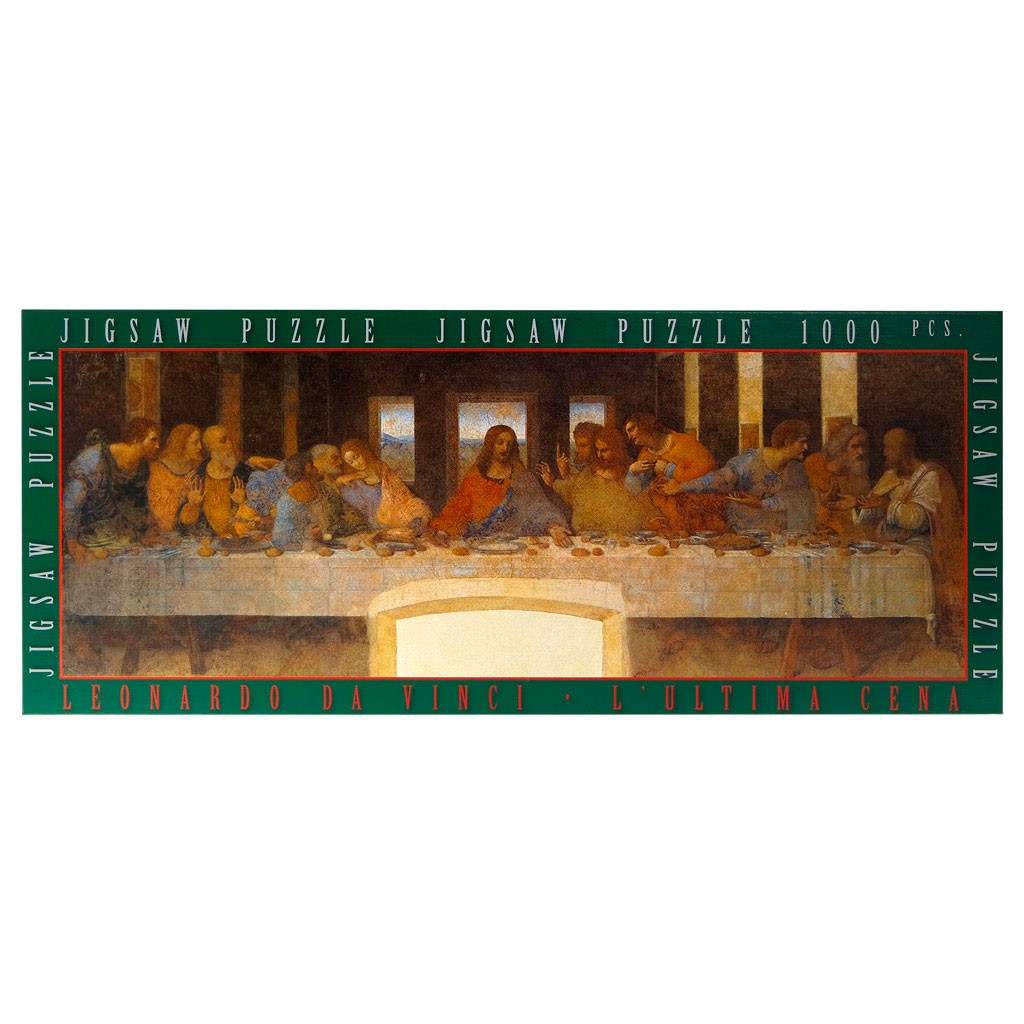
The 1000-piece Impronte Edizioni Last Supper puzzle is truly a masterpiece of Renaissance art.

This version proposes an extremely famous subject, the dinner of Christ with his disciples, in a very fascinating panoramic version.

The image is well defined and all the details stand out enormously.
The play of light and chiaroscuro allows us to appreciate the perspective technique typical of the art of this period.

The pieces of the Last Supper puzzle fit together perfectly and there are no glitches in reconstructing such a complex scene and such detailed characters.

Number of Puzzle PiecesNumber of pieces
1000
Puzzle BrandsBrand
Footprints
Editions
Puzzle DimensionsPuzzle dimensions (cm)
97 x 34
Puzzle Box DimensionsBox dimensions (cm)
39 x 16 x 6.5

Well finished box
Wonderful gift idea

Famous work of art
Renaissance art

1000 pieces
panoramic puzzle

Description of the artwork

In 1494 Leonardo Da Vinci received an important commission from Ludovico il Moro , who had chosen the Dominican church of Santa Maria delle Grazie as the site of the Sforza family.
The Duke of Milan had financed major renovation and embellishment works throughout the complex.
In fact, Bramante had just finished working on it when it was decided to begin decorating the refectory.

For this purpose, a traditional decoration was chosen on the minor sides, one representing the Crucifixion and the other the Last Supper .
Donato Montorfano worked on the Crucifixion, completed in 1495, creating a scene with a traditional setting.

Instead, the Last Supper was commissioned to Leonardo da Vinci, who was described by Matteo Bandello, in the novel LVIII dated 1492, who was staying in the building for study reasons at that time, providing a precious testimony of the modus operandi of Leonardo’s Last Supper:

«He used […] to go up to the bridge early in the morning, …from sunrise until dusk, never taking his brush out of his hand, but forgetting about eating and drinking, he continually painted…However, he would sometimes linger for an hour or two during the day and simply contemplate, consider, and examine his figures to himself, judging them. I have also seen him, depending on his whim or whim, leave at midday, when the sun is in the sky, from the Corte Vecchia where he was composing that stupendous clay horse, and come straight to the Grazie, and having ascended the bridge, take his brush and give one or two strokes to one of those figures, and usually leave and go elsewhere.»

The magnificent technique of a difficult painting

Leonardo did not like the fresco technique , whose speed of execution, due to the need to spread the colours before the plaster dried and trapped them, was incompatible with his method, made up of continuous second thoughts, additions and small modifications.

He therefore chose to paint on walls as he painted on wood.
In fact, recent restorations have made it possible to ascertain that the artist worked on the painting using a technique typical of panel painting .

The painting’s primer consisted of a mixture of calcium and magnesium carbonate bound together by a protein binder; before applying the colors, the artist interposed a thin layer of white lead, which was supposed to enhance the light effects.

The dry colours were then applied, consisting of a greasy tempera probably made by emulsifying the egg

This technique allowed Leonardo to create fantastic chromatic effects and to bring out a particular richness in the painting, with a series of small brushstrokes.
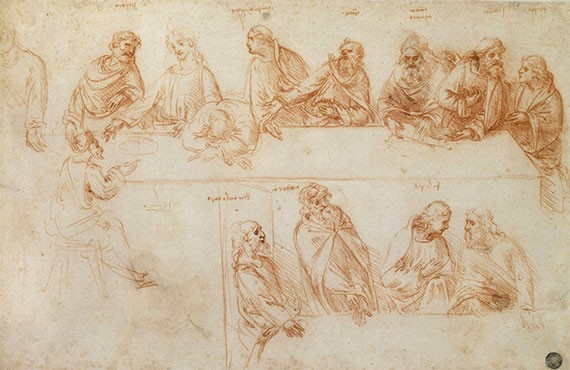
Thanks to these technical devices, Leonardo was able to achieve extreme attention to detail , a rendering of transparencies and light effects and small details visible only from close range.

The first conservation problems

However, these refined and sophisticated choices were also at the origin of conservation problems .

Unfortunately, with the painting still unfinished, Leonardo realized that the technique he had used immediately showed its serious flaws .
A small crack on the left side of the composition had already been described by the master during the work.
However, this was only the beginning of a process of disintegration that would continue inexorably over time.
Only twenty years after its creation, the Last Supper had suffered very serious damage , so much so that Giorgio Vasari , who saw it in May 1566, wrote that “nothing can be seen anymore except a dazzling stain”.

The slow crumbling of a treasure

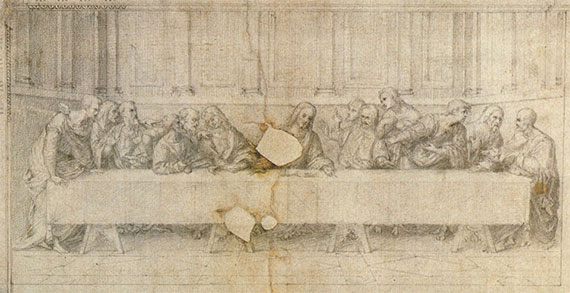
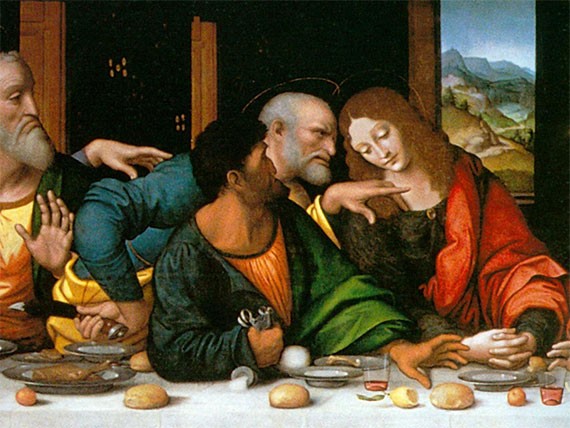
To understand how devastating the damage was, just compare the original with one of the many copies of the work, such as that of Giampietrino: the bright colors and vivid forms must have been as magnificent and impressive in Leonardo’s original work.

The work underwent numerous restoration attempts over time, which sought to remedy the damage, stabilizing the falls and, often, providing actual repainting .

However, restorations have not always fully respected the work. For example, the apostle Peter, with his low forehead, is one of the most disturbing figures in the entire composition; but copies show that his head was originally tilted back and seen from a foreshortened angle.

The deformations of the restoration

The restorer was not always able to follow this difficult design and so deformities often resulted.

The same failure occurs when dealing with uncommon poses such as those of the heads of Judas and Andrew.

The difficult story of the Last Supper, however, does not end with the complex restoration works .
In fact, at the beginning of the 19th century, Napoleon’s troops transformed the refectory into a bivouac and stable.

Even more serious damage was caused during the Second World War , when the convent was bombed in August 1943.
The vault of the refectory was destroyed, but the Last Supper miraculously remained safe among piles of rubble, protected only by a small roof, remaining exposed for several days to the risks caused by the elements.

The great restoration

After much study and research, in 1977 , the large and delicate restoration project began.
An operation destined to last more than twenty years, and to mobilize scientists, art critics and restorers from all over the world.
The work was now chipped and damaged everywhere: broken into millions of microscopic pieces, dust had crept in, trapping the humidity in the walls, thus creating the conditions for the painting’s inexorable disappearance.

Once the restoration began, the discoveries also began.
In fact, the hole left by a nail hammered into Christ’s head was found: here Leonardo had hung the threads to draw the entire perspective.

The restoration was completed in 1999 .

This work is not only an important piece of art history, but it is a tangible example of the genius and study of the Renaissance and of the man.
In fact, the Last Supper was declared a World Heritage Site by UNESCO in 1980 .

Irises, Van Gogh: The Story of One of the World's Most Expensive Paintings

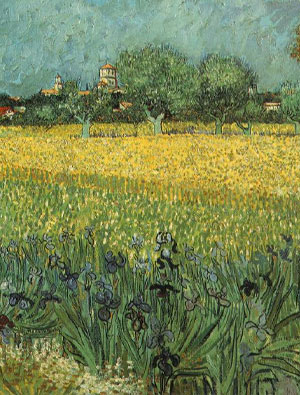
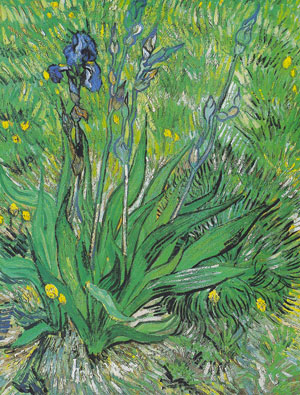
This painting, entitled Irises , was painted by Van Gogh in 1889, a year before his death. He was inspired by the garden of the psychiatric hospital where he was being held at the time.

During his stay in the facility, painting is a faithful companion to Vincent who never abandons him, and at the same time, he never stops writing to his brother Theo, updating him on his state of mind and letting him know how he was getting on with the other patients.

Honestly, at first Vincent thought he couldn’t cope, but with tenacity he managed to resist, to the point of feeling a certain “harmony” with the other patients, and he came to the conclusion that he wasn’t alone in having to deal with mental health problems.

While the patient Van Gogh follows the doctors’ instructions, the painter Van Gogh realizes it’s time to get to work (not even a week had passed since his hospitalization), and after becoming familiar with the environment, his eye immediately falls on the nature surrounding the hospital and notices the presence of flowers, trees, and natural views: he couldn’t have asked for anything better for his new paintings!

Iris is indeed a work full of air and life. Each flower painted by the artist is unique. Van Gogh carefully studied the plant’s movement and forms to create a variety of silhouettes, wavy, folded, and curled lines.

The painting “Iris” is located in the J. Paul Getty Museum in the United States.

Reviews

There are no reviews yet.

Show reviews in all languages (8)

Be the first to review “Last Supper Puzzle – Leonardo”

Your email address will not be published. Required fields are marked *

Complimenti!

hai una vera passione per l'arte!

Visto che sei arrivato fino a qui, meriti un premio!
Ecco uno sconto del 10% per il tuo prossimo capolavoro! ✨

Cosa se ne pensi di questi puzzle d'arte simili...

39,90

In offerta!

Original price was: 25,00€.Current price is: 22,90€.

Hot Hot

35,00

Hot Hot

35,00