

Home / Flemish painters: Puzzle Arte’s favorites
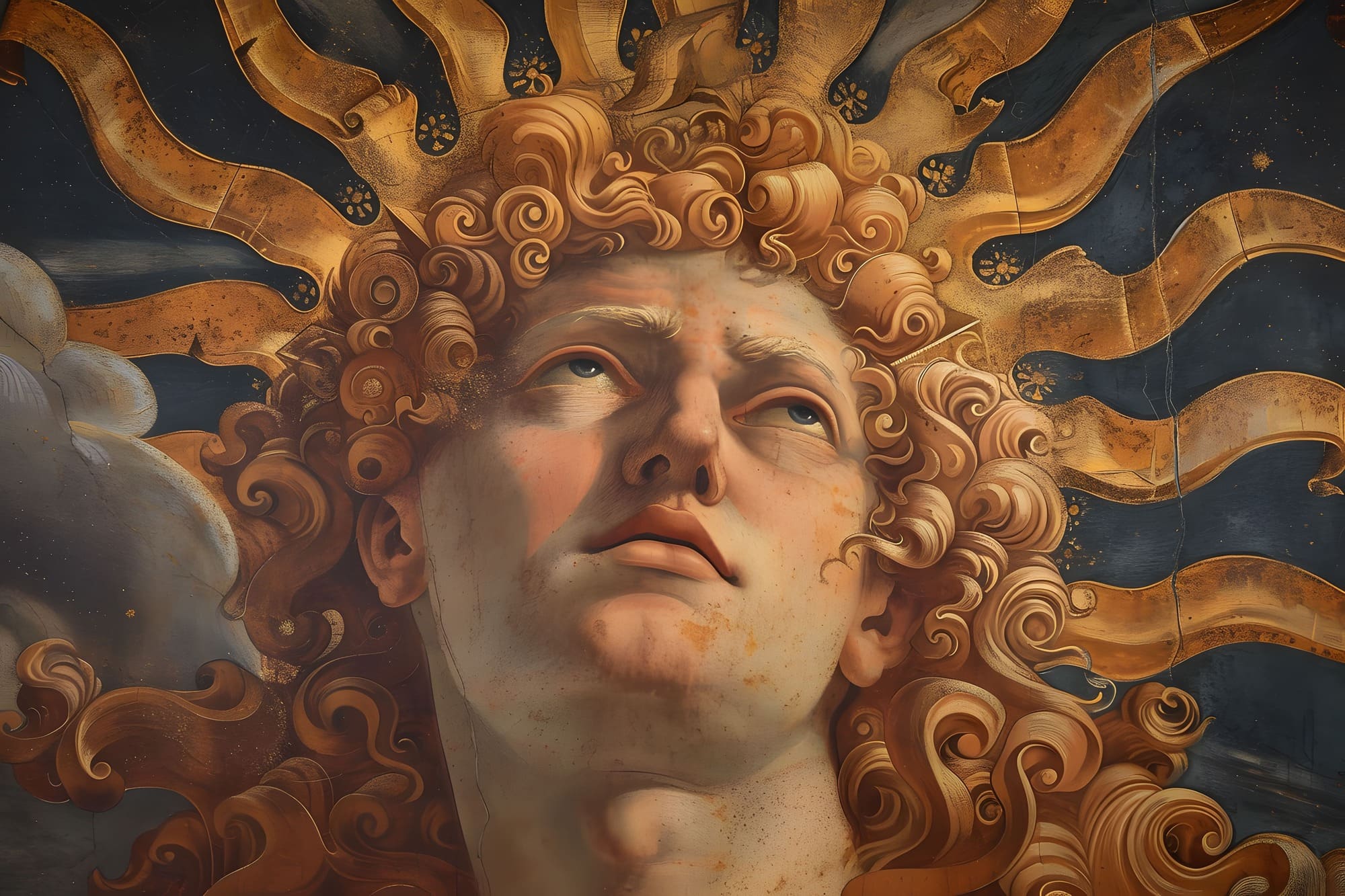
Among Puzzle Arte’s favorite Flemish painters are Bosh Hyeronimus , Pieter Bruegel the Elder , and Jean Vermeer . Together with others, they represent the great contribution of Flemish culture to European pictorial art. It stands out in particular for its use of oil paints, its spatiality unified through light, and its detailed vision of reality. Also, for its taste for miniaturism and three-quarter portraits.
The most famous of the Flemish painters is Jan van Eyck, founder of the school of painting that emerged in the 15th century in the affluent Flanders region. The first generation of artists also cites two other great masters, Rogier van der Weyden and Robert Campin. The second generation, which saw the flourishing of other cities such as Bruges and Brussels, cites Petrus Christus and Dieric Bouts. In the final years of the 15th century, artistic representation took on a nostalgic connotation that shied away from the changes taking place. Hans Memling and Hugo van der Goes stand out here. Noteworthy is the influence that Flemish painting had on all European art, especially on a technical level. Oil painting replaced the previous tempera technique everywhere.
The attention to detail and the most diverse objects removes man from the center of the scene. Unlike the humanists, the Flemish painters relegated man to a part of the universe. Not everything can be traced back to the ordering principle of rationality. Individual objects gain importance in the pictorial representation. They take on a strong symbolic value that lends itself to different meanings and interpretations.
The variety of meanings, along with elegant and detailed depictions, distinguish Flemish painters among the most sought-after. They also pioneered a new viewing perspective: no longer profile or frontal, but three-quarters. This perspective allows for greater detail and insight into the physiognomy.
Miniaturism involved the painter tracing a rough, easily modifiable outline onto a white primer, followed by a rough sketch of the model. Over this, he then applied a base color—better known as primer—which represented the medium of the colors. This was where the chiaroscuro began, and all the figures were then reproduced with successive layers of lightly shaded glazes.
The Flemish painters of the 15th century belong to what is known as the “Flemish Primitives.” They painted religious subjects and showed an interest in portraits and landscapes. Using oil techniques, these painters developed a style characterized by miniaturism, naturalism, and a love of landscape. The historical, geographical, and economic context was crucial. First and foremost, artistic production of the period encompassed the entire Low Countries, which was larger than Flanders. Indeed, the centers of greatest artistic influence were Bruges, Ghent, and Antwerp. The most influential painters of the Low Countries were present here, but they were not necessarily native to the region or even trained there. Many came from the Netherlands or other countries. Only at the end of the 16th century did a split emerge, distinguishing between Flemish and Dutch painting.
The differentiation was not only geographical but also cultural. This was reflected in the figurative arts and influenced political events. While the North embraced the Protestant religion, the South remained Catholic. The repercussions on artistic production were clear. The North created an independent, bourgeois republic, while the South remained a possession of the Kingdom of Spain and continued to define itself as Flemish.
The Flemish Quattrocento, along with the Florentine Renaissance , is considered a cultural reference point for all of Europe. The strong religious sensibility fostered by the Western Schism had encouraged a closer relationship between man and God. Devotional books and images were more widely distributed, leading to an emphasis on spirituality. This attitude, frowned upon in Italy, led artists to focus on figurative research, more attentive to detail and everyday life. It was in this environment that Jan van Eyck’s new painting style was born. Unlike the Italian courts, where intellectuals stimulated reflection, artists in Flanders had no equal.
The great innovation introduced by Flemish painters was the development and refinement of oil painting. The technique they used remedied the drawbacks encountered until then. Since tempera dries quickly, it was difficult to blend colors. Oil colors, however, blended more easily, allowing for subsequent glazes. This gave the painting a bright and glossy appearance and allowed for the detailed definition of surface textures.
Unlike fifteenth-century Europe, Flemish painting did not produce frescoes. This was due to the use of oil painting, which favored tapestries. In Flanders, this practice also excelled thanks to the combination of the renowned textile production, which became wall decoration. One exception is Michael Coxcie, who frescoed two chapels in the Roman church of Santa Maria dell’Anima.
Following the Protestant Reformation, the split between what is now Belgium and the Netherlands was evident. The region had always enjoyed extraordinary economic and cultural prosperity. The influence of Italian art was particularly felt. However, local artists such as Hieronymus Bosch and Pieter Brueghel the Elder stood out for their originality. From the early 1500s, the area became a laboratory for international Mannerism. Frans Floris, Pieter Aertsen, Jan van Scorel, Maerten van Heemskerk, and Anthonis Mor are noteworthy here. Dutch art of that period was accused of being subordinate to Italian art, with the exception of Bosch and Brueghel the Elder.
At the beginning of the 17th century, with the birth of the Dutch Republic, North and South also separated in the artistic field. In Holland, the “Golden Age” took shape thanks to artists such as Rembrandt and Vermeer .
These depicted the values of mercantile and reformed society on a religious level. Here, sacred art lost importance and was relegated to the private sphere. Protestant churches no longer had room for the grandiose altars typical of Flemish art. Ecclesiastical, courtly, and aristocratic commissions were supplanted by the bourgeoisie. Examples include Vermeer ‘s and Pieter de Hooch’s Servants, and Rembrandt’s Anatomy Lessons.
Still life took on a renewed prominence. Full-length portraits on large canvases were replaced by group portraits. These represented the great city guilds, depicted in their pride. Typical scenes of Dutch group portraits include the farewell banquet of the heads of the city guards, or the military and police institutions where the Dutch bourgeoisie gathered in urban centers. The major artists specializing in group portraits were Frans Hals and Bartholomeus van der Helst.