

News from PuzzleArte
Home / Famous works of art through an illusionistic visual journey
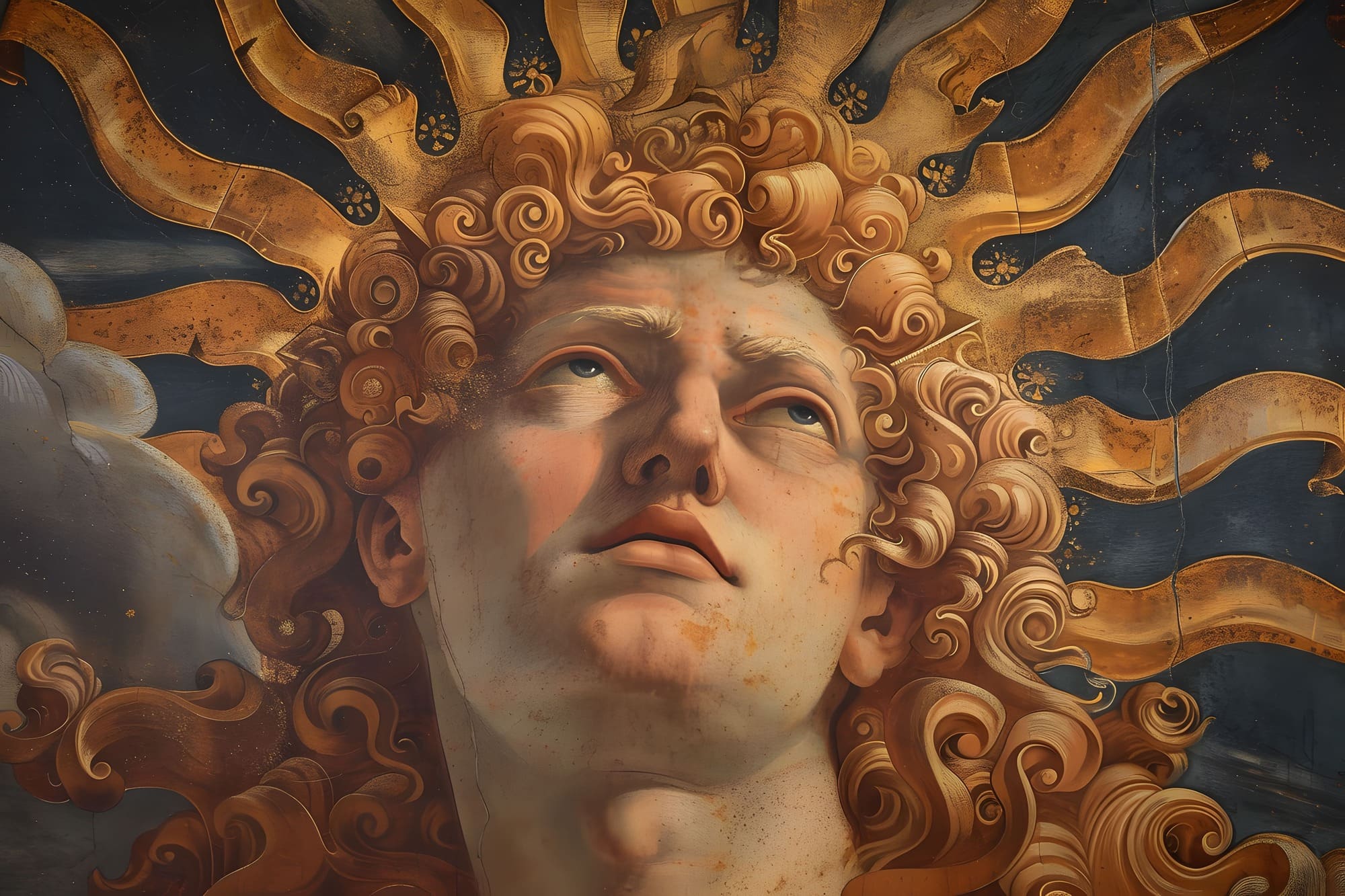
Famous works of art are a cultural heritage that spans time and space, inspiring generations of artists and enthusiasts. In the context of video projections, these works can be presented in innovative ways, creating immersive experiences that offer new perspectives on iconic masterpieces. In this article, we’ll delve into famous artworks featured in a video that creates the illusion of continually exploring new layers through zooming, giving the impression that behind each work there’s always something more to discover. We’ll also explore how these works can be reinterpreted in the context of puzzles, offering a unique way to interact with art.
The artist behind these artistic video projections sought to represent art in a new and modern context, highlighting how technological innovation can amplify visual impact. The ability to transform ordinary spaces into extraordinary artistic surfaces reflects a creative vision aimed at engaging and inspiring viewers. The message is clear: art can be experienced in new ways, creating a deeper connection between the artist, the work, and the audience.
The video is approximately 73 seconds long and has a frame rate of 28.99 frames per second. To better understand the famous artworks featured in the video, here’s a detailed description of the video’s content:
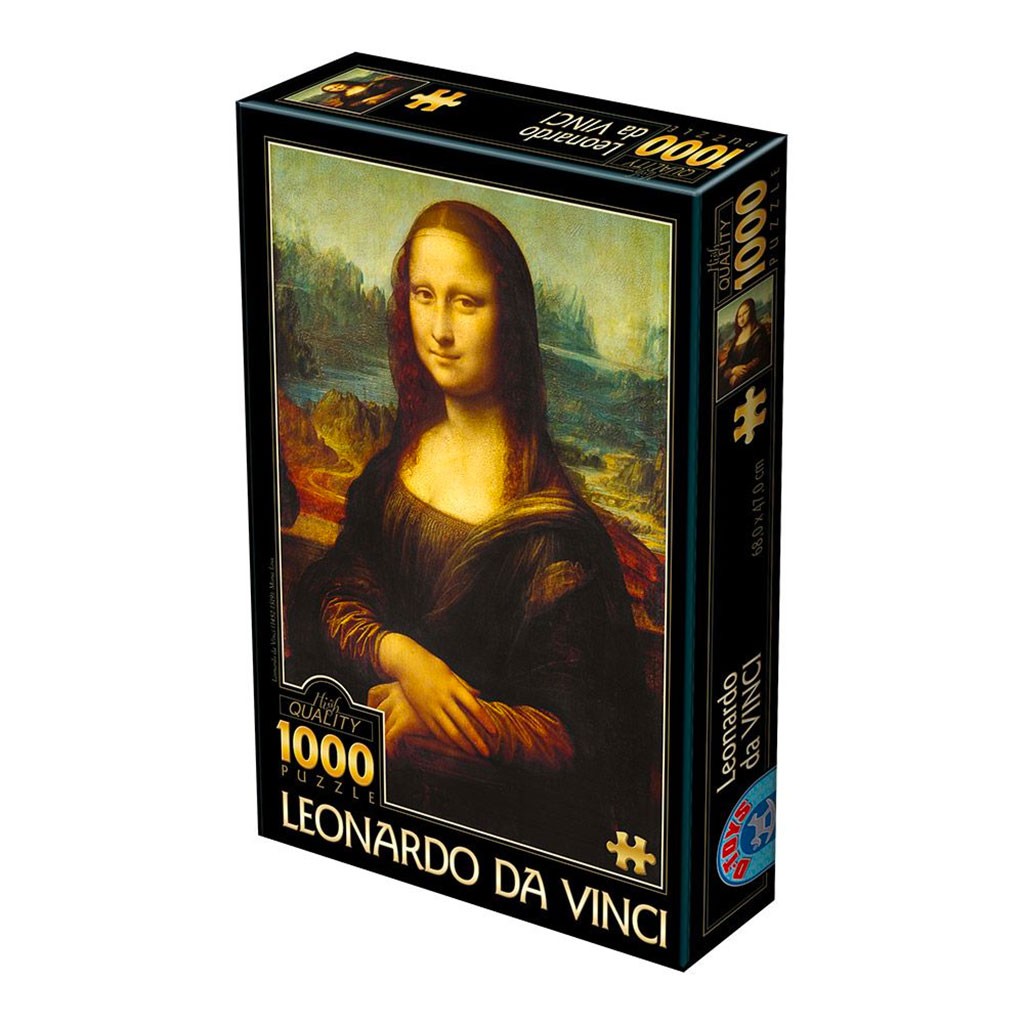
“The Gioconda,” also known as the “Mona Lisa,” is the world’s most famous portrait, painted by Leonardo da Vinci between 1503 and 1506 during the Italian Renaissance. The work is renowned for its enigmatic smile, which seems to change depending on the angle from which it is viewed. The painting depicts a woman seated on a chair, with a blurred landscape in the background, a hallmark of Leonardo’s genius. The use of “sfumato,” a technique that creates smooth transitions between colors and shapes, gives the Mona Lisa an ethereal, almost dreamlike quality.
The painting’s composition is remarkable for its balance and harmony. The woman’s posture and the way her hands rest delicately on her lap convey grace and tranquility. The landscape in the background is evocative, with hills and rivers lending depth to the scene. The Mona Lisa is often interpreted as an icon of feminine beauty and the enigma of femininity, an image that has inspired numerous artists and scholars.
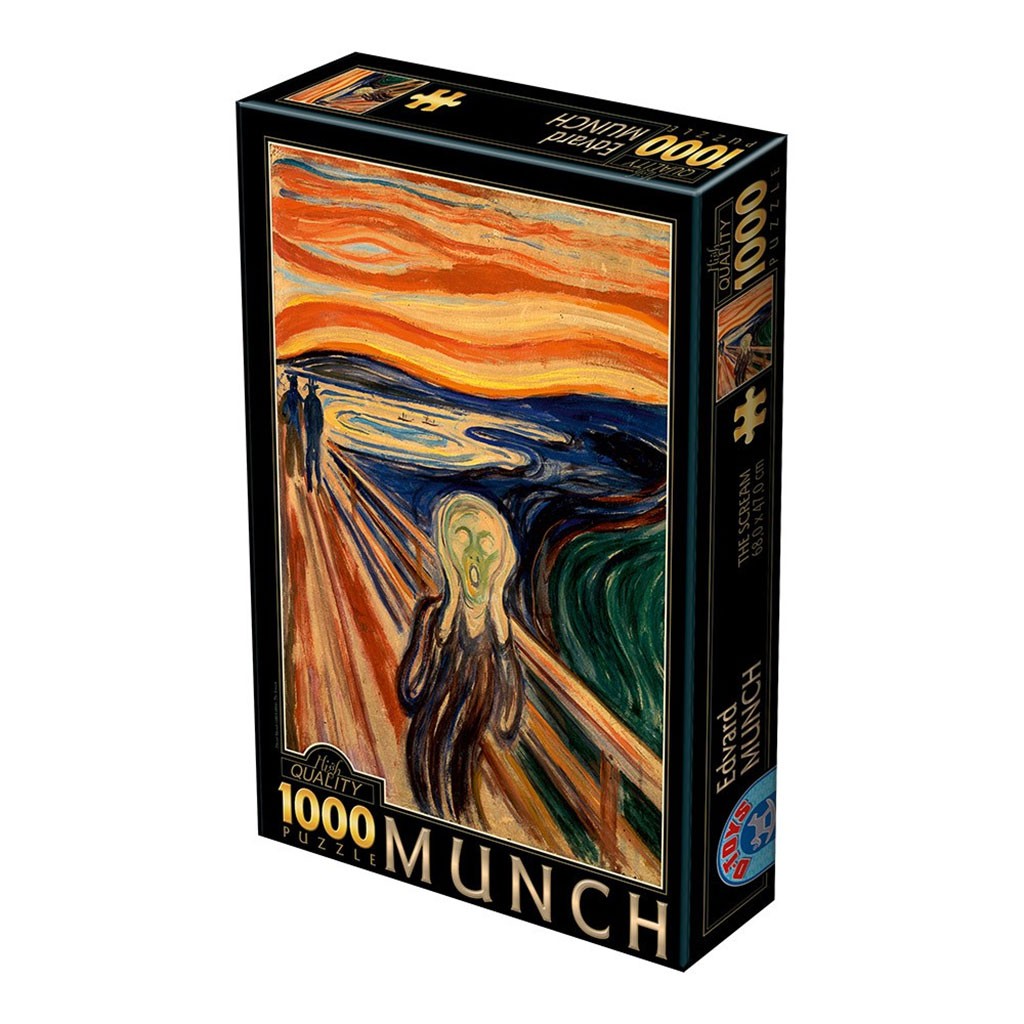
Edvard Munch’s “The Scream” is one of the most famous works in art history, created in 1893. The work is part of a series in which Munch explores themes of anxiety, alienation, and existential fear. The painting depicts a stylized human figure, with a terrified expression, on a walkway overlooking a dramatic landscape. The sky is depicted in intense, distorted colors, creating a surreal and unsettling atmosphere.
The expressive power of “The Scream” lies in the contrast between the central figure and the swirling sky. The scene suggests a sense of isolation and desperation, with the figure seemingly hearing a silent scream in the air. The work is often interpreted as a visual representation of anxiety and existential angst, central elements of the Expressionist movement. The Scream has become a universal symbol of fear and anguish, having a profound impact on popular culture.

“The Great Wave off Kanagawa,” also known as “Hokusai’s Wave,” is one of the most famous masterpieces of Japanese art, created by Katsushika Hokusai between 1830 and 1833. It is part of the series “Thirty-six Views of Mount Fuji,” which explores different perspectives of Japan’s sacred mountain. The painting depicts a gigantic wave crashing into small fishing boats, with Mount Fuji in the background. The wave, with its fluid curves and detailed foam, creates a sense of swirling motion, lending the work a powerful dynamic energy.
The contrast between the force of the wave and the tranquility of Mount Fuji in the background adds depth to the composition. The ukiyo-e technique used to create the print allows for intricate details and vibrant colors, giving the scene an almost surreal feel. The “Great Wave” has become a symbol of Japanese culture and a global art icon. Its popularity has influenced numerous Western artists, including Vincent van Gogh and Claude Monet, and continues to inspire new adaptations and reinterpretations.
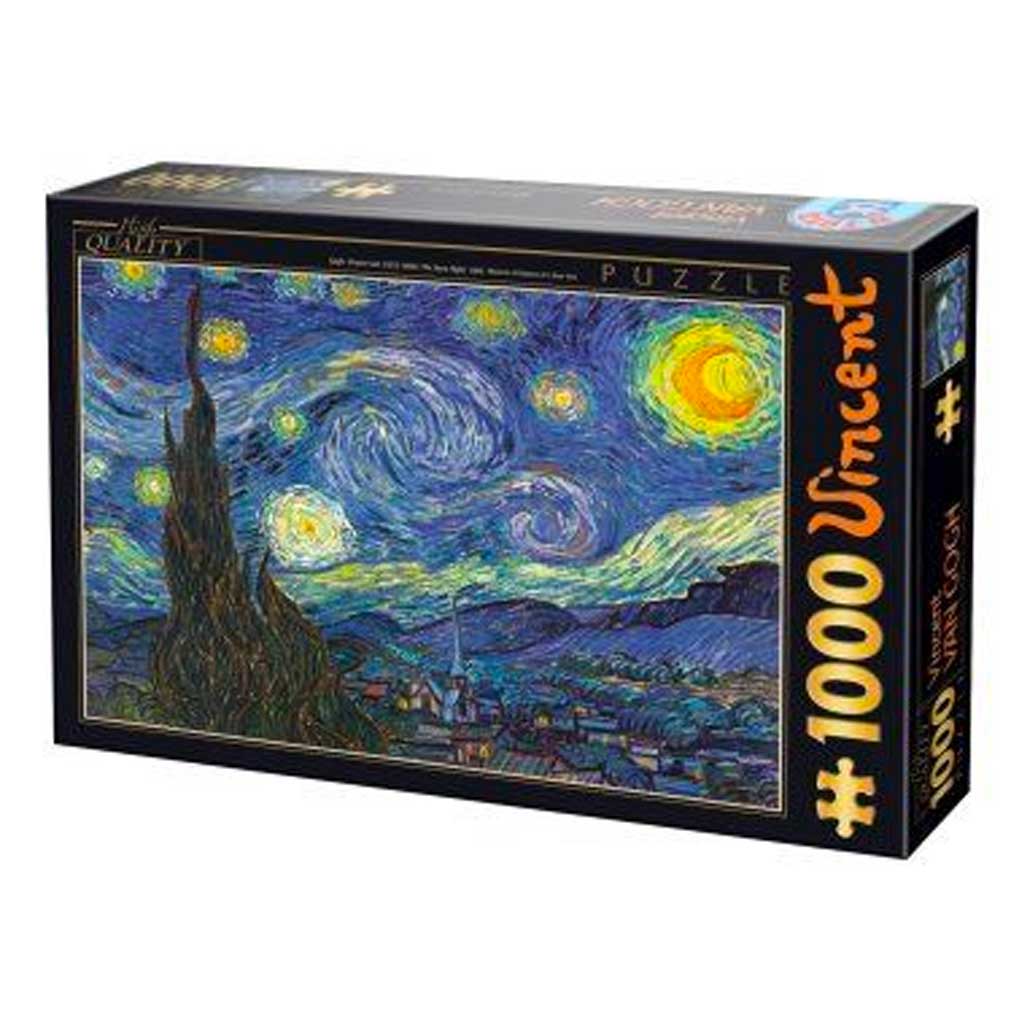
“The Starry Night” is one of Vincent van Gogh’s most famous works, painted in 1889 while the artist was in a sanatorium in Saint-Rémy-de-Provence. The work depicts a swirling night sky with bright stars and a tranquil village in the background. The composition is characterized by fluid movement and vibrant colors, elements that give the painting a sense of dynamism and emotional intensity.
Van Gogh uses thick, bold brushstrokes to create a sky that seems alive, with swirls suggesting movement and energy. The cypress tree in the foreground adds drama and balances the composition. The Starry Night is often interpreted as an expression of Van Gogh’s turbulent emotions and his relationship with nature and the universe. The work has become a symbol of the artist’s creativity and unique vision, inspiring numerous artists and enthusiasts.
Grant Wood’s “American Gothic” is an iconic painting depicting rural American life, created in 1930. The work depicts a couple: an older man with glasses and a pitchfork in his hand, and a younger woman wearing a black dress and a decorative brooch. In the background is an American Gothic-style house with pointed windows and wood siding. The couple’s austere, serious appearance suggests a connection to the work ethic and traditional values of the Midwest.
The interpretation of “American Gothic” has been the subject of debate. Some see the painting as a satire of rural American culture, while others consider it a tribute to the resilience and determination of farmers. The symmetrical composition and attention to detail give the work a sense of stability and firmness. Grant Wood succeeded in creating an image that has become an integral part of American culture, with references in various contexts, from literature to film. The work represents the complexity of American society and its constant tension between tradition and modernity.

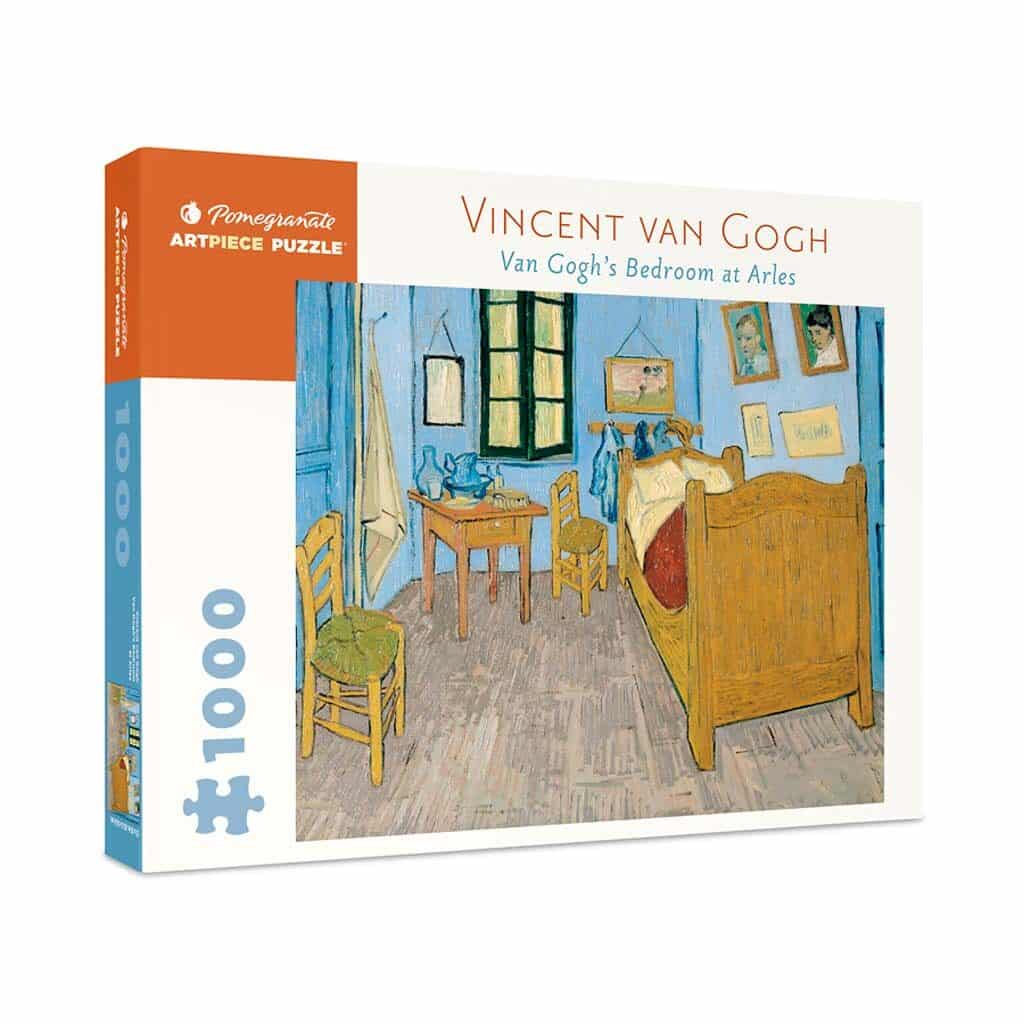
“Van Gogh’s Bedroom in Arles” is another famous work by Vincent van Gogh, created in 1888 during his stay in Arles, France. The work depicts the artist’s bedroom, with a simple yet deeply expressive composition. The scene features a bed, a chair, a table, and a few other elements, all rendered in vibrant colors and bold outlines.
Van Gogh uses bright colors to create a sense of vitality and energy in the scene, with red and yellow dominating the composition. The perspective is slightly distorted, giving the painting an almost dreamlike quality. The Dormitory at Arles is often interpreted as an expression of Van Gogh’s desire to create a comfortable and familiar environment, despite personal difficulties. The work is an example of the artist’s extraordinary ability to transform everyday scenes into something extraordinary.
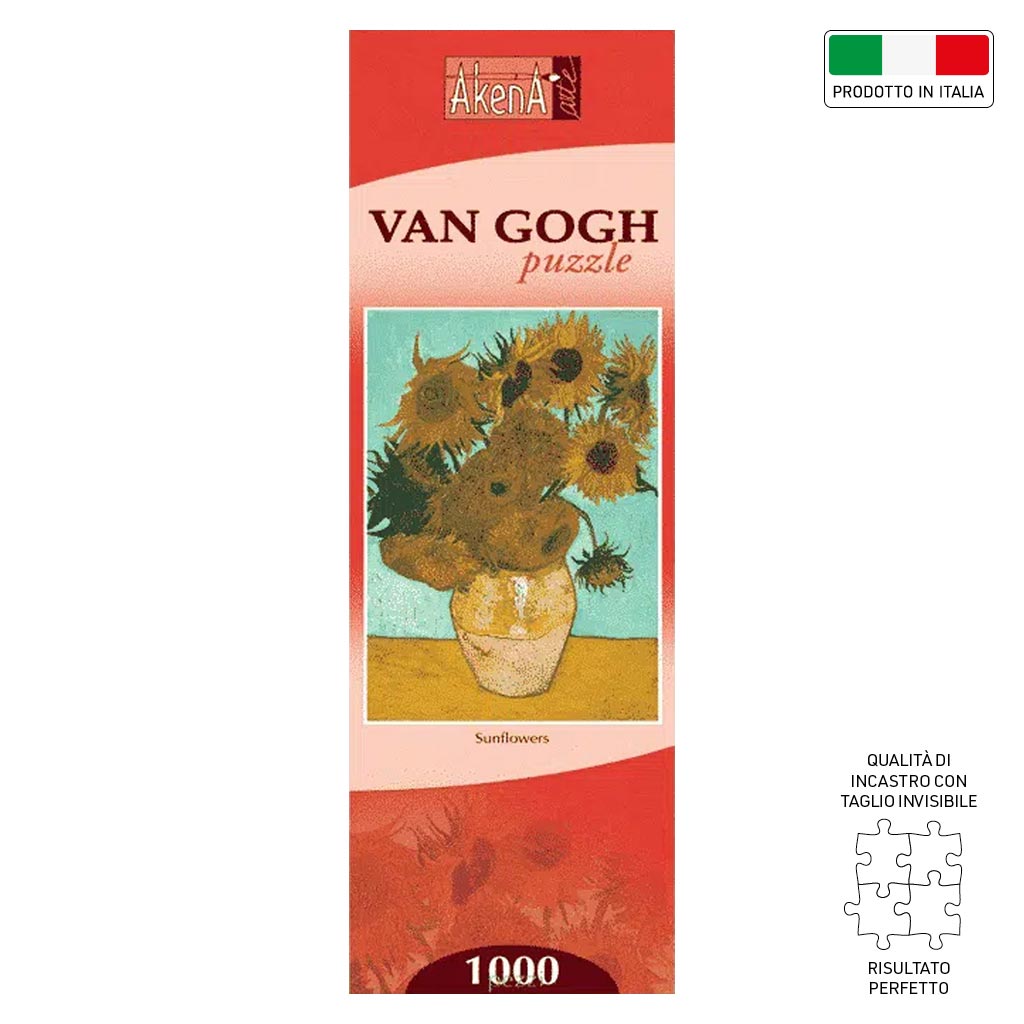
Vincent van Gogh’s “Sunflowers” is a series of paintings that continues to inspire and fascinate generations of artists and enthusiasts. The combination of vibrant colors and dynamic brushstrokes gives these paintings a unique vitality, while the underlying symbolism adds depth and complexity. Through puzzles and video projections, you can explore “Sunflowers” in new ways, appreciating the beauty and complexity of this iconic series.
Van Gogh’s legacy is closely linked to these paintings, which have become symbols of his extraordinary creativity and artistic vision. Sunflowers continue to be a recurring motif in art and popular culture, representing the beauty of nature and the complexity of human emotions.
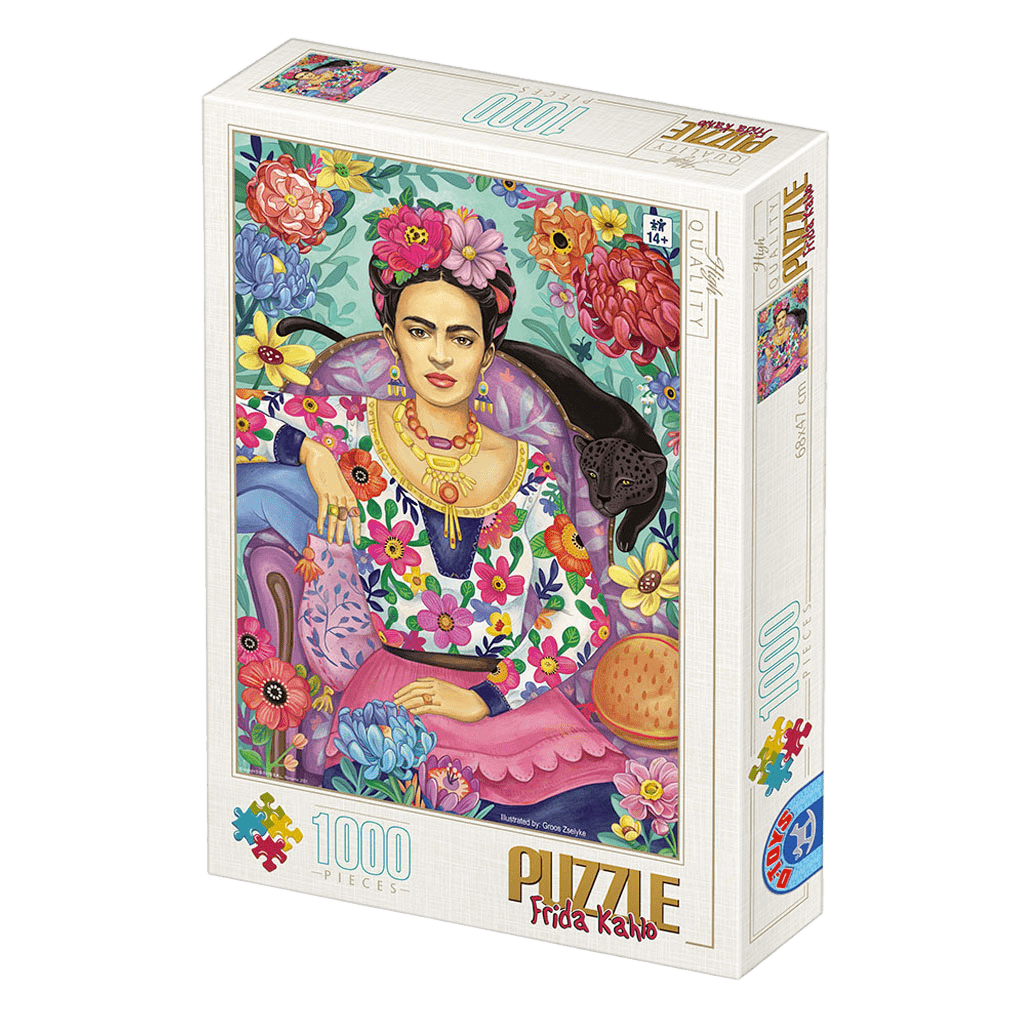
“Portrait of Frida Kahlo” refers to one of the many self-portraits created by Mexican artist Frida Kahlo. Kahlo is famous for her paintings that explore themes of identity, grief, and resilience. In her self-portraits, Frida often depicts herself with symbols that reflect her personal experiences and Mexican culture. Kahlo’s works are known for their emotional intensity and vibrant colors, elements that capture attention and convey a strong personality.
In many of her self-portraits, Kahlo depicts herself with natural elements, such as flowers, animals, or leaves, symbolizing her connection to the land and Mexican tradition. Her paintings often tell stories of personal suffering, illness, and complex relationships, but also of strength and determination. Frida Kahlo left a lasting legacy as one of the most iconic artists of the 20th century, and her self-portraits continue to inspire and captivate with their emotional depth and visual beauty.
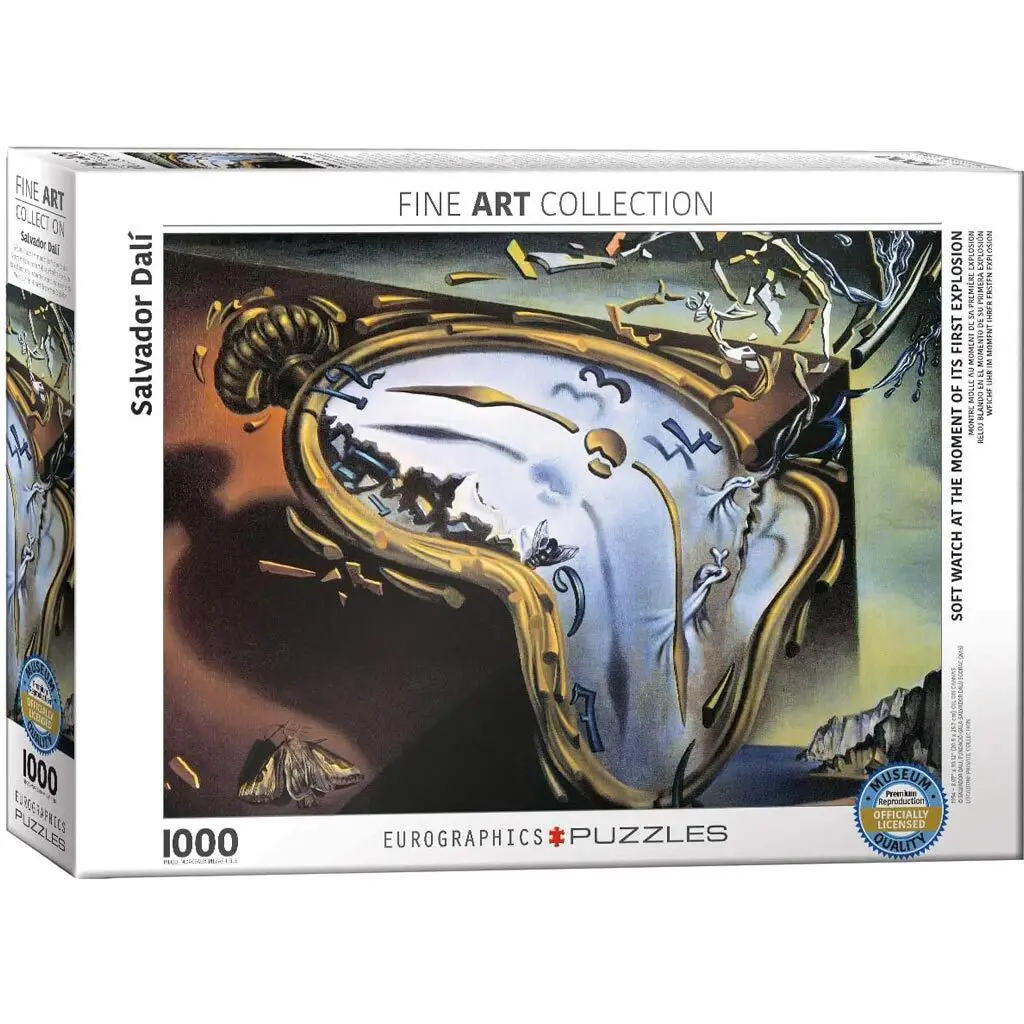
“The Persistence of Memory” is one of Salvador Dalí’s most famous works, created in 1931 during the Spanish artist’s Surrealist period. The work is famous for its melting clocks, which seem to melt and deform, and for its dreamlike, surreal atmosphere. The painting depicts a desolate landscape, with natural and man-made elements combining in unexpected ways.
The painting depicts a series of melting clocks on various objects, such as a dry tree and a rectangular structure. These distorted clocks are the work’s most recognizable symbol and are often interpreted as a representation of the fluidity and relativity of time. In the background, an arid and desolate landscape extends to a horizon that fades into a calm sky. The human element is represented by a distorted, almost anthropomorphic figure lying at the center of the scene, adding a further touch of surrealism.
The contrast between the melting clocks and the static landscape creates a fascinating and disorienting visual effect. Dalí uses muted colors and soft transitions to give the painting an ethereal atmosphere. The chiaroscuro technique and use of perspective contribute to the sense of depth and three-dimensionality.
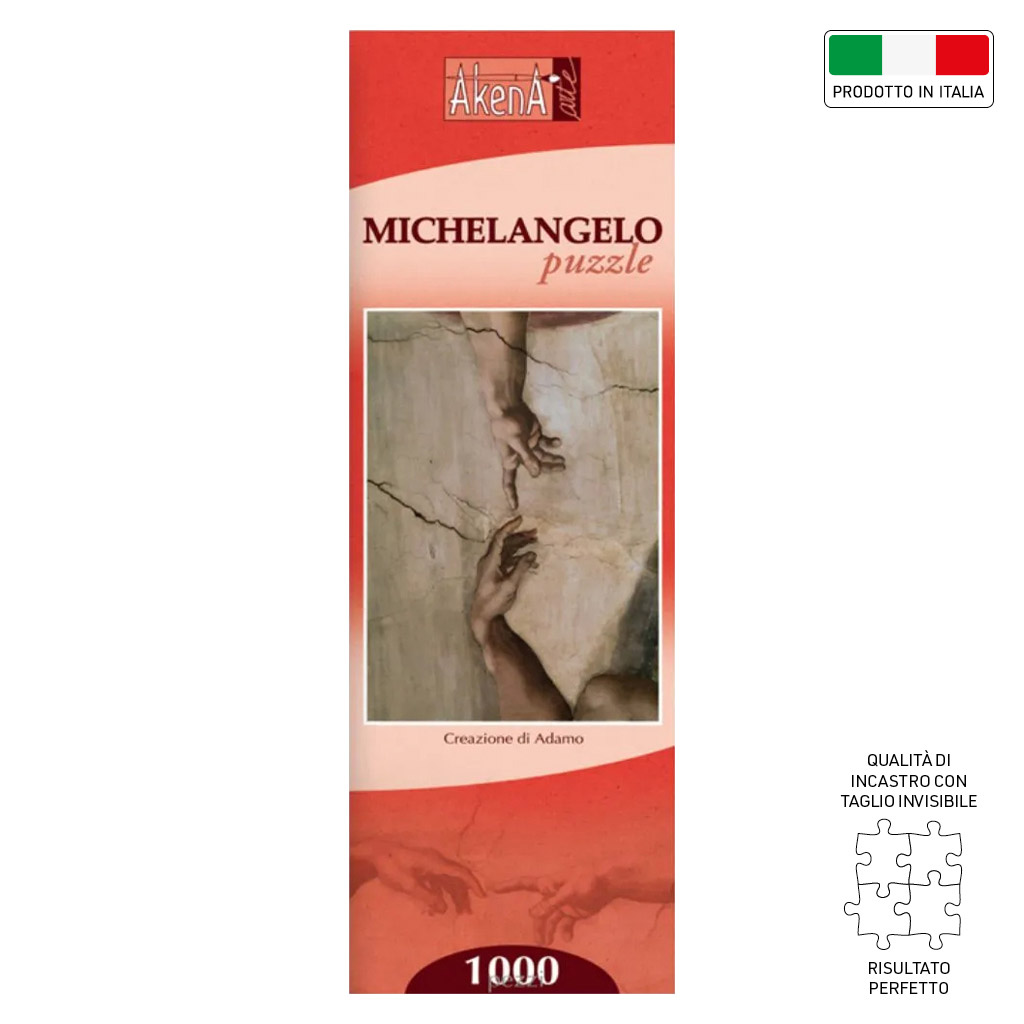
“The Creation of Adam” is one of the most famous panels in the Sistine Chapel, painted by Michelangelo between 1508 and 1512. The work depicts the biblical moment when God gives life to Adam, the first man, creating an iconic image that has had a profound impact on Western culture. The composition shows God, surrounded by angels, approaching Adam with an outstretched arm. Their hands almost touch, suggesting the transmission of life and the connection between the divine and the human.
The scene is characterized by a perfect balance between the divine and human figures, with Michelangelo using chiaroscuro to create depth and drama. The precise anatomy and dynamic poses lend an unprecedented majesty to the scene, highlighting Michelangelo’s technical and artistic prowess. The work is often interpreted as a symbol of the connection between the divine and the human, a central theme in the Renaissance and the Christian religion. The cultural impact of “The Creation of Adam” was enormous, becoming a recognizable icon throughout the world.
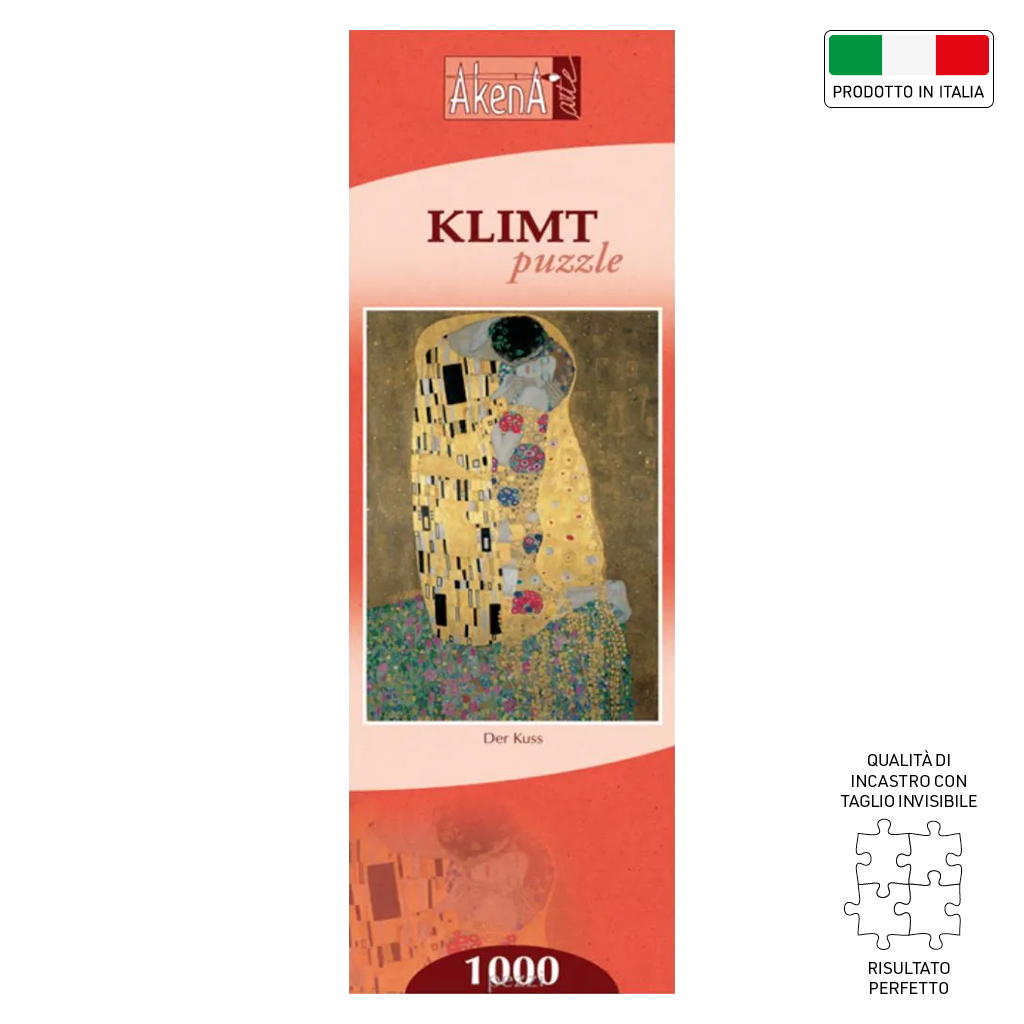
Gustav Klimt’s “The Kiss” is undoubtedly one of the most celebrated and iconic works of art from the Viennese fin-de-siècle period, created between 1907 and 1908. It is part of the artist’s so-called “Golden Period,” characterized by the abundant use of gold leaf and intricate patterns. The painting depicts an embraced couple in a moment of profound intimacy, with the man gently kissing the woman on the cheek. Both figures are draped in a dress richly detailed and geometrically ornamented, typical of Klimt’s decorative style. The gold background lends the work an aura of luxury and sacredness, while the floral motifs and sinuous lines add a romantic touch.
The painting is often interpreted as a hymn to love and passion, but also as an expression of the fusion of traditional elements and artistic innovation. The geometric shapes and vibrant colors lend a modern feel to the work, while the couple’s pose and their expressions suggest a sense of peace and joy. Klimt’s influence on other artists of the time was significant, and “The Kiss” remains one of the most reproduced and appreciated paintings in the history of art.
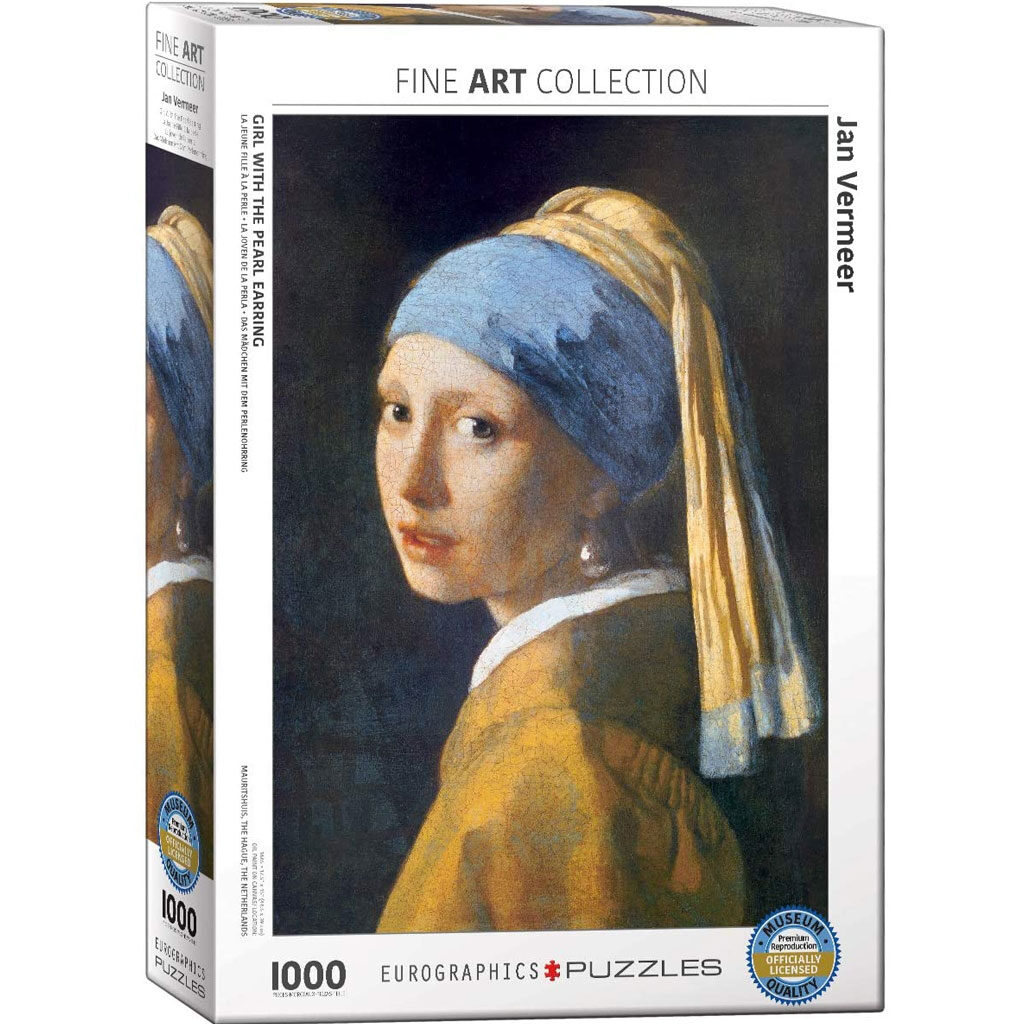
“Girl with a Pearl Earring” is a masterpiece by Johannes Vermeer, a 17th-century Dutch painter known for his mastery of light and detail. The painting is often called the “Dutch Mona Lisa” for its mysterious allure and enigmatic beauty. The scene depicts a young woman wearing a blue turban and a large pearl earring, her gaze directed at the viewer. Light plays a key role in the work, creating reflections on the earring and lending depth to the woman’s face.
Vermeer uses a delicate technique and a muted color palette to create an intimate and tranquil atmosphere. The simplicity of the composition contrasts with the complexity of the emotions it evokes, leaving ample room for interpretation. The painting has been the subject of numerous analyses, with some highlighting its purity and beauty, while others emphasize the enigmatic nature of the figure. “Woman with a Pearl Earring” remains a timeless icon, a symbol of Vermeer’s extraordinary skill in portraiture.
The video showcasing these famous artworks creates an immersive and stimulating experience, using video projections to create the illusion of exploring new levels of depth. The ability to zoom in on the artworks gives the impression that there’s always something new to discover, making the viewing experience dynamic and engaging. This technique allows for a different appreciation of the works, highlighting details that might have been overlooked in a traditional context.
At the same time, puzzles based on these works offer a tangible way to interact with art. Completing a puzzle is a hands-on experience that requires patience and dedication, but it also offers the satisfaction of reconstructing a masterpiece piece by piece. Puzzles allow you to explore famous works of art in detail, providing a unique opportunity to deepen your understanding and appreciation of art.
The video introducing these famous artworks demonstrates how technology and creativity can be combined to offer unique and immersive visual experiences. Video projections allow visitors to explore art in new ways, creating optical illusions that add depth and movement. Puzzles, on the other hand, offer a tangible way to interact with the artworks, allowing enthusiasts to reconstruct the masterpieces with their own hands.
Both of these approaches represent a new way of experiencing art, demonstrating that art isn’t confined to galleries or museums, but can be taken anywhere and experienced in an interactive and engaging way. Through the famous artworks featured in this video, we can explore the rich diversity of art and appreciate the genius of the artists who created them.