Additional information

Number of pieces

Brand

Atmosphere

Artist

Opportunity

art museum

Dimensions of the work

199.3 x 162.5 cm

Difficult

Puzzle Dimensions

68 cm x 48 cm

Box Dimensions

35 x 25 x 6 cm

EAN

628136607988

5 motivi per acquistare i nostri puzzle d'arte

Puzzle Ricercati Puzzle Arte

Puzzle d’arte rari e ricercati

Spedizione Gratuita Puzzlearte

Spedizione gratuita sopra i 50€

Consulenza Puzzlearte

Consulenza e assistenza da veri esperti

Progetti Rimboschimento Puzzlearte

Progetti di rimboschimento

Bambini Puzzlearte

Progetti educativi per i più piccoli

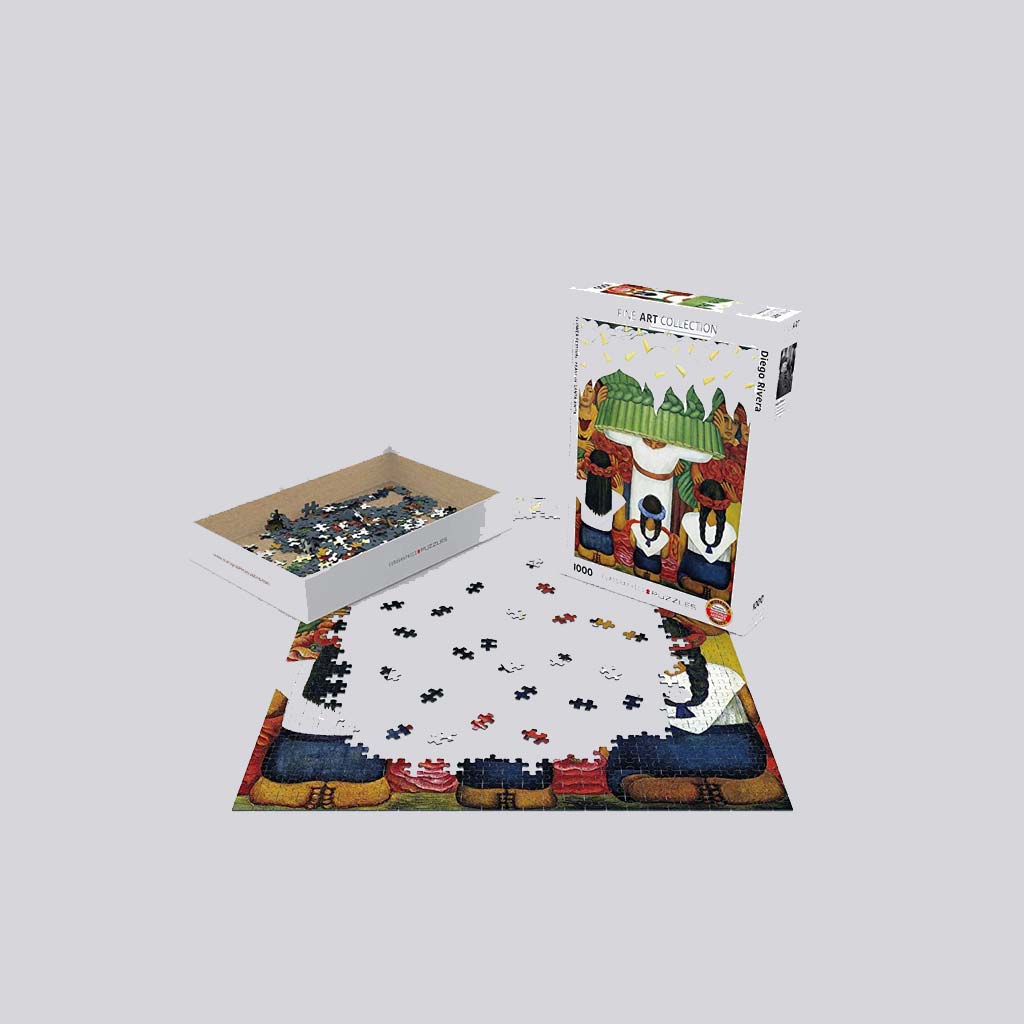
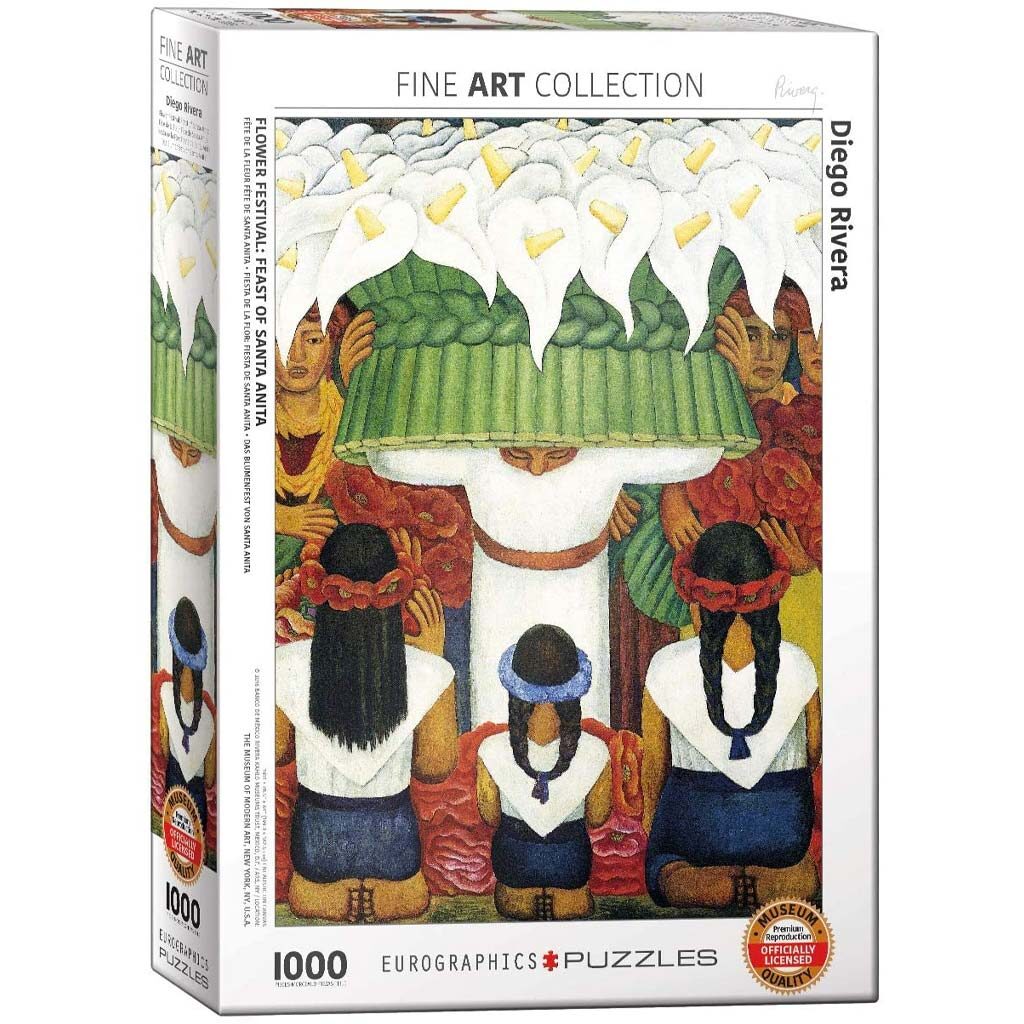
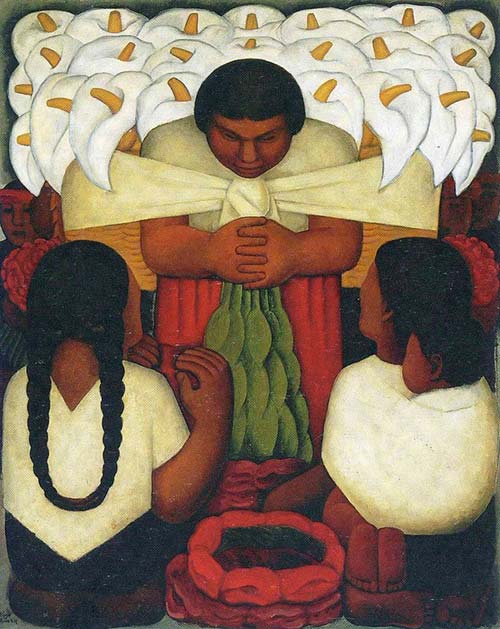
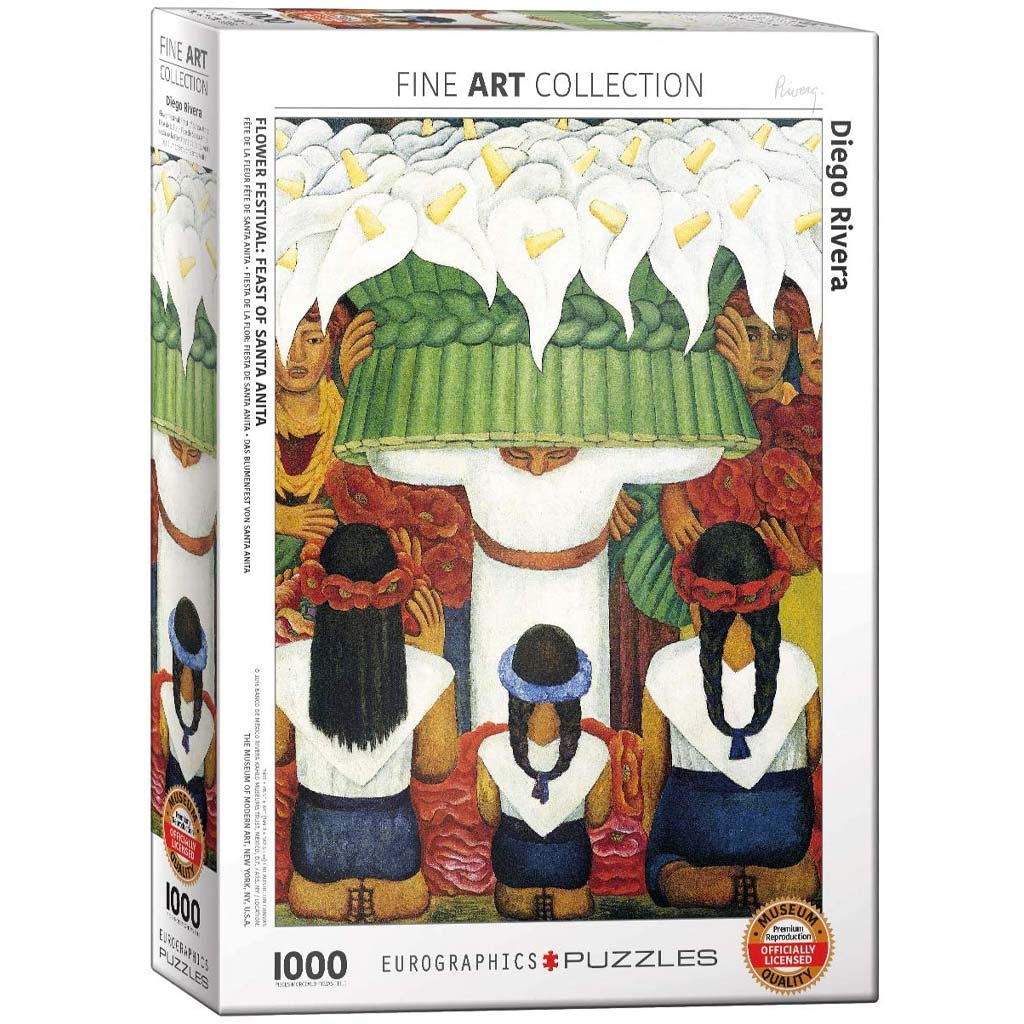
Diego Rivera Flower Festival – 1000-Piece Puzzle

Hot Hot

25,00

25,00

2 in stock

Discover the style of contemporary art and challenge yourself with one of the most beautiful American art puzzles Diego Rivera flower festival 1000 puzzle.
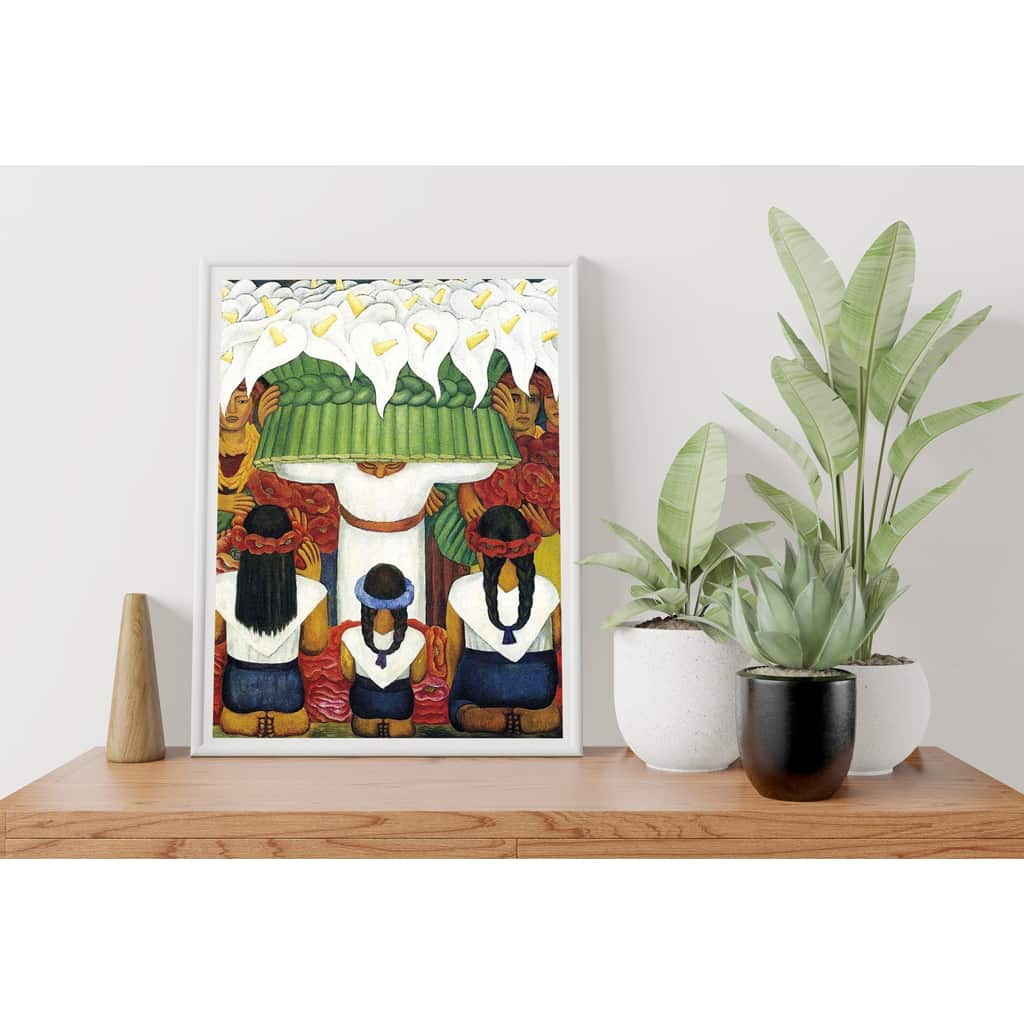
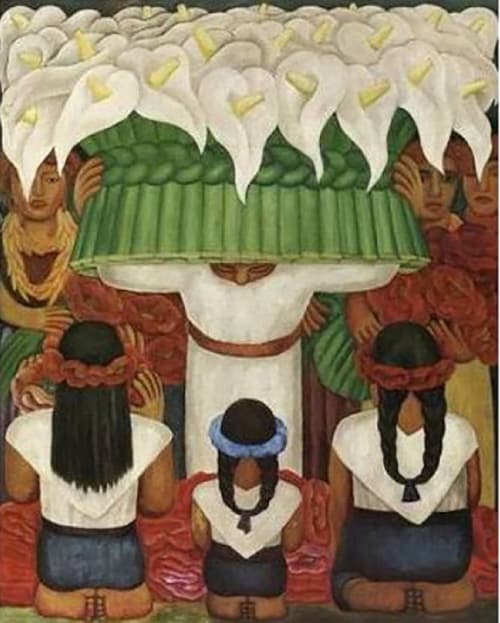
The painting by the Mexican artist , husband of Frida Kahlo , depicting a Good Friday in a Mexican town, a day of flowers.

Puzzle Art thanks to the new splendid edition of the Eurographics brand is pleased to offer you this art puzzle.
The Diego Rivera Flower Festival puzzle from EuroGraphics is made with Smart-Cut Technology, a cutting-edge manufacturing process that creates a multitude of unique and unusual shapes.

Questo puzzle è momentaneamente esaurito.

Nel frattempo, ti suggeriamo alcuni puzzle d’arte che potrebbero piacerti!

Altri puzzle di Diego Rivera

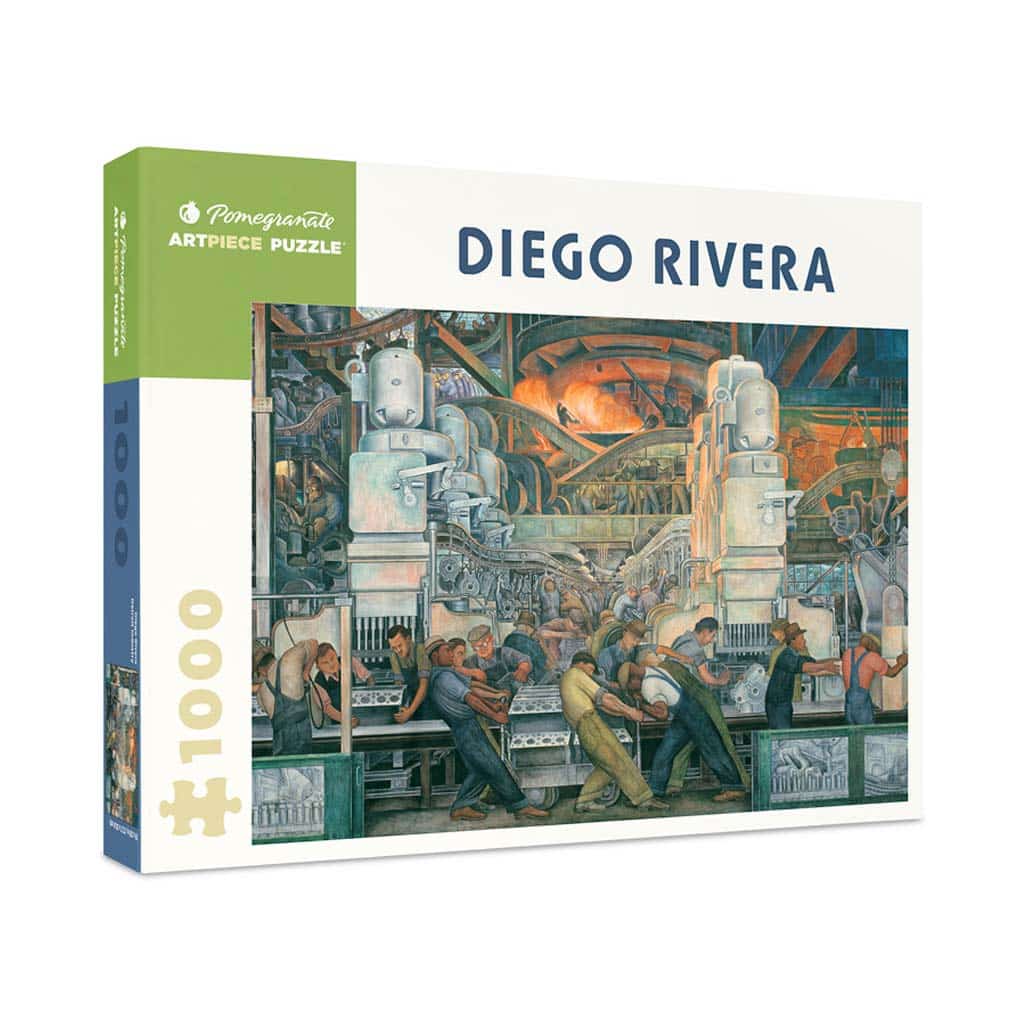
Detroit Industry Murals
Detroit Industry Murals – 1000 piece puzzle
25,00

Puzzle Features

The Diego Rivera Flower Festival Puzzle is a wonderful example of contemporary art and a wonderful way to discover the history of Mexico and its festivities.

The Day of the Flowers or Día de flores is his first and most accomplished representation of a calla lily vendor, dated 1931.
The unusual perspective of the flowers, which are seen from above, and the blocky forms of the figures are stylistic devices derived from Rivera’s earlier Cubist paintings .
The colors of the puzzle are very bright and the details are extremely accurate and refined.

The Diego Rivera Flower Festival Puzzle in Detail

The 1000-piece Diego Rivera Flower Festival puzzle from Eurographics is a splendid example of a contemporary art puzzle and an example of the relationship between art and popular traditions.
The subject is very rare and particularly pleasant in its execution.
The puzzle’s colors are very bright and the details are extremely accurate and refined. The puzzle pieces are sturdy and fit together perfectly.
The EuroGraphics 1000 piece puzzle is made with Smart-Cut Technology.

Number of Puzzle PiecesNumber of pieces
1000
Puzzle BrandsBrand
Eurographics
Puzzle DimensionsPuzzle dimensions (cm)
68 x 48
Puzzle Box DimensionsBox dimensions (cm)
35 x 25 x 6
Diego Rivera Flower Festival Puzzle

Well finished box
Wonderful gift idea

Famous work
Bright colors

1000 pieces
Standard grid

Description of the artwork

Throughout his career, Diego Rivera created numerous paintings depicting the indigenous peoples of Mexico.
The Day of Flowers (Día de flores) is his first and most accomplished depiction of a calla lily vendor, dated 1931.
The unusual perspective of the flowers, which are seen from above, and the blocky forms of the figures are stylistic devices derived from Rivera’s earlier Cubist paintings .

Rivera spent the tumultuous years of the Mexican Revolution (1910–20) painting and traveling abroad. Upon returning to his native country in 1921, he celebrated Mexican traditions and indigenous people, making them a central subject of his work. As he later recalled,

My return home aroused in me an aesthetic joy impossible to describe. Everywhere I saw a potential masterpiece: in the crowds, the markets, the festivals, the marching battalions, the workers in the workshops, the fields, in every shining face, in every radiant child.

This painting, depicting a flower festival held on Good Friday in a town then called Santa Anita, was included in a solo exhibition of Rivera’s work at MoMA in 1931. Only the second artist, after Matisse , to receive this honor, Rivera was, by the time, an international celebrity: the New York Sun hailed him as “the most talked-about artist this side of the Atlantic.”
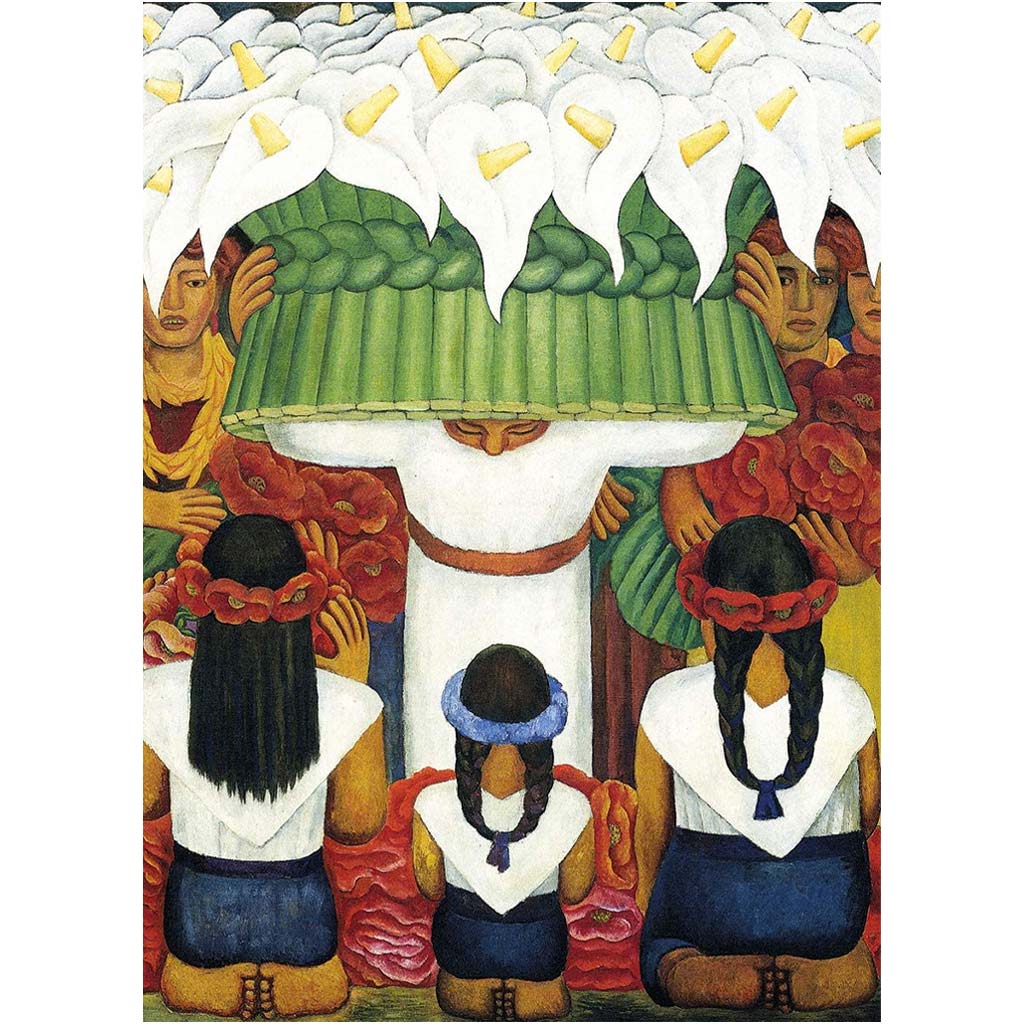
Diego Rivera Flower Festival

Day of Flowers is Rivera’s first major painting to enter a public collection in the United States. It was acquired by the Los Angeles Museum of History, Science, and Art (LACMA’s parent institution) after winning first prize at the first Pan-American Exhibition of Oil Paintings.

In 1929, Rivera married Frida Kahlo , who is now considered one of the leading Mexican painters of the 20th century. He was influenced by her work and included her portrait in many of his murals. Rivera also executed several works in the United States, including a mural (1932–33) for the Detroit Institute of Arts. A fresco (1933) commissioned for the new RCA building in Rockefeller Center, New York City, was ordered destroyed shortly after its completion because it included a portrait of Soviet leader Lenin.

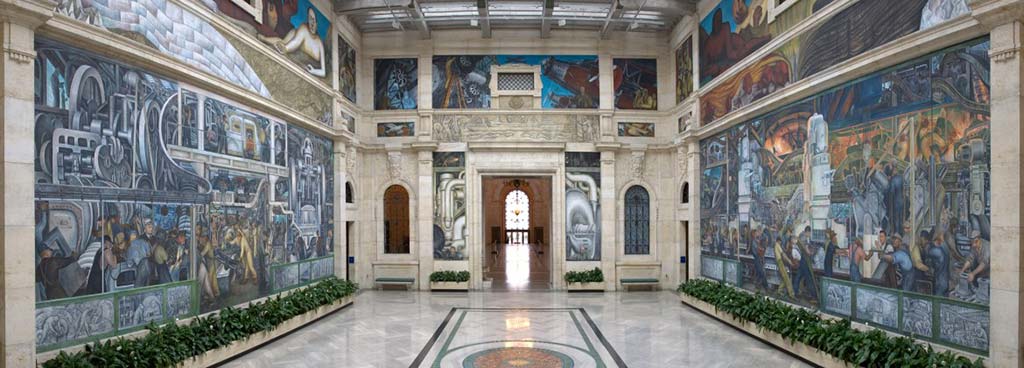
The Detroit Industry Murals, created between 1932 and 1933, are a series of frescoes by Mexican artist Diego Rivera.
The series consists of twenty-seven panels depicting industry at the Ford Motor Company in Detroit . Together, they surround the interior of Rivera Court at the Detroit Institute of Arts. Rivera considered them his most successful work.

Detroit murals

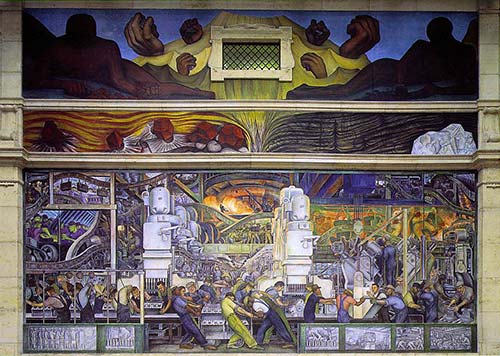
The two main panels on the north and south walls depict workers at Ford Motor Company’s River Rouge plant.
Other panels depict advances in various scientific fields, such as medicine and new technologies. The series of murals, taken as a whole, expresses the idea that all actions and ideas are one.
In 1932, Wilhelm Valentiner , director of the Detroit Institute of Art, commissioned Mexican artist Diego Rivera to paint 27 murals depicting Detroit’s industries in the museum’s inner courtyard. Rivera was chosen for the project because he had just completed a mural at the California School of Fine Arts (now the San Francisco Art Institute) that showcased his painting skill and interest in modern American industrial culture.

In fact, at the onset of the Depression, Diego Rivera was commissioned by Edsel Ford to create the series of murals in the gallery at the Detroit Institute of Arts. Rivera’s Detroit Industry murals are one of the greatest treasures in the United States.
When Mexican artist Diego Rivera arrived in Detroit in 1932 to paint these walls, the city was a major industrial center. For this reason, it was one of the cities hardest hit by the Great Depression. Industrial production and the workforce were a third of what they had been before the Crash of 1929.

Rivera arrived in Detroit just days after a notorious hunger march in which thousands of unemployed workers marched from downtown Detroit to the gates of the Ford Motor Company River Rouge plant to demand work. Armed Ford security guards encountered them, panicked, and shot at the protesters, killing six people .
This confrontation became known as the Battle of the Overpass. Workers were barred from the Ford factories, but Rivera put them to work in the heart of the museum.

The space he was assigned to paint was aligned on an east/west/north/south axis. Rivera used this architectural orientation symbolically. Indeed, on the east wall , facing the rising sun, beginnings, and new life, he depicted a child cradled in the bulb of a plant, cradled by two plowshares and framed on either side by heavy nudes holding grain and fruit, symbolizing abundant harvests. These panels introduce some of the world’s first agricultural technologies.

North and south walls of the Detroit Industry Murals

The production of the 1932 Ford V-8 at the Ford Motor Company’s River Rouge plant is represented by the two main panels on the north and south walls.
On the north wall , the direction of darkness and the interior of things , Rivera has captured all the processes involved in the assembly of the engine. The blast furnace glows orange and red at extreme temperatures to produce molten steel, which is poured into molds to form ingots that are then ground into sheets.
All the major processes involved in the manufacturing of a car engine, from the construction of the mold in the top left to the final assembly of the engine on the assembly line in the foreground, are carefully rendered with engineering precision.
The artist intertwined the processes through the use of serpentine conveyors and assembly lines. The composition is based on two rows of white milling machines standing like sentinels at the center of the wall, marching in the background toward the blast furnace.

On the south wall , the wall of light, the outside of things, Rivera depicted the car body assembly on the south automotive panel. The parts stamped on the stamping press on the right are then welded to the welding plate at the top center. Surrounding this image are the painting, the upholstery, and the final assembly where the chassis is joined to the body. At the end of the assembly line is a tiny, finished red car.

The only machine that was slightly modified was the stamping press because Rivera saw in it a physical and symbolic resemblance to the famous and feared ancient Aztec statue that was believed to have caused death and destruction when it was unearthed in Mexico City in the 18th century.
It is now known as the representation of Coatlicue, the goddess of creation .

Finally, on the west wall, the direction of sunsets, endings, and final sentences, Rivera painted passenger planes and bombers. Here, the constructive and destructive uses of technology are clearly presented. The panels below the planes depict a dove and a hawk to emphasize the theme.

Le recensioni sono disattivate per questo prodotto.

Complimenti!

hai una vera passione per l'arte!

Visto che sei arrivato fino a qui, meriti un premio!
Ecco uno sconto del 10% per il tuo prossimo capolavoro! ✨

Cosa se ne pensi di questi puzzle d'arte simili...

Hot Hot
25,00

Hot Hot

Price range: 19,99€ through 55,00

Select options This product has multiple variants. The options may be chosen on the product page