





Additional information

Number of pieces

,

Brand

Atmosphere

Size

Opportunity

Difficult

Artist

art museum

Dimensions of the work

114 × 155 cm

Artistic movements

5 motivi per acquistare i nostri puzzle d'arte

Puzzle Ricercati Puzzle Arte

Puzzle d’arte rari e ricercati

Spedizione Gratuita Puzzlearte

Spedizione gratuita sopra i 50€

Consulenza Puzzlearte

Consulenza e assistenza da veri esperti

Progetti Rimboschimento Puzzlearte

Progetti di rimboschimento

Bambini Puzzlearte

Progetti educativi per i più piccoli

Bruegel’s Tower of Babel Puzzle

(1 customer review)
Hot Hot

Price range: 25,00€ through 45,00

Price range: 25,00€ through 45,00

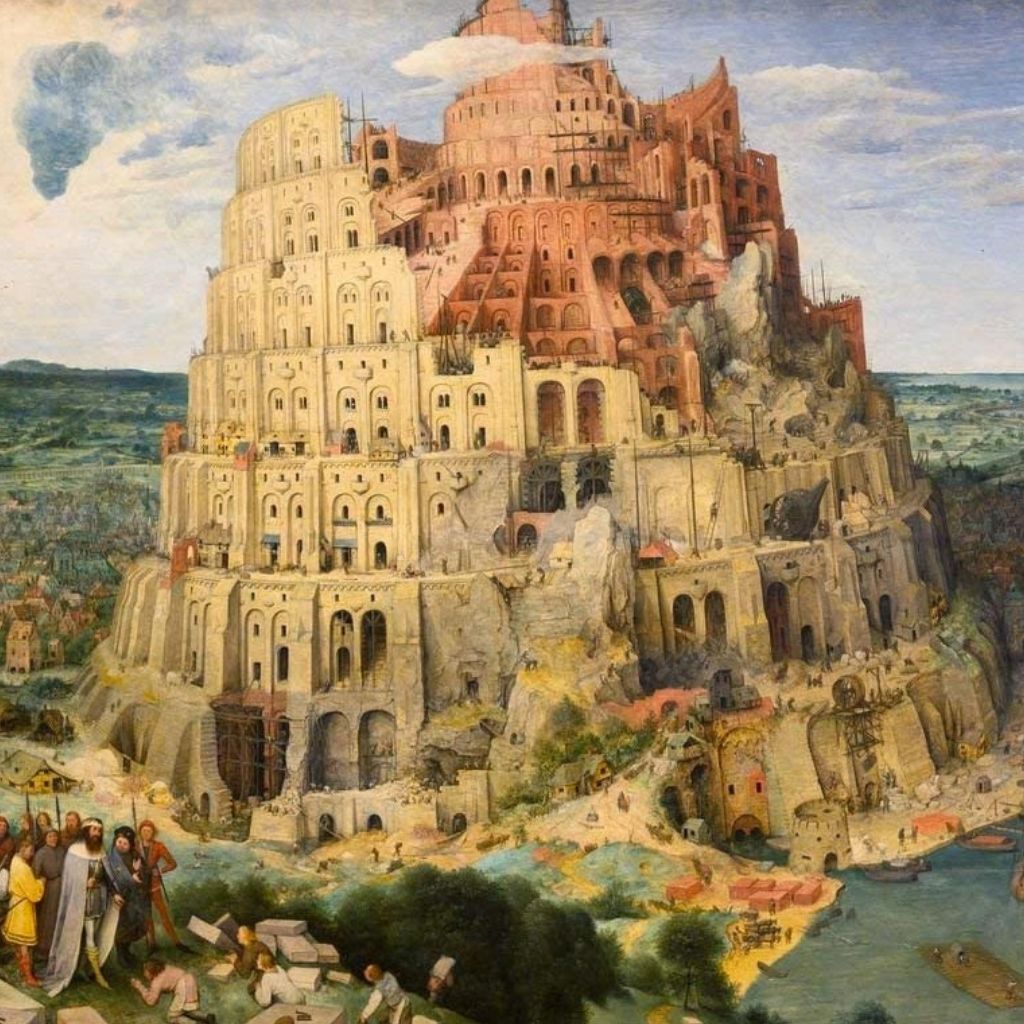
Discover the splendid Tower of Babel puzzle by Bruegel the Elder, one of the greatest paintings by the great master of Flemish Renaissance art .
By putting together this magnificent Renaissance art puzzle, you will be able to discover piece by piece one of the most fascinating works of Flemish art of the sixteenth century.
With this beautiful art puzzle , you can discover the beauty of Dutch paintings in 1560.

Questo puzzle è momentaneamente esaurito.

Nel frattempo, ti suggeriamo alcuni puzzle d’arte che potrebbero piacerti!

Altri puzzle di Bruegel the Elder

Bruegel Giochi Di Bambini Puzzle Arte
Bruegel Children’s Games – Renaissance Art Puzzle
19,99€ – 45,00€Price range: 19,99€ through 45,00€
Puzzle Bruegel
Bruegel Puzzle – The Census at Bethlehem, 2000 pieces
29,90
La Caduta Degli Angeli Ribelli 1.jpg
The Fall of the Rebel Angels – 2000-Piece Puzzle
45,00

Puzzle Features

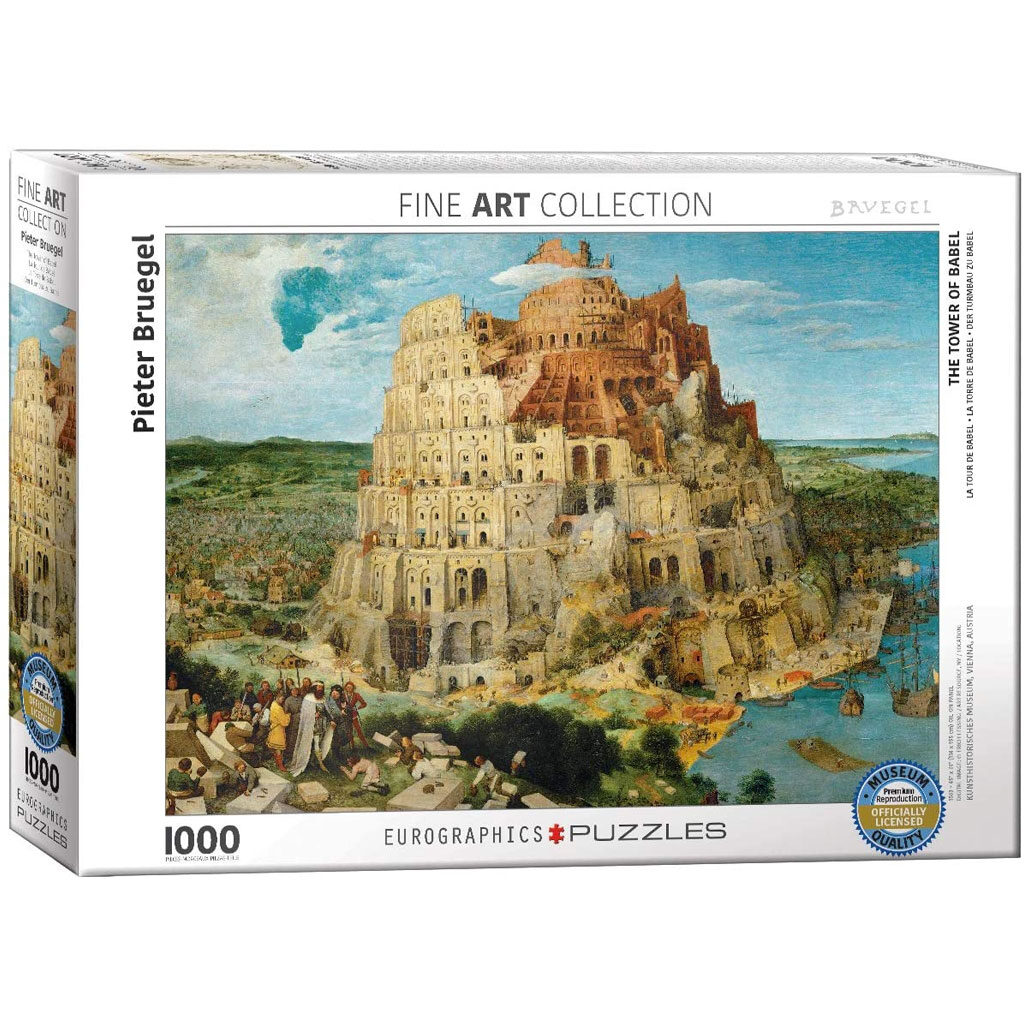
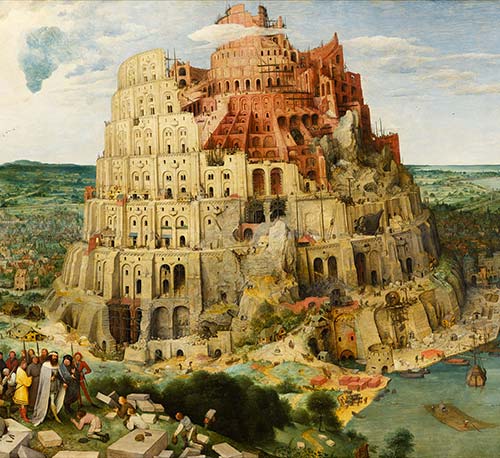
The Tower of Babel, a puzzle by Bruegel the Elder , is one of the most famous paintings by the great Flemish master. This magnificent Flemish Renaissance art puzzle will allow you to discover, piece by piece, one of the most fascinating works of art.

Puzzle Tower of Babel Bruegel the Elder is an oil painting by the Flemish Renaissance artist Pieter Bruegel the Elder, painted and signed in 1563. It is currently preserved and exhibited at the Kunsthistorisches Museum in Vienna.

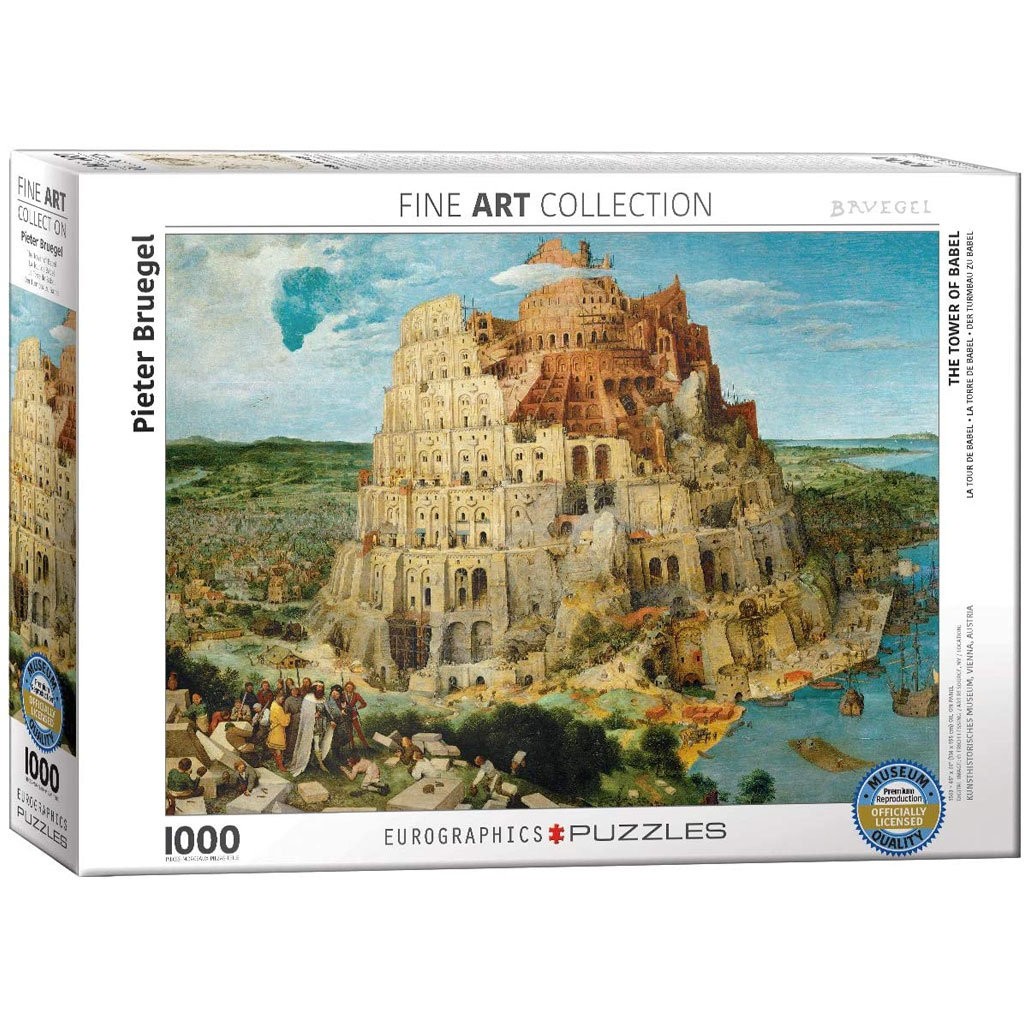
Bruegel's Tower of Babel Puzzle, Classic 1000-piece Puzzle Version

The work Tower of Babel Bruegel Puzzle by Pieter Brueghel the Elder is one of the greatest examples of Flemish Renaissance art.

The Brueghel puzzle in question is one of the most famous subjects in the history of art because its subject matter conveys the relationship between painting and religion.

This is why the Tower of Babel puzzle by Bruegel the Elder is suitable for both experienced puzzlers and beginners. The clearly defined design and gameplay scenes allow you to complete this puzzle with complete peace of mind and share this moment with your loved ones while having fun.

The puzzle is classified as Museum Quality.

Number of Puzzle PiecesNumber of pieces
1000
Puzzle BrandsBrand
EuroGraphics
Puzzle DimensionsPuzzle dimensions (cm)
48 x 68
Puzzle Box DimensionsBox dimensions (cm)
35 x 25 x 6

Well finished box
Wonderful gift idea

Religious artwork
Modern Art

1000 pieces
Standard grid

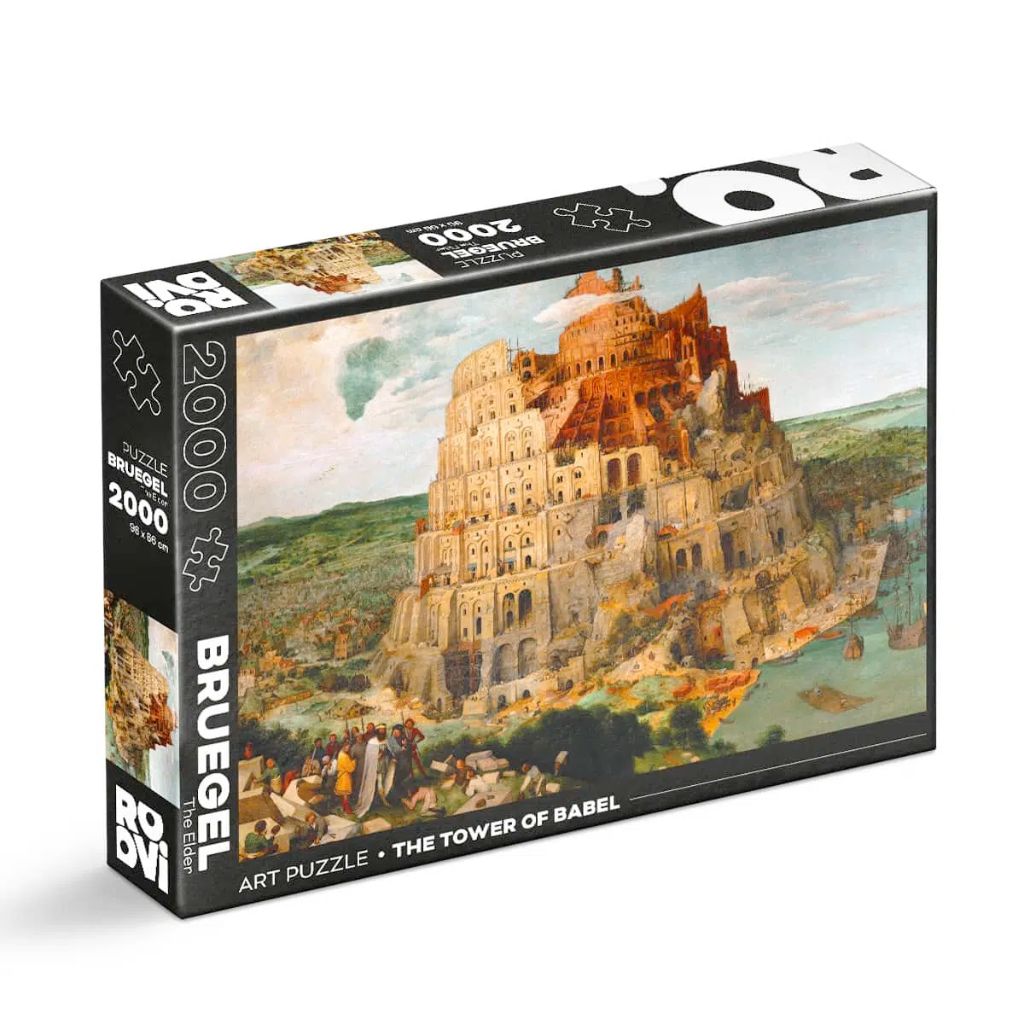
Bruegel's Tower of Babel Puzzle, Classic Version, 2000 Pieces

Discover the Tower of Babel puzzle by Bruegel the Elder in the special 2000-piece version from the high-quality brand Roovi, one of the largest paintings by the great master of Flemish Renaissance art.

By putting together this magnificent Renaissance art puzzle, you will be able to discover piece by piece one of the most fascinating works of Flemish art of the sixteenth century.

With this beautiful 2000-piece art puzzle, you can discover the beauty of Dutch paintings in 1560.

Number of Puzzle PiecesNumber of pieces
2000
Puzzle BrandsBrand
Roovi
Puzzle DimensionsPuzzle dimensions (cm)
96 x 60
Puzzle Box DimensionsBox dimensions (cm)
38.5 x 27
Tower Of Babel Bruegel 2 1.jpg

Elegant box
Wonderful gift idea

Religious artwork
Modern Art

2000 pieces
Standard grid

Description of the artwork

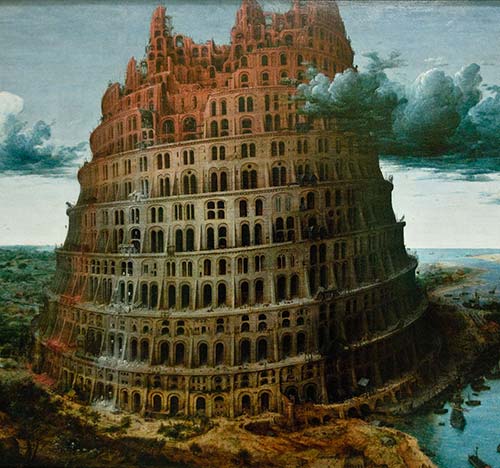
The Tower of Babel is a beloved subject, painted three times by the Flemish painter Pieter Bruegel the Elder . The first, a miniature painted on ivory, was created while Bruegel was in Rome and is now lost. The two surviving paintings, often designated by the prefix “large” and “small,” are in the Kunsthistorisches Museum in Vienna and the Museum Boijmans Van Beuningen in Rotterdam.

Both are oil paintings on wood panels. The Rotterdam painting is about half the size of the Vienna one. Overall, they have exactly the same composition, but in terms of detail, the paintings are completely different. Indeed, both the architecture of the tower and the sky and landscape are different in the two paintings. The Vienna version has a group in the foreground, with the main figure presumably Nimrod, who was believed to have ordered the tower’s construction.

In Vienna, the tower stands on the edge of a large city, but the tower in Rotterdam is in open countryside. The paintings depict the construction of the Tower of Babel, which, according to the Book of Genesis in the Bible , was built by a unified, monolingual humanity as a sign of their success and to prevent them from dispersing.

Then they said, Come, let us build ourselves a city, and a tower with its top in the heavens, and let us make a name for ourselves; otherwise we will be scattered abroad upon the face of the whole earth. (Genesis 11:4)

The two versions of the Tower of Babel Bruegel

The Tower of Babel is one of Pieter Bruegel the Elder’s most famous paintings. However, the motif has sometimes caused some confusion, as there are two versions. However, there are a number of important differences between these two compositions.

Tower of Babel – Vienna

This is the largest, most famous, and most detailed version. Bruegel depicts a gigantic spiral tower clearly reminiscent of the architecture of the Roman Colosseum , a symbolic reference to imperial power and its fall. The construction appears monumental, yet already unstable, with scaffolding, workers, and meticulous architectural details suggesting a grandiose undertaking doomed to failure.

In the foreground, King Nimrod observes the work with an authoritative gesture, but the whole scene is pervaded by a sense of constructive madness , a race against logic, typical of Bruegel’s humanist thought.

The palette is rich in earthy and gray tones, and the dramatic lighting emphasizes the fragility of human work in the face of divine order.

Tower of Babel – Rotterdam

This version is smaller and considered later , or even a workshop work with less direct involvement from Bruegel. The composition is similar, but less detailed. The tower is more square, less architecturally complex, and the background appears less animated.

The symbolic meaning remains present, but with less narrative force . The light is more diffuse, and attention seems to focus on the geometric shape and mass of the building , rather than on the representation of human activity and the frenzy of construction.
The Tower of Babel Bruegel

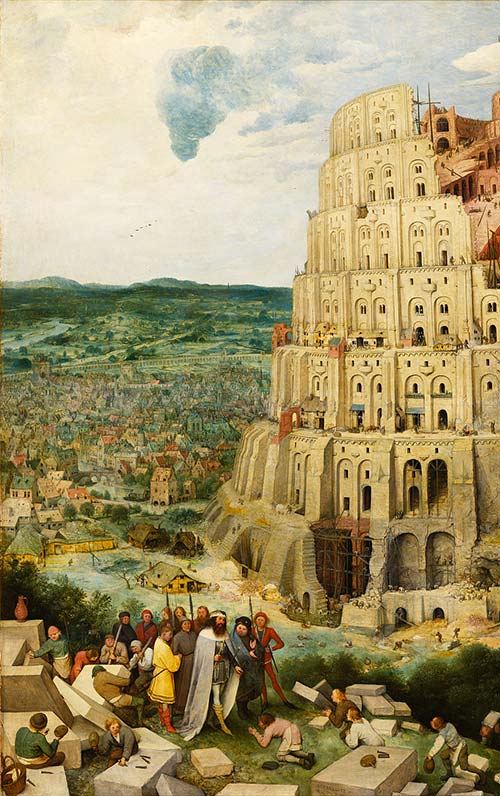
Imposing and haunting, The Tower of Babel by Pieter Bruegel the Elder, created in 1563 and preserved at the Kunsthistorisches Museum in Vienna, is the most famous depiction of a biblical subject that crosses art, myth and social criticism.

Bruegel depicts the moment when humanity, united by a single language, attempts to build a tower that reaches to the heavens. King Nimrod, visible in the lower left with his royal entourage, observes the progress of the work with an authoritative air. Although Nimrod does not appear directly in the biblical text, he was identified as the tower’s builder by Flavius ​​Josephus, a first-century Jewish historian who combined disparate sources to create a narrative that later became accepted into medieval scholarship.

In the Middle Ages, depictions of the Tower were often inspired by local buildings. Bruegel, however, like many 16th-century artists, looked to the ancient Mesopotamian ziggurat, which, however, was rectangular. His tower is circular and spiraling, clearly inspired by the Roman Colosseum, a symbol of imperial arrogance. However, the architectural layout blends classical and Romanesque elements, creating an imaginary yet extraordinarily believable building.

The sense of scale is accentuated by the miniature port city placed next to the base of the tower: a Flemish town with streets, ships, warehouses, and cranes, all depicted with meticulous precision. Bruegel demonstrates an encyclopedic spirit here, depicting in detail the construction technologies of the era: wooden scaffolding, pulley cranes, river transport of materials, and permanent housing for the workers embedded in the structure itself.

Anchored on a rocky slope, the tower gives the impression of stability, but a glance is enough to grasp the paradox: it optically sinks into the ground on the left side, an illusion desired by Bruegel to amplify the sense of monumentality and at the same time suggest the intrinsic instability of human work.

It is not only impossible architecture, but an allegory of blind ambition, collective hubris, and inevitable disintegration. As the book of Genesis (11:9) states:

“the Lord has confused the language of all the earth”

1 review for Bruegel’s Tower of Babel Puzzle

  1. Italian

    Cristina Cabella

    Un’opera meravigliosa rappresentata magnificamente in questo puzzle fantastico,uno dei miei preferiti.

Show only reviews in English (0)

Add a review

Your email address will not be published. Required fields are marked *

Complimenti!

hai una vera passione per l'arte!

Visto che sei arrivato fino a qui, meriti un premio!
Ecco uno sconto del 10% per il tuo prossimo capolavoro! ✨

Cosa se ne pensi di questi puzzle d'arte simili...

Hot Hot

25,00