

Discover with us our Velázquez puzzles and immerse yourself in the history of the great Spanish painter.
For us at Puzzle Arte, Velázquez puzzles are a wonderful tool to intimately experience the works of the great Spanish master.
Indeed, the puzzle is a tool for a silent relationship between the artwork and you who are assembling it. By searching for each piece of Velázquez’s works, you will immerse yourself in his spectacular life.
Velázquez is considered one of the best portrait painters in Spain, becoming the official painter of Philip IV and ultimately the greatest representative of Spanish Baroque painting.
However, despite the importance of religious art in Spain, Velázquez painted relatively few noteworthy religious works.
Instead, he painted the world around him, specializing in portraits, some genre paintings, and occasional history painting.
Ironically, given the scarcity of his religious works, he was greatly influenced by the Italian genius Caravaggio, and Velázquez was also strongly influenced by the ideas of the Italian Renaissance.
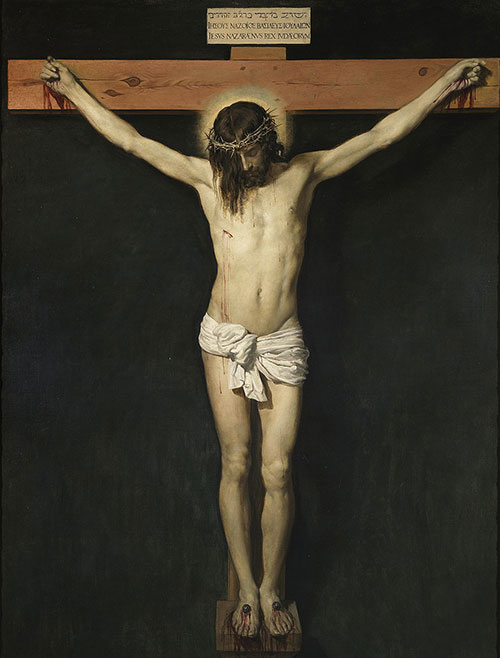
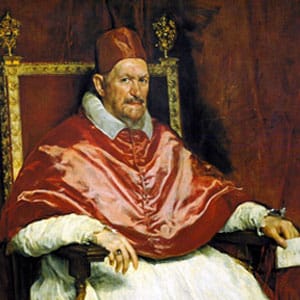
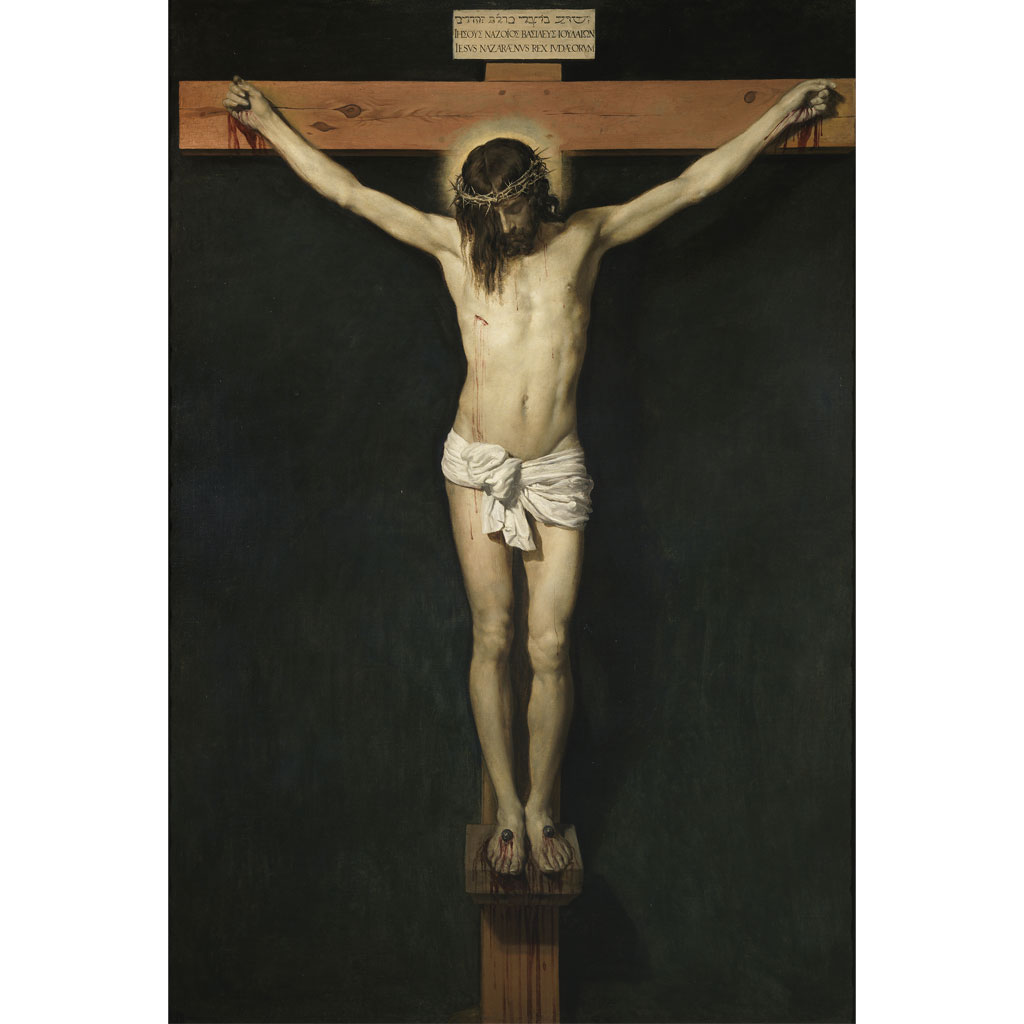
In addition to Christ Crucified, his best Baroque paintings include: The Water Seller of Seville, Portrait of Pope Innocent X, and Las Meninas.
Although the end of the sixteenth century marked the beginning of the decline of Spain’s political and commercial power, the seventeenth century was a fruitful period for literary and artistic production.
In painting, the best results are to be found in a naturalism indebted to the lessons of sixteenth-century Italian works present in the royal collections of Madrid and, above all, to the lesson of Caravaggio, mostly known through the mediation of Roman and Neapolitan Caravaggism.
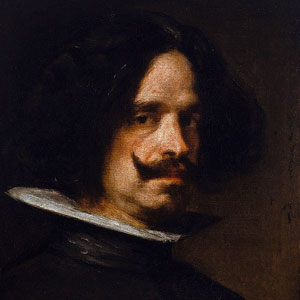
Diego Rodriguez de Silva y Velázquez, born in Seville in 1599 and died in Madrid in 1660, is without a doubt the greatest Spanish painter of the Baroque era.
He trained in his hometown, where by 1623, at only twenty-four, he held the position of official court painter. From the beginning, Velázquez demonstrated a strong preference for an approach tied to extremely realistic depictions of landscapes and, above all, the human figure.
From the Spanish artist’s paintings emerges a new sense of “truth.” Setting aside all the scenic fantasy of Baroque culture, it is rather an everyday, disenchanted truth, which in each portrait aims to capture the human side and revealing details of a state of mind.