
Novità!
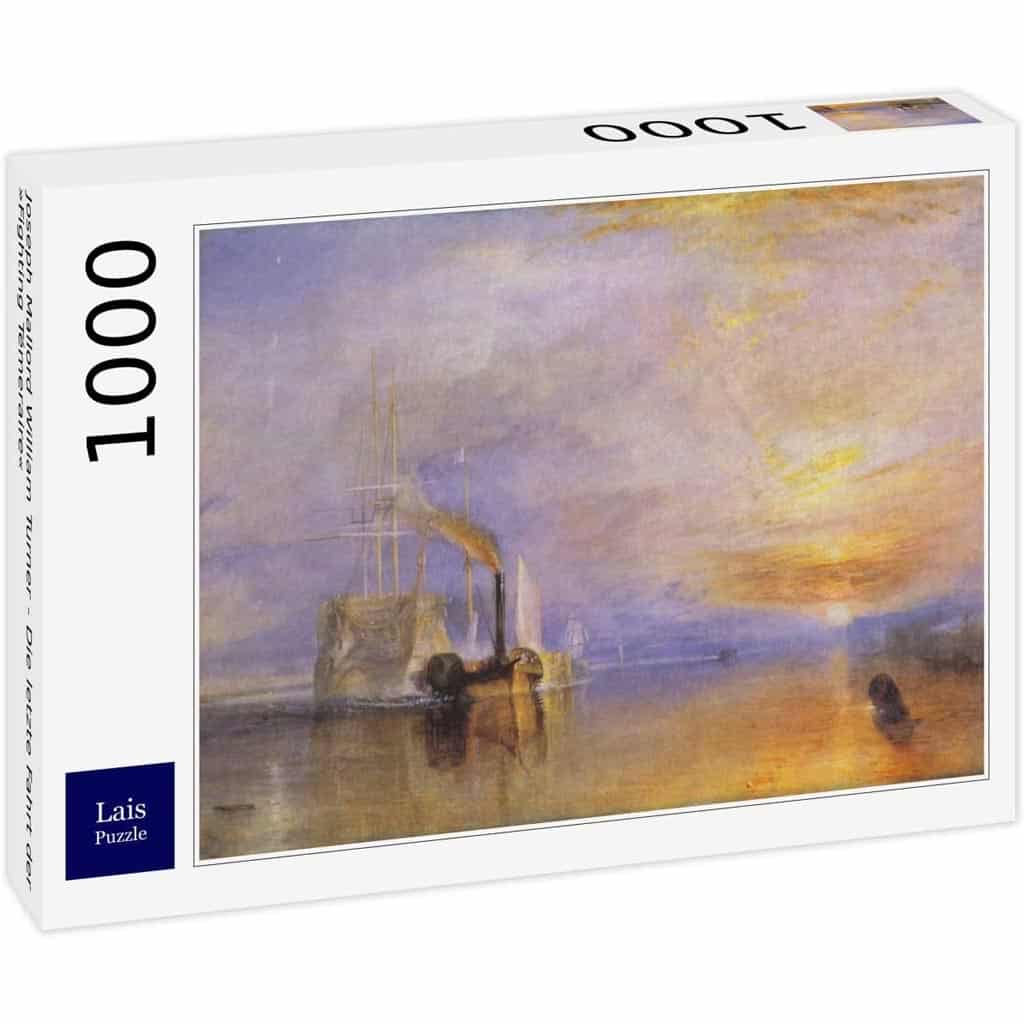
Discover with us our Puzzle William Turner and immerse yourself in the history of the great Romanticism painter.
His art is a tribute to the study of color and light.
For us at Puzzle Arte, William Turner puzzles are a wonderful tool to intimately enter the works of the great English master.
Indeed, the puzzle is a tool for a silent relationship between the artwork and you as you build it. Searching for each piece of Turner’s works, you will immerse yourself in his spectacular life.
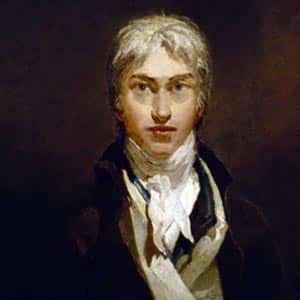
Joseph Mallord William Turner was born in London on April 23, 1775.
At 24 he was accepted into the art school of the Royal Academy, where, among other subjects, he also studied perspective, a discipline in which he often practiced and would teach at the same London institution starting in 1807.
From a young age, he traveled extensively through Wales and Scotland, drawing impressions and emotions that he poetically rendered in watercolor landscapes or simply sketched.
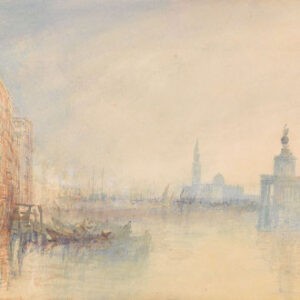
He then visited continental Europe: Switzerland, France, Germany, Austria, and finally Italy, staying repeatedly in Venice. The warm Mediterranean light and the color nuances it takes on would have a decisive importance in the development of the painter’s artistic concepts.
By then already very famous and made renowned also by the writings of John Ruskin, his first and unconditional admirer, Turner passed away in London on December 19, 1851. England gave him a triumphant funeral and the rare honor of being buried in the crypt of London’s St. Paul’s Cathedral.
Among English Romantic painters, Turner is undoubtedly the most passionate and sensitive interpreter of the poetics of the sublime, according to which, as we have seen, nature, in its power and immensity, imposes itself grandly on man, overwhelming the senses.
Initially, the artist was driven by the desire to merge adherence to the subject with the ability to produce in the viewer the sensation of probable atmospheric change.
Turner’s ultimate artistic approach is color, which, almost detached from any naturalistic reference, becomes pure modulation of light.
Turner, an attentive and refined draftsman, never went out without one of his notebooks, on which he could always sketch an architecture or a landscape view, capturing on paper the visual note or atmospheric impression that interested him most.
The undated drawing of Tewkesbury Abbey preserved at the National Gallery of Art in Washington is one of the drawings remaining solely in graphite, without the watercolor with which, subsequently, the artist gave body and color to the sketch.
This explains the lightness of the stroke, barely perceptible yet extremely rigorous in terms of overall perspective setup and meticulous attention to architectural details.
The absence of any hatching confirms Turner’s habit of achieving light and chiaroscuro effects through watercolor glazes.
His watercolors, initially figurative and based on immediately recognizable forms, slowly transform into pure color, almost without any relation to the represented object.
Over the years, Turner’s attention increasingly focused on parts of the landscape not directly influenced by form, such as the sea, the atmosphere, or the sky.
In general, the artist shows a great predilection for river and lake views, but it is especially color that fascinates him, in all its shades. From the notation of a blue sky fading at the horizon to clouds still caressed by a gentle twilight.