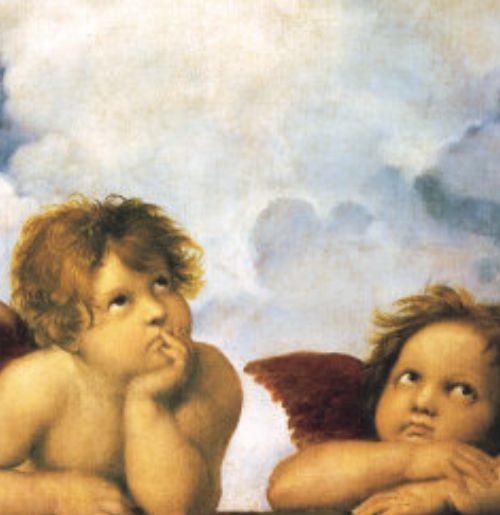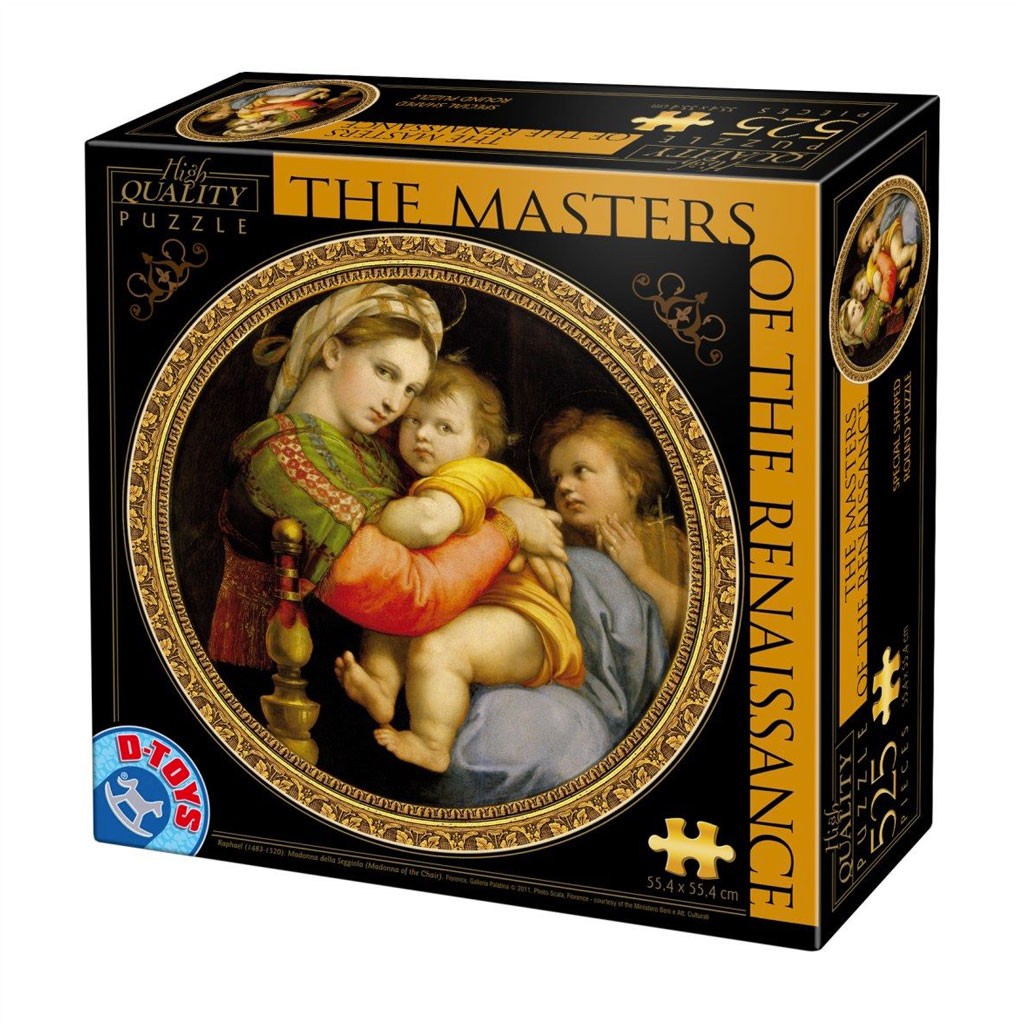


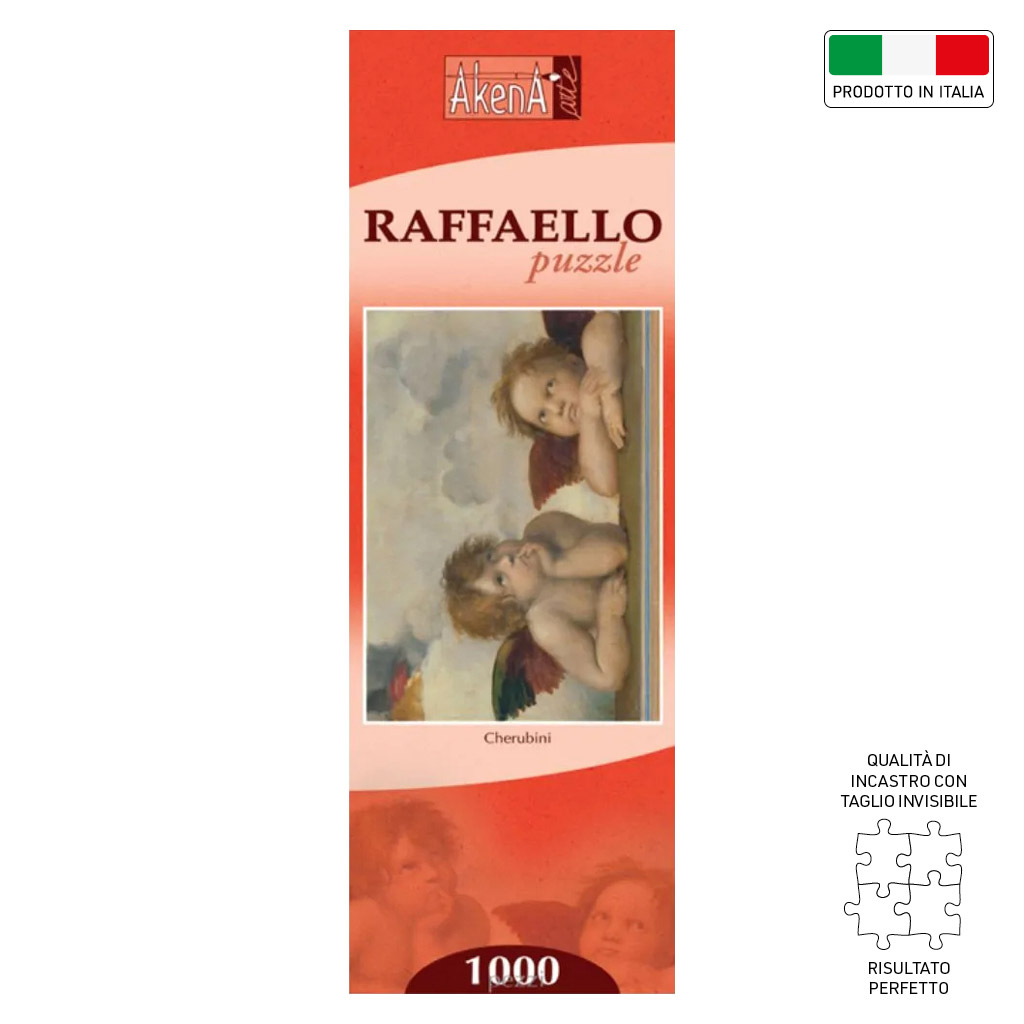
Discover with us our Raphael puzzles and immerse yourself in the history of the great Marche painter of the Renaissance. Raphael was not only a painter but undoubtedly one of the most skilled and innovative figures in the history of art.
For us at Puzzle Arte, Raphael puzzles are a wonderful tool to intimately enter the works of the great master from Urbino.
Indeed, the puzzle is a tool for a silent connection between the artwork and you as you assemble it. By searching for each piece of Raphael’s works, you will immerse yourself in his spectacular life. Try the Raphael puzzles yourself.
Around the end of 1504, preceded by a letter of introduction from the Duchess of Urbino, Raphael moved to Florence, where he was deeply impressed by the art of the great masters of the mature Renaissance.
The city, despite years of political and social unrest, was experiencing a remarkable period of artistic brilliance: the simultaneous presence of Leonardo, Michelangelo, and other leading figures made it an extraordinary, lively, and stimulating hub for a young painter.
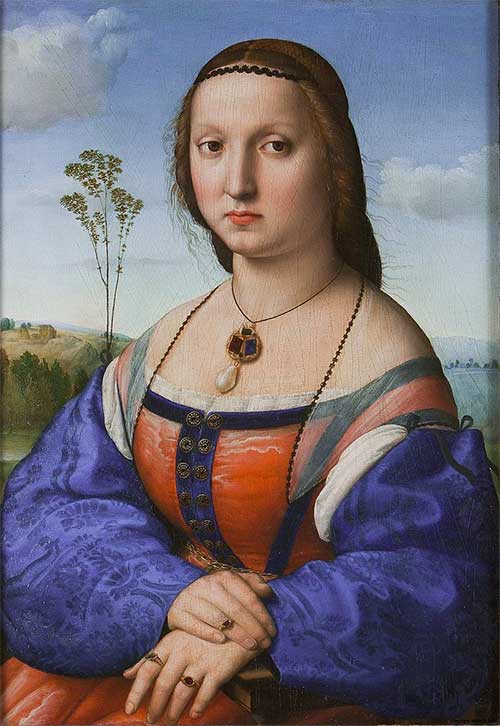
Initially, Raphael was fascinated by Leonardo’s innovations, his sfumato, the atmospheres in his paintings, and his portraits, which Raphael attempted to interpret personally.
This is evident in his Madonnas and the Portrait of Maddalena Strozzi, inspired by Mona Lisa but very different in execution.
Gradually, however, the artist turned his attention to the rising star of Michelangelo, from whom he gained greater plasticity and increased compositional dynamism.
From both masters, he absorbed and developed his drawing skills, becoming one of the most versatile interpreters of his time: in addition to charcoal, he used both silverpoint and pen, more traditional tools, as well as the innovative red chalk introduced by Leonardo.
Looking at these great masters, Raphael quickly abandoned the Perugian classicism, considering it outdated, and created an “eternal” style, whose canons of beauty, harmony, and classical inspiration would influence Western art until the 20th century.
Raphael Sanzio is the third great personality, the only one whom Giorgio Vasari places at the top of the «modern manner», dedicating these words to him:
“Hence it can be said with certainty, that those who possess so many rare gifts, as seen in Raphael of Urbino, are not merely men, but mortal gods.”
This is taken from the second edition of *Lives*, published in 1568, when Raphael had been dead for more than forty years and had already entered legend. His contemporaries called him “the prince of painters,” praising his gentle and graceful style, sincere devotion, as well as courteous manners, and lamenting his premature death in 1520, when the Marche artist was only 37 years old.
Born in Urbino in 1483, Raphael was the son of Giovanni Santi, a painter and scholar at the court of the Montefeltro: he was thus able to breathe the lively and refined atmosphere that Duke Federico had created in the magnificent halls of the Ducal Palace, showing a very early and pronounced inclination toward painting.
Although precise documentation regarding his early artistic years does not exist, it is highly likely that in the Urbino court the young artist had the chance to study the works of Piero della Francesca, which made him very skilled in perspective and in applying a rigorous compositional harmony between space, figures, and architecture, as well as to become familiar with many Flemish paintings collected by the dukes and the architecture of the fellow Urbino native Bramante, whose fame was already fully established.