Novità!
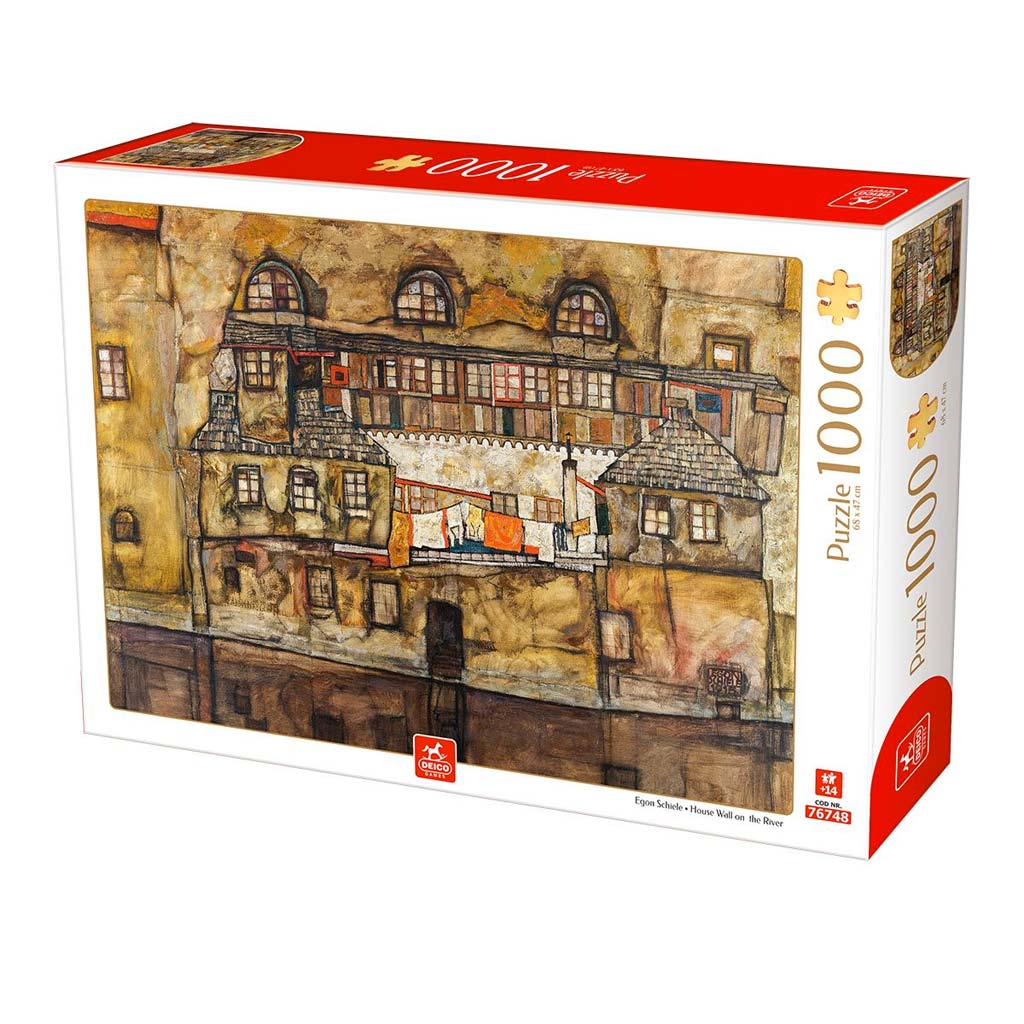
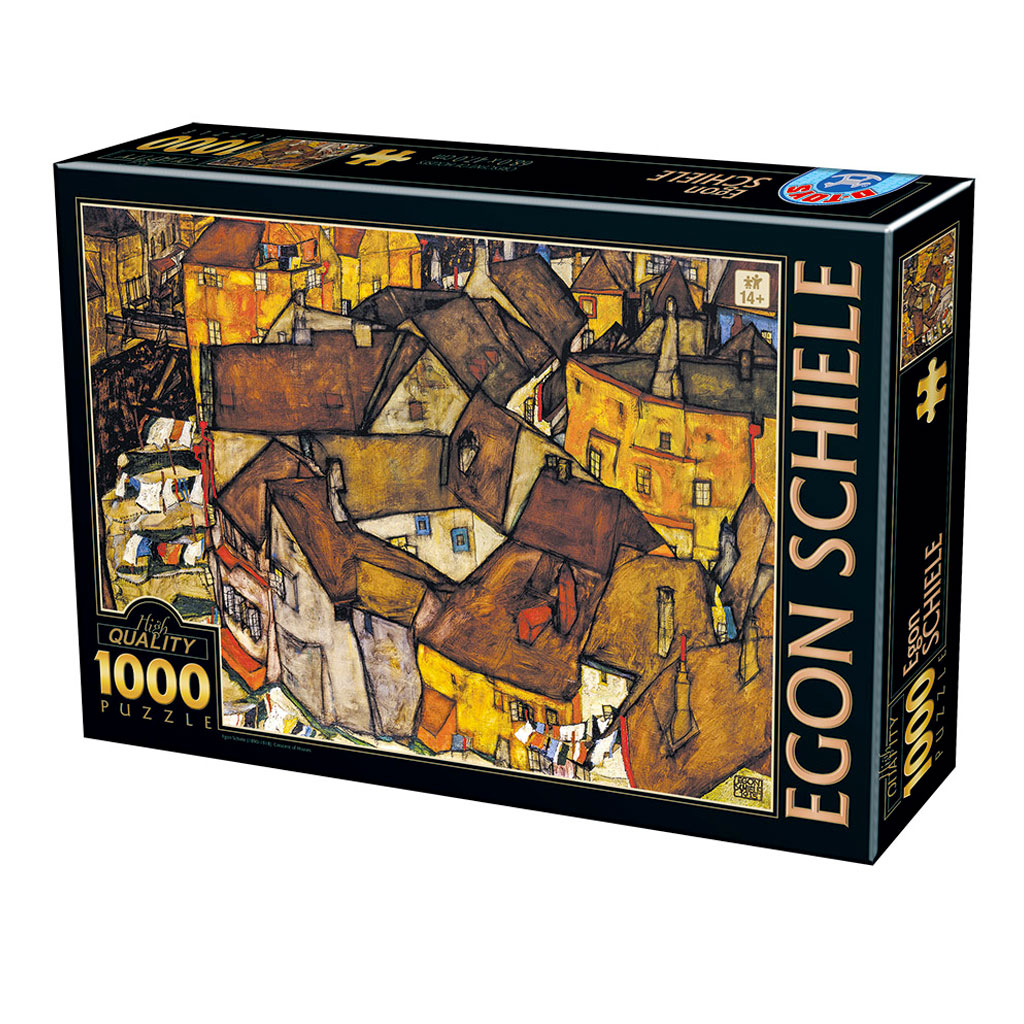
Discover with us our Schiele puzzles and immerse yourself in the history of the great Austrian expressionist painter.
His art is a hymn to thought, criticism and the study of the human psyche.
For us at Puzzle Arte, Schiele puzzles are a wonderful tool to intimately enter the works of the great master of the Viennese Secession.
In fact, the puzzle is a tool for a silent relationship between the artwork and you who are building it. Try the Schiele puzzles yourself.
In Austria, Expressionism in art did not develop, as in Germany, starting from organized groups, but as the work of artists who were not in direct relationship: its two pioneers, Oskar Kokoschka and Egon Schiele.
Both had very strong personalities, incapable of forming bonds of
lasting collaboration. This individualism also led them not to believe in a total art of collective value, which also explains why both were so inclined toward self-portraiture and autobiographical figurative work.
“You draw better than me”
said Klimt in 1907 to his former student Egon Schiele, when he achieved artistic independence.
The young man had long been fascinated by the master’s painting. But his stays in Germany and especially in Munich, where he regularly participated in the Secessions and where, in 1911, he met Paul Klee, allowed him to detach himself, which was also his opportunity for growth.
In fact, compared to the master Gustav Klimt, he simplified the backgrounds, reduced the interest in obsessive and Byzantine decorations, and made the drawing more immediate and nervous.
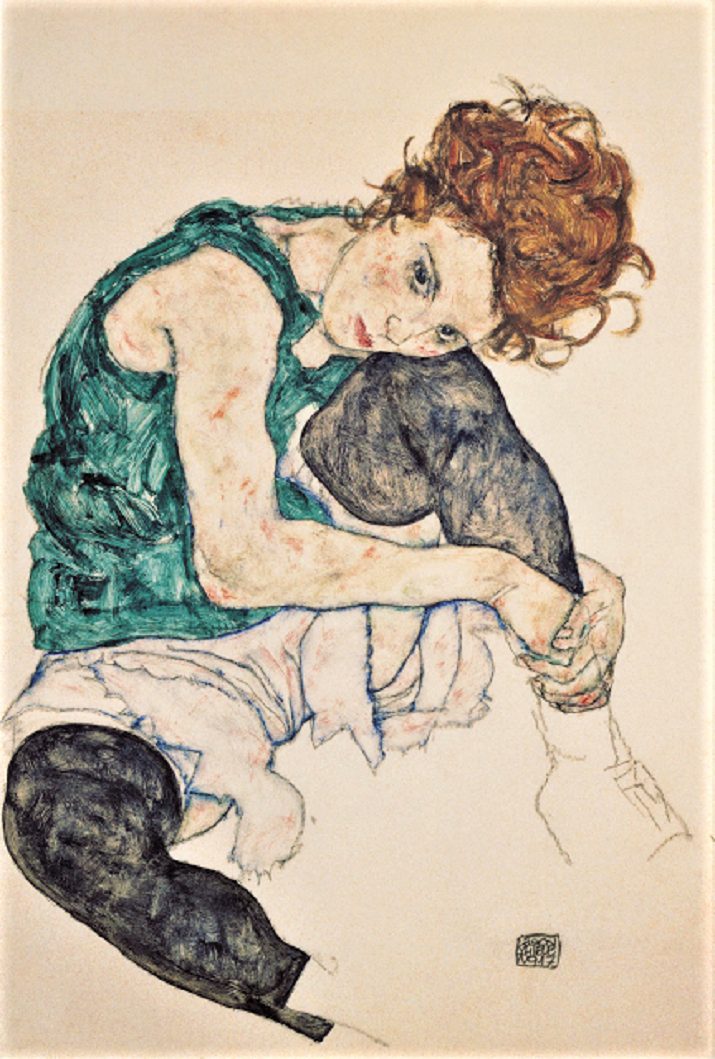
Spectral and convulsive landscapes, but above all portraits and self-portraits form the main corpus of his work: naked and tormented bodies, mutilated, deformed, often in erotic attitudes.
The boldness with which Schiele painted models in obscene poses caused him many problems, so much so that he was even arrested in 1912 and convicted for distributing immoral images.
Like Freud, Schiele ventured into the universe of private life, that closed world within rooms animated by impulses and fears into which even artists had not yet truly dared to enter.
In fact, Schiele casts upon his own body and that of his models a raw gaze, at the same time passionate and frozen by observation. He removes clothes, shows the signs of thinness or pleasure, confronts behavioral taboos such as female homosexuality and autoeroticism, and reduces anatomy to that of flayed beings.
The Embrace shows the struggle and the grip of two bodies bound by desperate love and hate: she is the model whom Schiele later abandoned to marry Edith.
In his last important painting, The Family (begun in 1917 and never finished) he represents himself with his wife crouched between his legs, protected by his entire figure, whose anatomy appears expanded to make space for the young woman. She, in turn, holds a child between her legs as if she had just given birth to it, as if the artist himself had given birth to it through her.
The progression that fits the figures one inside the other is also respected by color, a tool of symbolism: brown for the background, dark brown for the man’s skin, pinkish for that of the woman and light for the child’s face.
The depicted artist looks toward the viewer, while the mother and the child look toward the same point on the right: only he is the mediator between the external world and his own family.
This painting was begun when Schiele was preparing for the role of father and was never finished (his wife died six months pregnant); the painting tells how much of his own happiness and how much importance, in general, the artist entrusted to the private sphere.
He himself died struck down by influenza, the deadly “Spanish flu” of 1918, eight years after his beginnings and shortly after having achieved his first important recognitions.