
Novità!
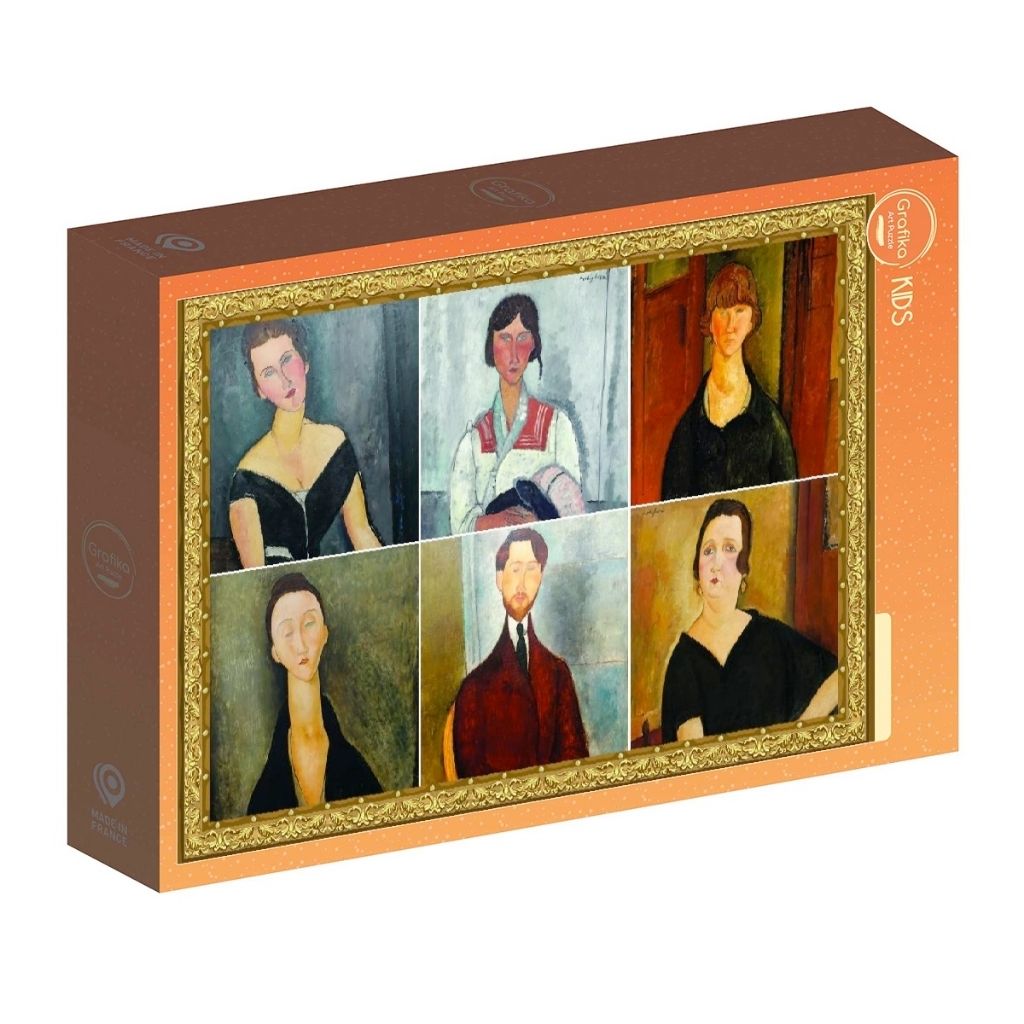
Amedeo Modigliani was born in Livorno on July 12, 1884. As a child he contracted a serious illness that would accompany him throughout his life.
At the age of fourteen he began to study painting.
His first experiments with sculpture date back to the summer of 1902; the following year he enrolled at the Institute of Fine Arts of Venice.
At the beginning of 1906 Modigliani arrived in Paris, took a house in Montmartre and attended the Académie Colarossi. His early works were influenced by Henri de Toulouse-Lautrec, Gauguin and Cézanne.
Later in the autumn of 1907 he met his first patron,
Dr. Paul Alexandre who, before the Great War, bought some of his works. Modigliani exhibited in 1907 and 1912 at the Salon d’Automne and in 1908, 1910 and 1911 at the Salon des Indépendants.
In 1909 Modigliani met Brancusi when both were living in Montmartre. From 1909 to 1915 the Italian focused on sculpture, although, to a limited extent, he continued to draw and paint.
Most of his paintings date to the years between 1916 and 1919. The only solo exhibition granted to the artist during his lifetime was held in December 1917 at the Galerie Berthe Weill.
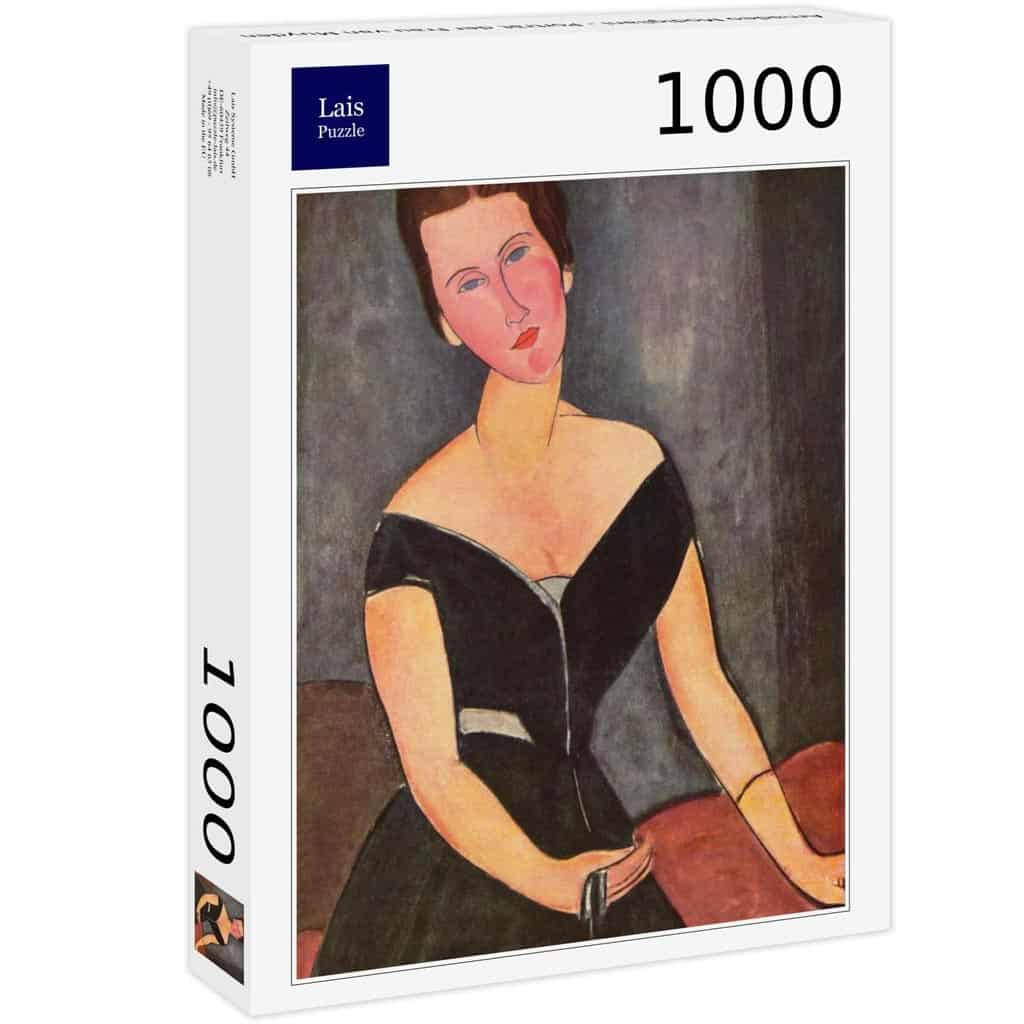
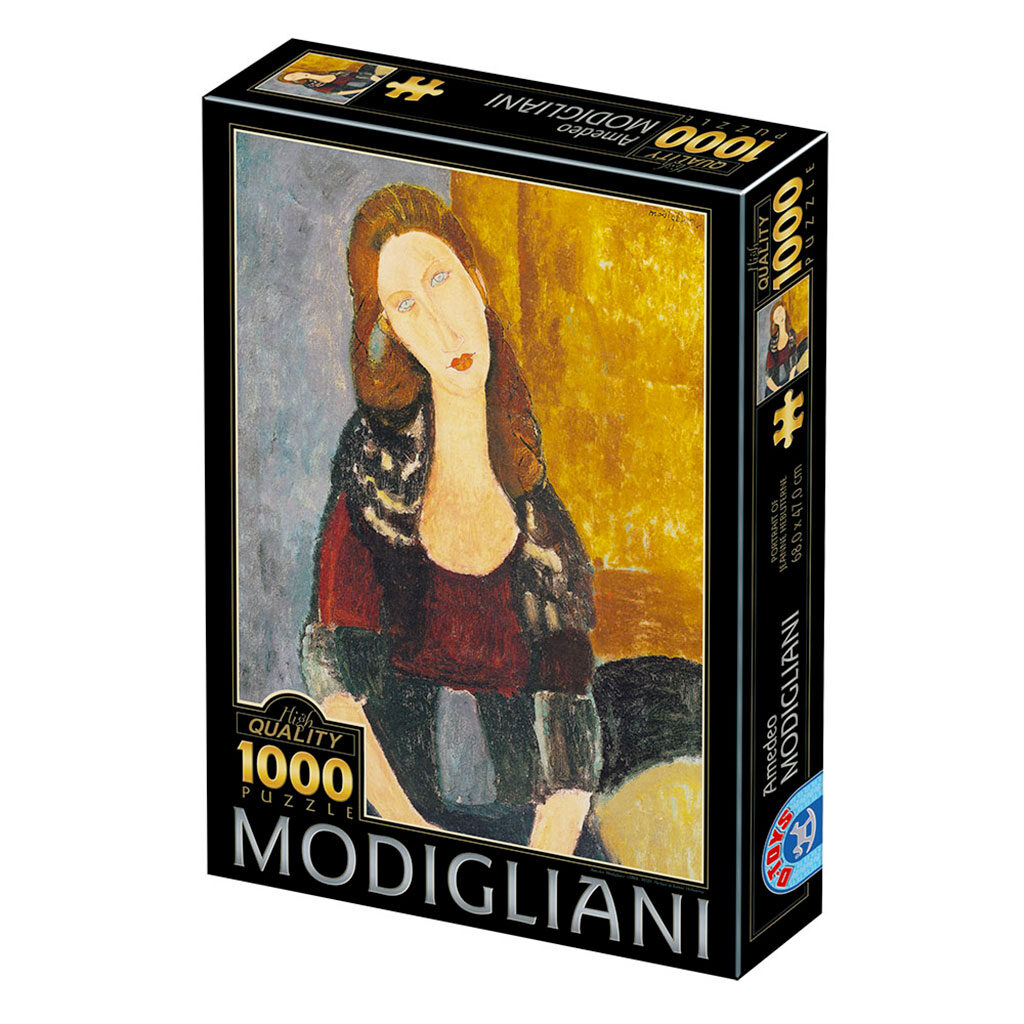
In March 1917 Modigliani met Jeanne Hébuterne who would become his partner and model. From March–April 1918 until May 31, 1919 they lived in the south of France, both in Cannes and in Cagnes.
Finally Modigliani died in Paris on January 24, 1920.
It is difficult to reconstruct the story of an artist such as Amedeo Modigliani by completely separating it from the legend that grew around him.
His daughter Jeanne tried to do so, painstakingly reconstructing a biography that is both an accurate tribute and apparently a cold one.
But it is a fact that the young Jewish artist from Livorno, weakened by tuberculosis and emotionally fragile, thrown into the Parisian nights in a vortex of drug intoxication, living in poverty, whose premature death was followed the next day by the suicide of the woman he loved who was pregnant with their second child, is surrounded by an aura of human as well as artistic fascination.
The importance of the artist therefore lies in his way of painting and certainly not in that cursed legend which was not his alone.
He studied in Florence, in Venice and, from 1906, in Paris. His ambition was to become a monumental sculptor, to rediscover in sculpture the formal strength that comes from synthesis, from that luxury for a few which is the apparent poverty of works.
His classical sense of form left no room for investigation of the urban context: his nudes and his faces (he painted only a small number of landscapes) are never characterized by social denunciation.
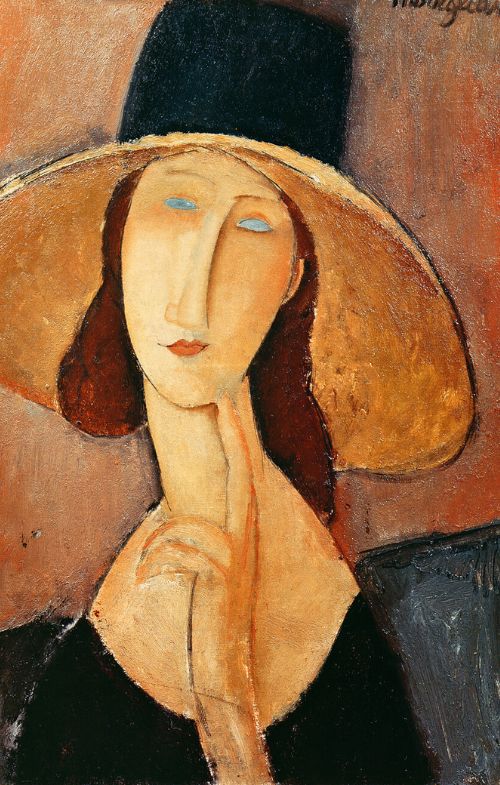
The eyes are often empty, just like those of statues. If the necks are too long and the breasts of the women too spherical, it is not because Modigliani wanted to deform the reality he saw, but because he wanted to ennoble it by emphasizing its geometric aspects: cylinders, spheres, triangles, that is, the bases of an architectural vocabulary.
When Modigliani completely stopped sculpting, abandoning the simplified and sacred heads that were his main sculptural achievement, the hardness of carving was reflected in the outlines of his paintings.
The technique that resulted was decidedly personal, a hybrid between painting and sculpture: the outlines were not drawn at once, but often retraced over a previous more hesitant drawing. This is a clue that reveals how the rigidity of the lines was exactly what he desired; it did not arise from an instinctive impulse, but was the result of research.
The colors lend themselves to filling these forms in a flat, decisive way, never weakened by chiaroscuro effects but not emphasized by overly strong contrasts either, of Fauvist influence.
The lack of the materiality of sculpture was compensated by the dense mixture of pigments, carved rather than painted, worked more with a chisel than with a brush.
The last significant source for Modigliani was the geometric approach of Cézanne, his desire to structure the painting according to simple directions and an order that, besides belonging to the deep layer of things, also governs the organization of our visual field and our way of perceiving.