
Novità!
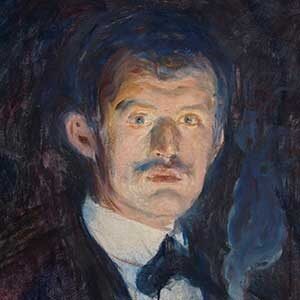
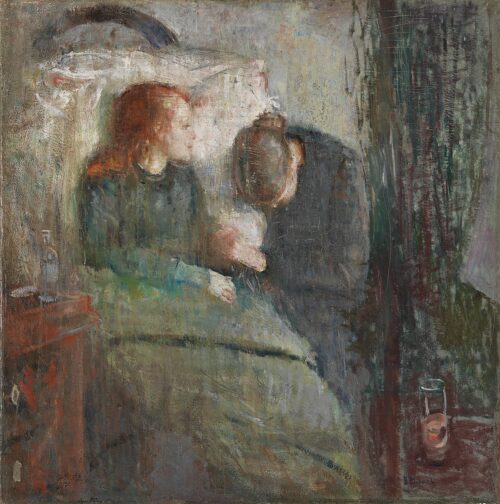
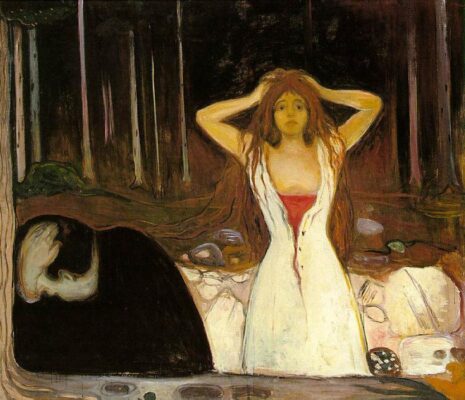
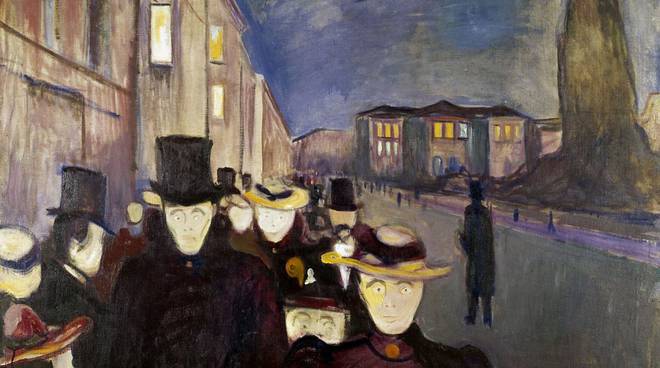
Discover with us our Munch puzzles and enter the deep world of emotions of the greatest Norwegian artist in history.
Munch’s art is characterized by an extraordinary emotional strength and communication.
In fact Munch was a true revolution in the expressive technique of art, anticipating the advent of German Expressionism by more than a decade.
For this reason we have chosen the Munch puzzles to allow you to enter with us into the powerful works of Munch and of the entire Expressionist movement.
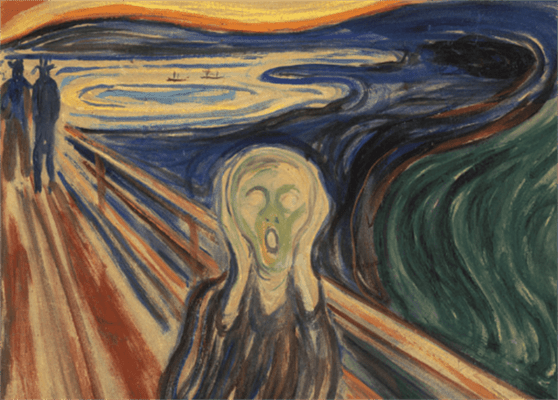
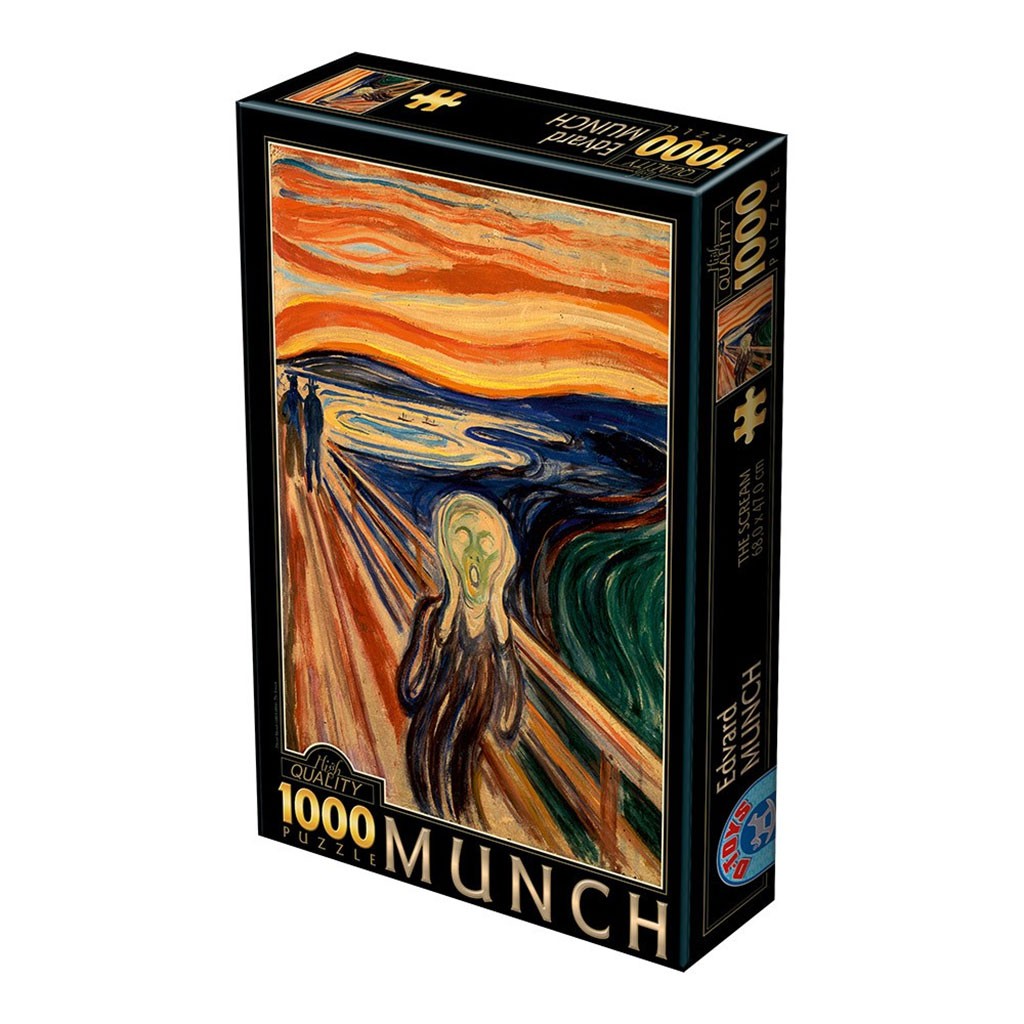
What strikes us about the paintings in the Munch puzzles such as the The Scream by Munch puzzle is the extraordinary emotional intensity that the painter was able to convey with the use of the brush. He graphically created the density of his thoughts and the sadness of the painter’s life.
At Puzzle Arte we want you to discover these masterpieces through our puzzles.
Observing Munch’s works in every detail and discovering them piece by piece means embarking on a journey: a true experience into the depths of the great Expressionist painter Edvard Munch.
He is undoubtedly one of the first and most significant exponents of European Expressionist painting. In fact his influence was absolutely decisive also for the later development of the German and Austrian Expressionist art experiences.
For this reason in Munch we find all the great social and psychological themes of the time: from uncertainty about the future to the dehumanization of bourgeois society, from human loneliness to the tragic presence of death, from existential anguish to the crisis of ethical and religious values.
Edvard Munch had a complex and often contradictory personality.
Munch was born in Løten, in Norway, on December 12, 1863; the following year his large and unfortunate family moved to Christiània, present-day Oslo, and in 1868 his mother died of tuberculosis.
The death of his mother was the first of a very long series of difficult events that struck Munch, shaping his thoughts and his life experience.
In 1877 his fifteen-year-old sister also died of the same disease.
These were the first of many early encounters with illness and death that would mark the entire existence of the artist, influencing a strongly pessimistic outlook. In fact he later said:
Without fear and illness my life would be a boat without oars
However starting from 1880 Munch began regular artistic studies at the Royal School of Painting in Oslo and his training reflects the clear naturalistic influence of his first teachers.
However the Impressionist experience was also soon surpassed. In fact Munch would never paint what he sees, as the Impressionists did in their En plein air paintings, but what he has seen.
In 1892 Munch exhibited about fifty of his paintings in Berlin and the critics’ judgment was so harsh, calling it an insult to art, that after only one week the exhibition was suspended.
Despite his fragile health, in 1899 he participated in the Venice Biennale and was among the guests of honor at the exhibition of the Vienna Secession together with Gustav Klimt.
By 1914 the time was finally ripe for his art, even if never fully understood, to be accepted by critics.
In fact he became a member of the German Academy of Arts and an honorary member of the Bavarian Academy of Fine Arts, and in 1937 Munch experienced the first Nazi persecutions.
The Hitler regime defined as “degenerate” as many as 82 of the artist’s paintings displayed in various public museums in Germany and ordered their sale. In 1940, when the Germans invaded Norway, the artist refused any contact with the invaders and took refuge for a short period in the United States.
He died shortly after, on January 23, 1944, in Oslo, leaving all his possessions and works to the municipality of the capital which in 1963, on the centenary of his birth, dedicated a special museum to him: the Munch Museet.
Expressionism, especially that of Munch, tends to remove from the world any objective reality and transfer it into the personal sphere. In other words, what for a realist painter is an old country house, with peeling plaster and faded frames, for an expressionist becomes a sort of distorted face, in which the plaster becomes wrinkled skin, the windows murky wide-open eyes, the door a horrible gnashing mouth.
Thus if the motivations of Expressionism are contemporary, deeply rooted in a society where class contrasts created unemployment and devastating imbalances, the technical means used to give them form have ancient origins.
Behind the violent colors, the rough forms and the angular modeling, the true and immortal Northern European soul reappears, indissolubly linked to Gothic culture with its anxiety for religiosity, and to the Baroque one, which represents a refined evolutionary variant of the former.
To express is a verb of Latin origin that derives from the union of the particle ex, indicating movement from within outward, with the verb to press.
Therefore to express literally means to expel, to bring to light. In fact art is often spoken of as an extraordinary means of expressing emotions and ideas.