
Novità!

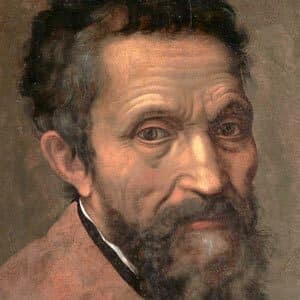
Michelangelo was an Italian sculptor, painter, architect and poet. A leading figure of the Italian Renaissance, he was already recognized during his lifetime as one of the greatest artists of all time.
Michelangelo Buonarroti was born in Caprese, in the Val Tiberina, on March 6 1475. At the age of twelve he joined the workshop of Domenico Ghirlandaio, one of the most important Florentine artists of the time.
Sponsored by Lorenzo the Magnificent, around 1490 he settled in the Medici palace in Florence on Via Larga, coming into contact with Poliziano and the greatest representatives of Florentine Neoplatonic culture.
Michelangelo was overall an artist as brilliant as he was restless.
His name is linked to a series of works that have secured his place in the history of art, some of which are known all over the world and considered among the most important works of Western art:
They are considered unsurpassed achievements of creative genius.
The great statue of David created by Michelangelo soon became the symbol of the proud independence of the Florentines. It was the workers of the Florence cathedral who offered payment to the master for the creation of the monument.
Initially, in 1464, the task of sculpting a giant over 5 meters tall, using marble that had arrived in Florence by boat along the Arno from a quarry in Carrara, had been entrusted to Agostino di Tuccio who, however, shortly after starting the work, abandoned the project. In 1476 the request passed to Antonio Rossellino, also remaining unfinished.
The young David has a proud posture focused on the completion of the warlike gesture against the giant Goliath.
The frowning expression, the proud and penetrating gaze, a slight grimace on the lips perhaps betraying a feeling of contempt toward the enemy, allude to the hero’s concentration before the battle.
David, the biblical hero, is represented at the moment when he prepares to face Goliath, the Philistine giant.
The Buonarroti breaks with tradition which depicts David with the head of Goliath lying at his feet, as well as as “a boy with a gentle appearance, reddish hair and beautiful eyes”.
David with his proud attitude soon became the symbol of Florence. In fact the heroic behavior of the protagonist well represented the intention of the Florentine people to fight against every tyranny.
The David was placed in front of the Palazzo Vecchio; today its place is occupied by a copy, while the original is located at the Academy of Fine Arts.
Still in Florence, for the marriage of Agnolo Doni, he created a panel representing the Holy Family, known by the name of Tondo Doni.
“Lord, grant that I may always desire more than I can accomplish.“