
Novità!
 Hot
Hot
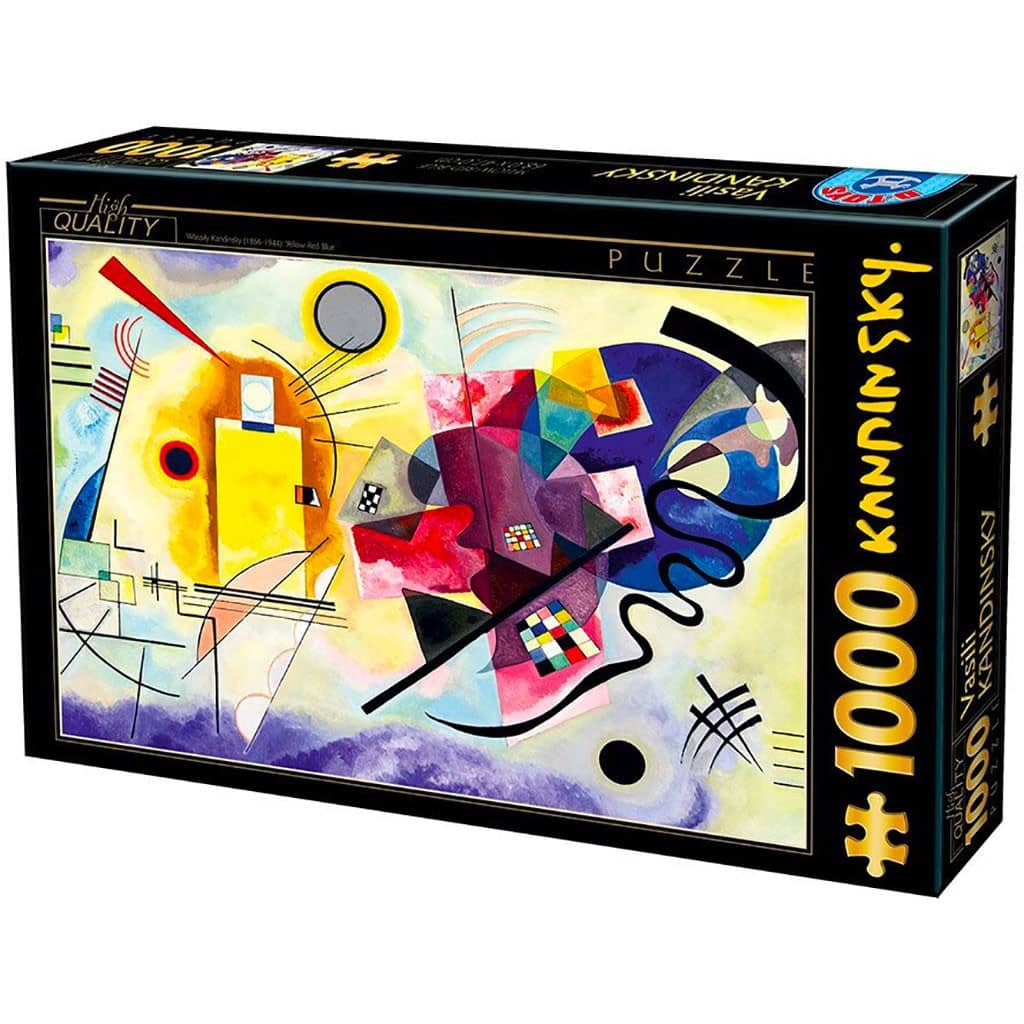
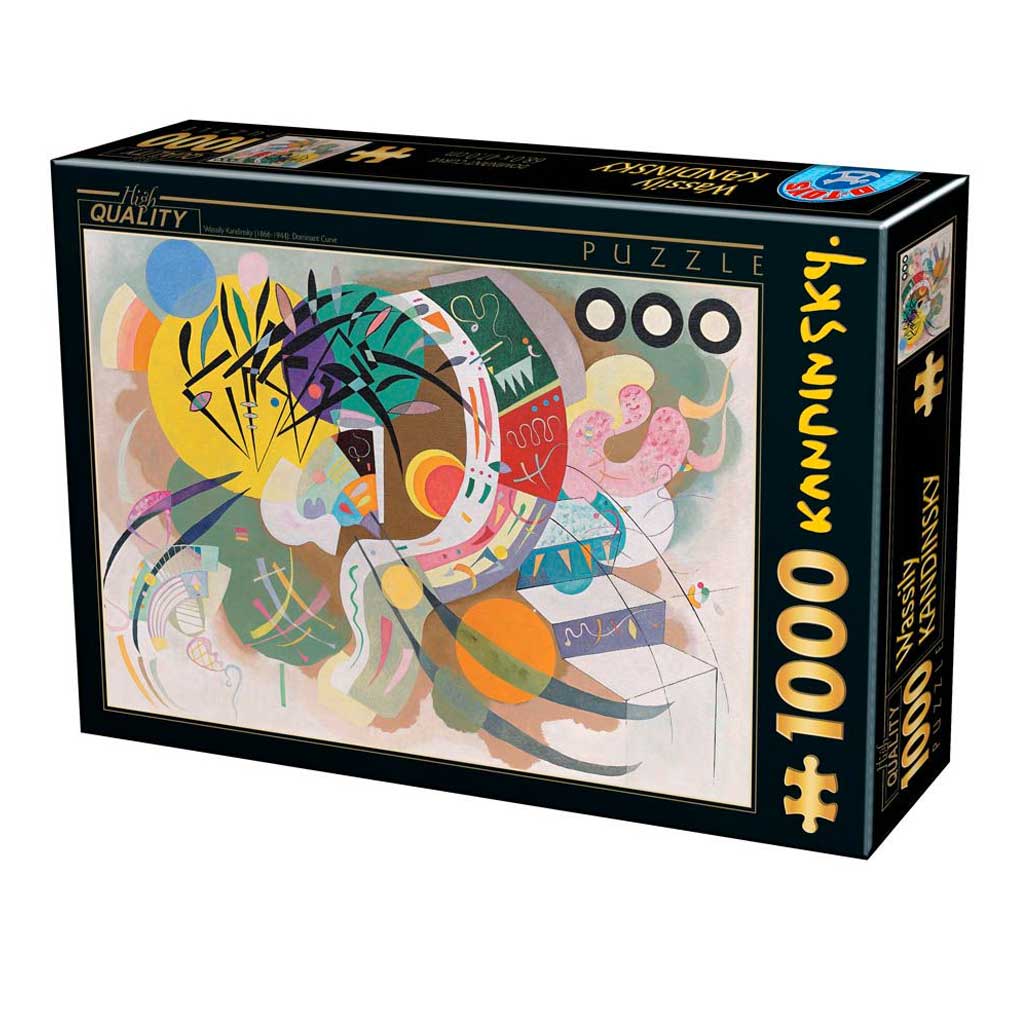
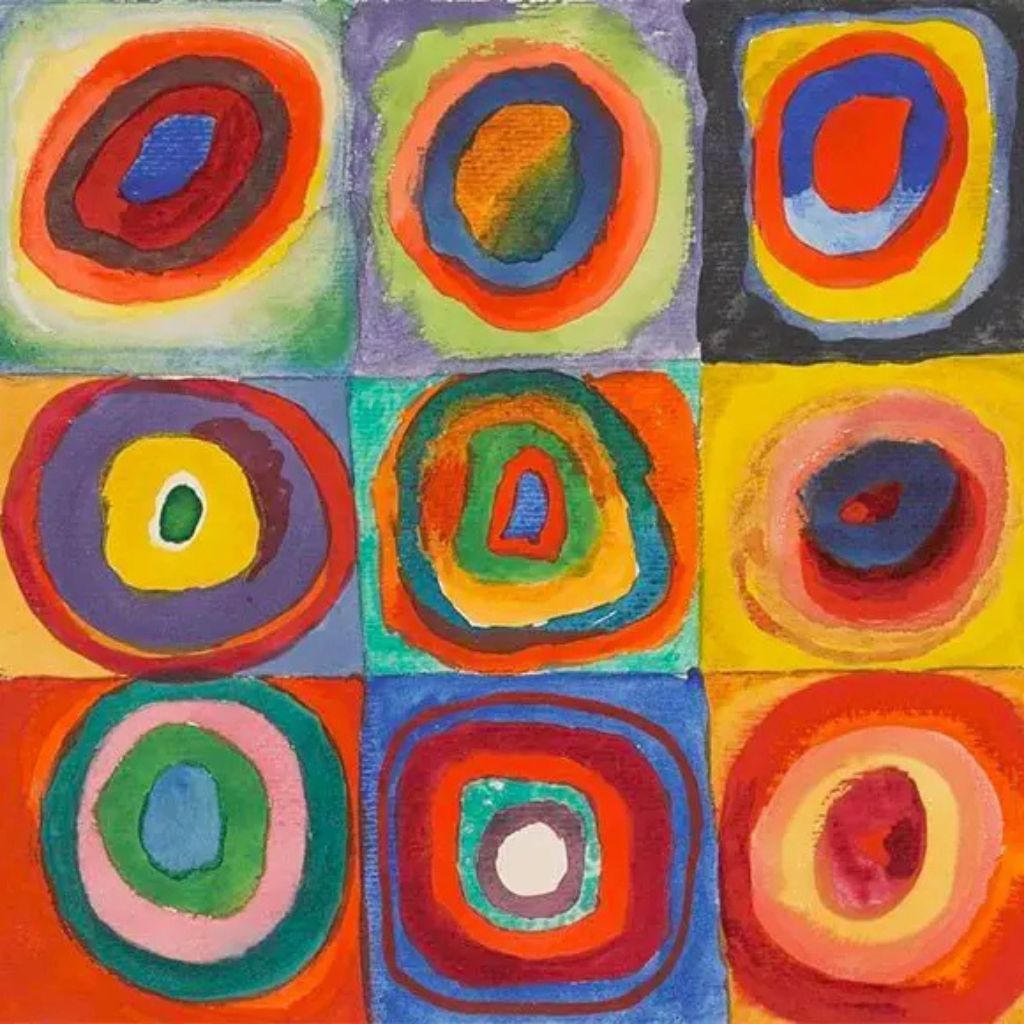
Discover our Kandinsky puzzles with us and immerse yourself piece by piece in the revolution of abstract art puzzles.
Kandinsky’s art is characterized by the intimate relationship between the artwork and the emotional and spiritual experience of the artist and the observer.
We chose Kandinsky puzzles to allow you to enter the deep intimacy of a work of art, into its silent emotional cry and into the ecstasy of color
In fact what strikes about the paintings of Vasilij Kandinsky is the continuous search to communicate and express inner identity through art. His works are imbued with a musical sense that makes them compositions, improvisations and expressions more similar to a lyrical concert than to a conventional painting.
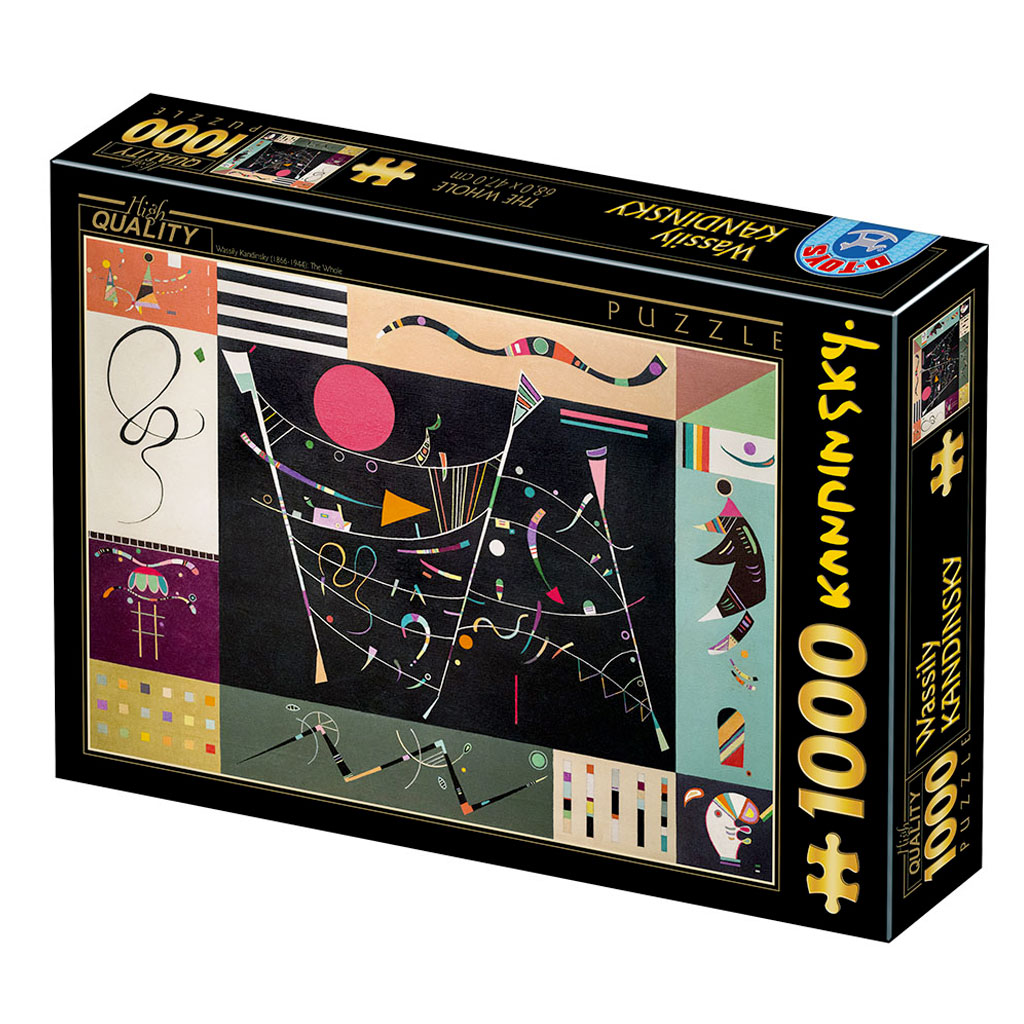
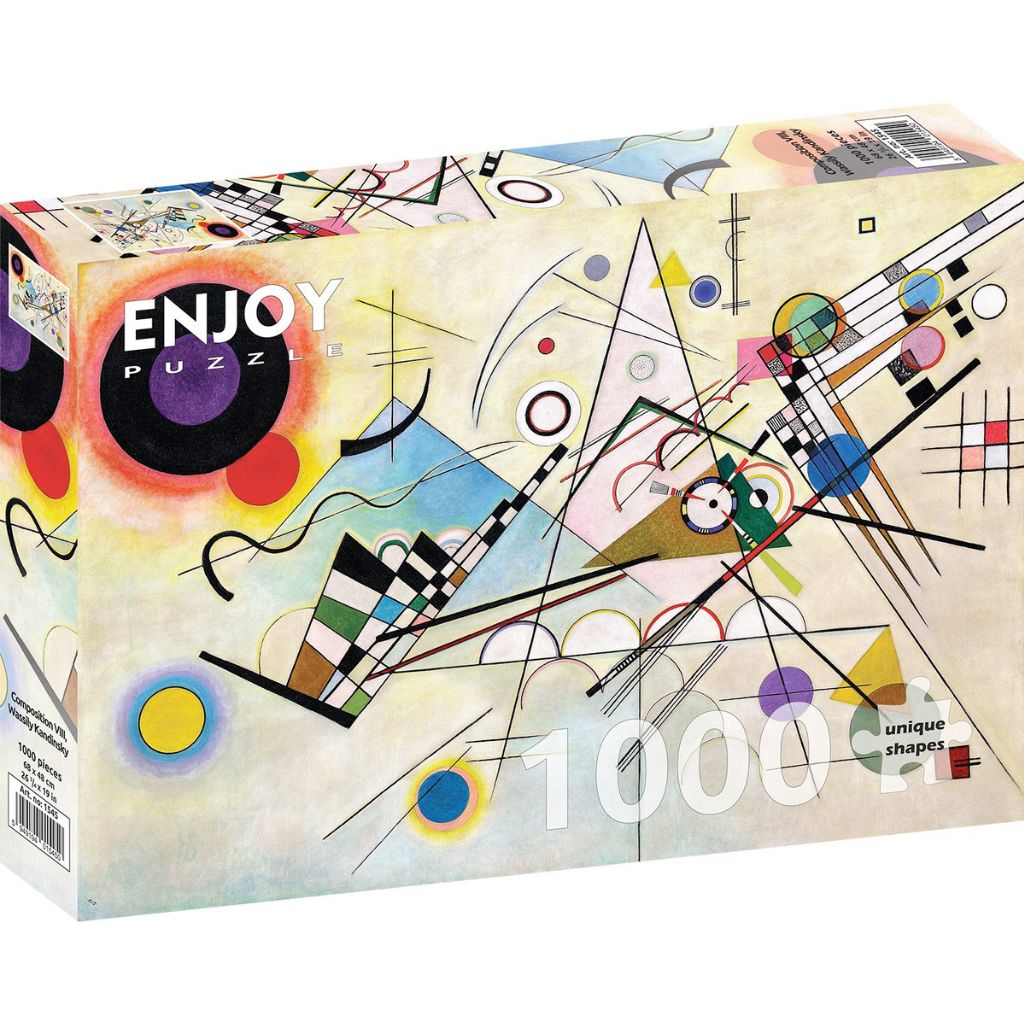

For this reason, like musicians searching for the perfect note, we at Puzzle Arte want you to discover the works of Kandinsky through his puzzles.
In fact the puzzle is a tool of intimate relationship between the artwork and you who are building it; by searching for every piece of Kandinsky’s works you will immerse yourself in his dense spiritual world.
Observing his works in every detail and discovering them piece by piece means embarking on a journey into your emotions.
It was the strong insistence of Franz Marc that convinced the publisher Piper of Munich to publish Concerning the Spiritual in Art by Vasilij Kandinsky.
In the fourth chapter Kandinsky writes that in all arts, especially those of his time, a search for abstraction and interiority can be perceived. And, in a comparison between the constituent elements of the individual arts, he adds that:
the richest teaching comes from music. With few exceptions, music has for some centuries been the art that does not use its means to imitate natural phenomena, but to express the psychic life of the artist and to create the life of sounds.
An artist whose ultimate aim is not imitation, even artistic imitation, of nature, but who is a creator who wants and must express his inner world, looks with envy at the fact that these goals have been achieved naturally and easily by the most immaterial art today: music.
It is understandable that he turns to it and tries to rediscover the same potentialities in his own art.
From this comes the present search for a pictorial rhythm, for an abstract mathematical construction; from this comes the value given to the repetition of chromatic tonality, to the dynamism of colors and to the succession of lines.
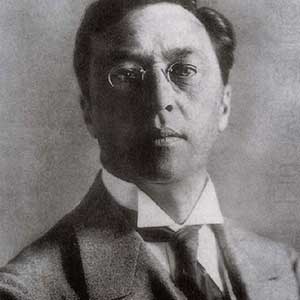
Vasilij Kandinsky was born in Moscow on December 4, 1866 and there he completed his university studies graduating in Law in 1892.
He was immediately offered a university professorship which, however, he refused because he wanted to devote himself to his passion: painting.
Already when he was a university student he had the opportunity to see the works of the Impressionists, visiting their Moscow exhibition of 1895 and being deeply impressed by it.
In 1896 he settled in Munich where he remained until 1914 when, at the outbreak of the First World War, he returned to his homeland.
In the Bavarian city he had the opportunity to come into contact with numerous painters, poets, art critics and musicians, with some of whom he founded the Neue Kunstlervereinigung München and Der Blaue Reiter.
Returning to Russia, now famous, he took part in the renewal of society and the cultural life of his country after the October Revolution: he reorganized provincial museums, created the Institute for Pictorial Culture (1918) and founded the Academy of Artistic Sciences (1920).
Thanks to the very important role he had in Russia, in 1921 he obtained permission to travel to Germany for six months: he would never return to his homeland again.
In fact in 1922 he became a professor at the Bauhaus in Weimar, a free school of arts and crafts created in 1919, where he directed the wall painting workshop.
In 1933 the Bauhaus of Weimar was closed by the Nazi regime. The following year, for political reasons, Kandinsky left Germany for France. In fact he spent the last ten years of his life living in Paris; he died there on December 13, 1944 in the French capital.
The first influences Kandinsky experienced in Munich were those of German Art Nouveau: Jugendstil.
The Blue Rider, in fact, a painting from 1903, is still rich in decorative charm and strong aesthetic and chromatic connotation. The term «blue» was added only in 1912 by the artist, after the publication of the yearbook «Der Blaue Reiter»; therefore the original title of the work was “The Rider”. Without any reference to the artistic themes developed in the yearbook and within the group recognized under the name of the Blue Rider.
On a green-golden hill, which occupies almost the entire surface of the canvas and is drawn by a delicate continuous curved line, a rider with a blue cloak gallops on his white steed.
The trees in autumn dress, the bluish mass of the forest and the light blue of the sky, crossed by small white clouds, are the necessary chromatic completion for the idyllic grace of the setting.
Riders, as Kandinsky himself would affirm, were a subject very loved by the artist, who was deeply attached to the stories and popular traditions of the Russian Middle Ages.
Meditation on European pictorial experiences, especially those of the Fauves, led Kandinsky to change genre and methods bringing him increasingly closer to the early avant-gardes.
In fact in 1909 he created in the town of Murnau am Staffelsee, in the Bavarian Alps, the painting entitled Murnau. Summer Landscape.
In the canvas the artist entrusts violently colored patches with a strong power of suggestion. The mountains, cobalt blue bordered with black, almost blend with the blue-green of the sky. The houses of the small German town, instead, are arranged along the convex edge of a hill and, flooded with sunlight, seem to be the continuation of the hill itself, treated with the same colors: intense yellow, blue and green, which arises from their union.
Reflections on the relationships between painting and music finally convinced Kandinsky that painting should increasingly resemble music and that colors should increasingly assimilate to sounds. Music, in fact, is pure expression of inner needs and does not imitate nature: therefore it is in itself abstract.
Painting too, according to Kandinsky, must be abstract, abandoning the imitation of a model. Only an abstract painting, that is non-figurative, where forms have no connection with anything recognizable, freed from dependence on the physical object, can give life to spirituality.
Kandinsky recounts that slowly he developed a sort of ability not to notice the object in the painting, to let it escape him.
Much later, in Munich, one day I was struck by an unexpected spectacle, just as I was returning to my studio. The sun was setting; I was returning after drawing and was still completely absorbed in my work when, opening the studio door, I saw before me an indescribably beautiful picture.
At first I was astonished, but then I approached that enigmatic painting, absolutely incomprehensible in its content and made exclusively of patches of color. Finally I understood: it was a painting that I had painted and that had been placed upside down on the easel.
The next day I tried, in the sunlight, to revive the same impression, but I did not succeed. Although the painting was still upside down, I could distinguish the objects and that subtle light of the sunset was missing. That day, however, it became perfectly clear to me that the object had no place, indeed it was harmful to my paintings.
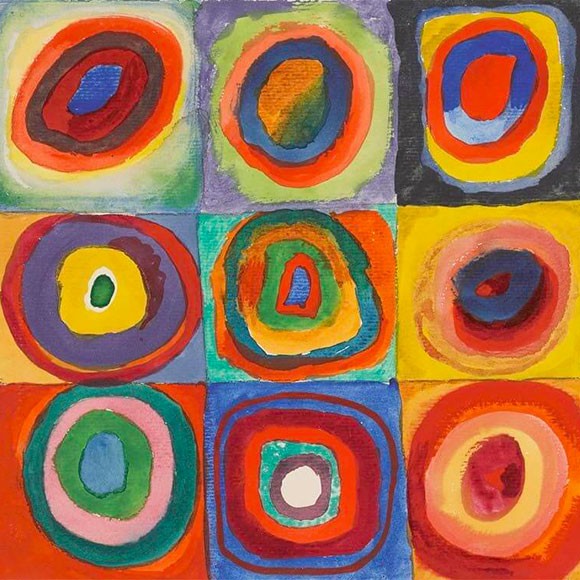
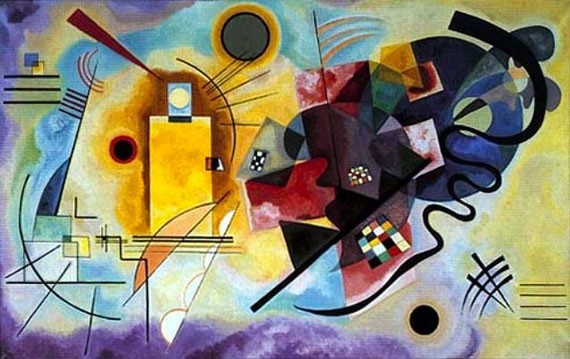
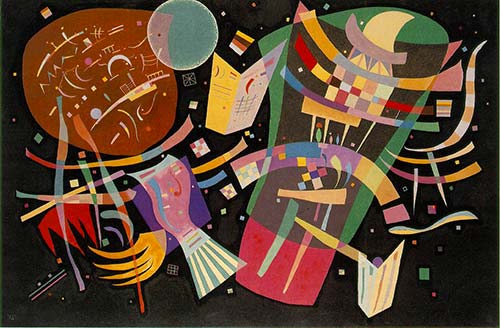
From now on it will become increasingly difficult to identify known forms in Kandinsky’s paintings, while the combinations of colors will take on greater and greater importance, composing themselves in such a way as to give rise to a true feast for the eyes.