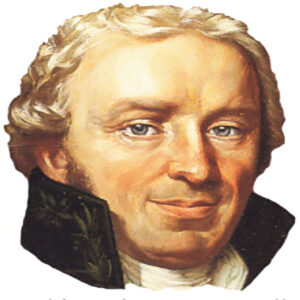


Giovanni Battista Nolli, also known as Giambattista (1701-1756), was an Italian architect and engineer.
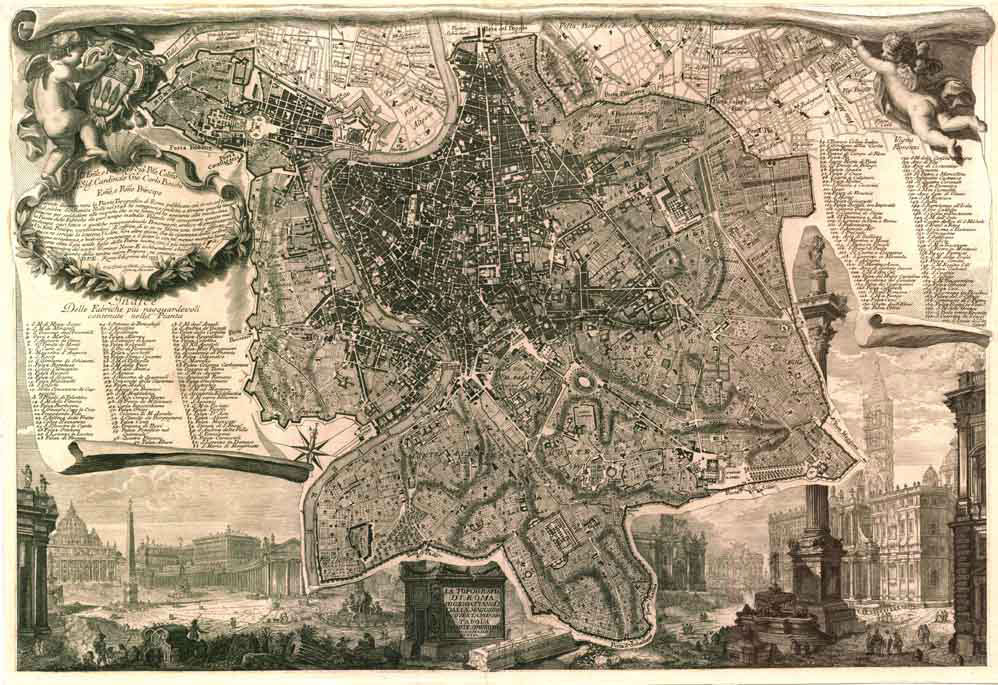
He soon left Como, his birthplace, to work as a surveyor. Moving to Rome, since literary and scientific circles often discussed the fact that Rome, unlike other major European capitals, lacked a modern and detailed map, Nolli conceived the idea of filling this gap, starting in 1736 to draft a map detailing streets, monuments, and the surrounding territory.
With the collaboration of his son Carlo, later joined by other distinguished personalities such as the young Venetian engraver Giovanni Battista Piranesi and the Sicilian Giuseppe Vasi, Nolli formed a working group that initially self-financed the daily expenses of the project and later leveraged the interest of Cardinal Prospero Lambertini, who became Pope Benedict XIV (1740-1758), officially endorsing the creation of the map of Rome and authorizing access to private properties (palaces, gardens, convents, even cloistered ones) to conduct surveys.
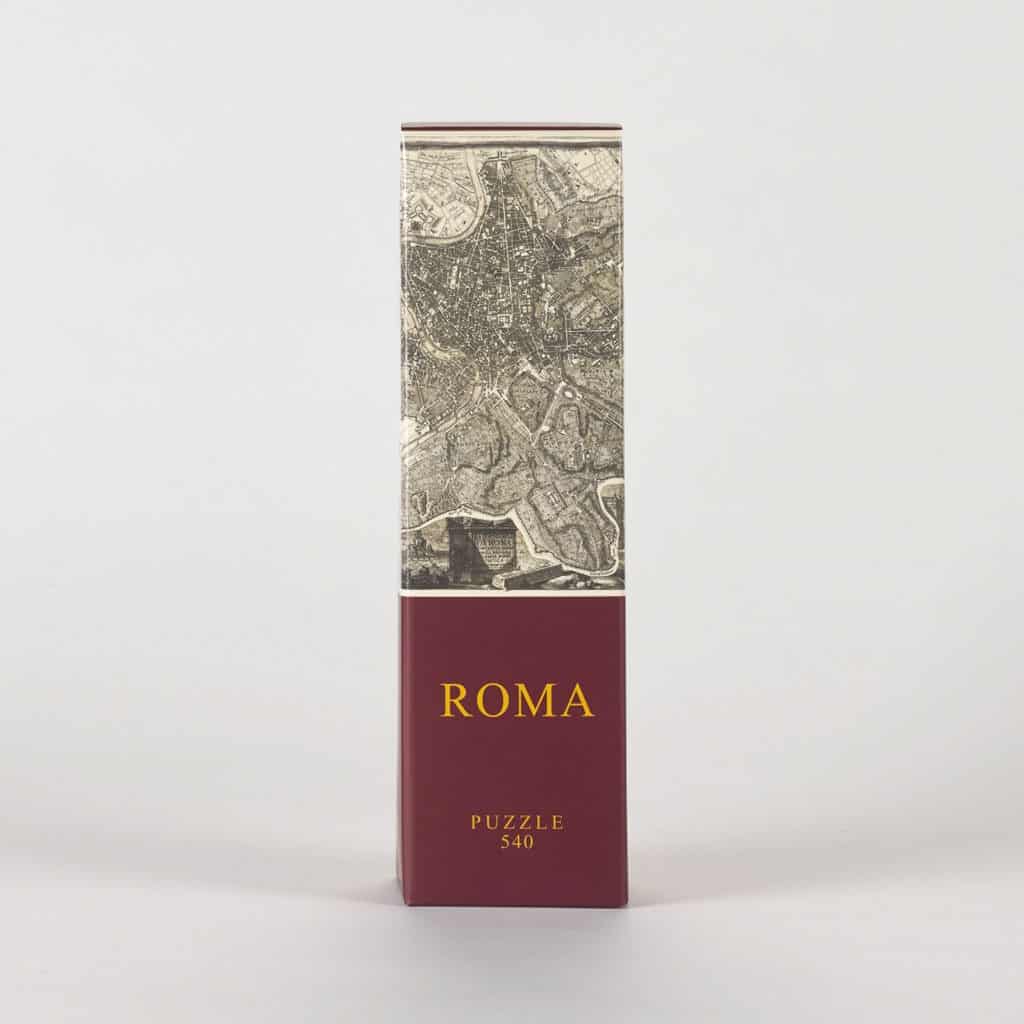
The result was a prestigious and extraordinary large map (176 x 208 cm), the Nuova Topografia di Roma, composed of 12 sheets and accompanied by detailed indexes of streets, churches, and monuments, completed and published in 1748.
Moreover, the map shows the new division of Rome into 14 Rioni, established in 1744 by Benedict XIV (to whom the map is dedicated), which led to the creation of beautiful stone plaques indicating streets and squares, many of which are still present in the streets of the capital.