
Novità!
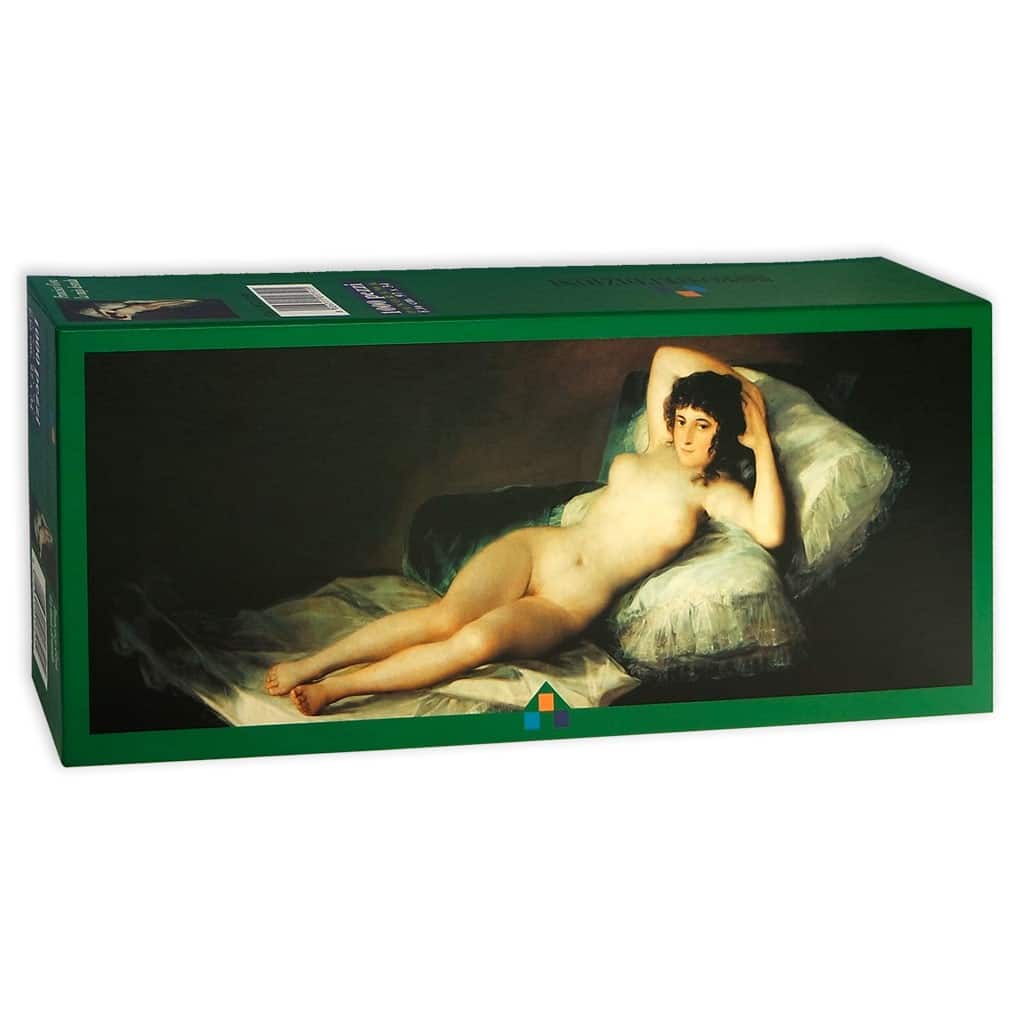
Discover our Goya puzzles with us and immerse yourself piece by piece in the Romanticism of the eighteenth century.
The art of Goya is characterized by a great expressive power due to his tormented personal experience.
Indeed, while his youthful masterpieces reflect carefreeness and positivity, in adulthood we find a much darker and melancholic Goya.
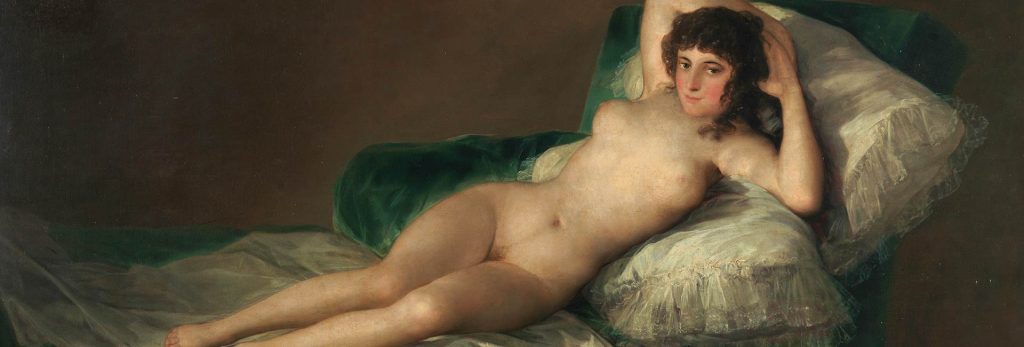
At Puzzle Arte, we want you to discover Goya puzzles and the works of the famous Spanish painter by presenting one of his greatest masterpieces: La maja desnuda.
Although this work was painted during the darkest and most anguished period of the artist’s life, it reflects unparalleled beauty and elegance.
A true masterpiece of seduction and femininity.
By building the Goya puzzles piece by piece, you will immerse yourself in the torment and passion of his soul and his painting.
In Spain and France, as in the rest of the world, Romanticism in the visual arts is expressed primarily in painting.
Architecture throughout the century remained neoclassical, and the same can be said of sculpture.
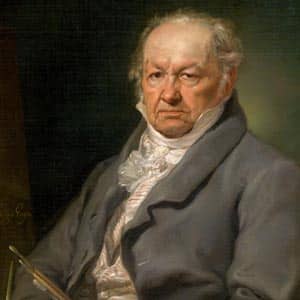
However, painting progressed with a new, sudden impulse, especially through the work of the one whose exceptional personality filled the first thirty years of the century: Francisco Goya.
Goya is the great continuator of the Spanish tradition inspired by the life of the people, and he brought this tradition to its highest and most dramatic vibrations. Indeed, in him there is that tragic sense of reality that, in different ways, was present in El Greco and Velázquez.
He approaches the first in certain eccentric deformations that are sometimes very slight, almost imperceptible, yet essentially transform the form.
From the second, he repeats the powerful realism that shines as the central motif of a lyrical transfiguration.
Indeed, in Goya there are undeniable literary motifs that appear in all Romantic artists.
A tragic sense of life finds its expression in painting, though in some ways it could also be expressed in words, which makes literary criticism of Romantic paintings easier.
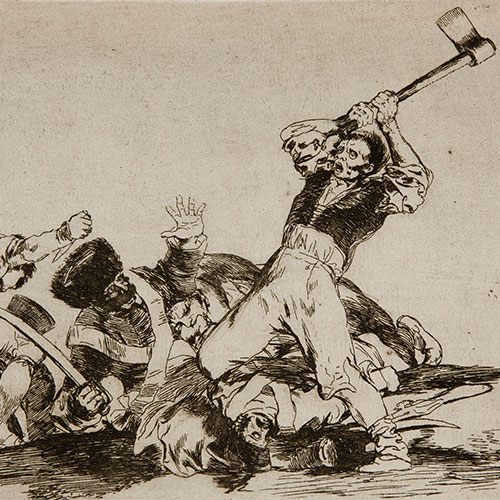
But it would be a mistake to consider Goya solely from this perspective. It is an error, for example, to focus on the tragic aspects of his terrible war scenes or genre scenes, only on the subject matter and what is most easily readable.
The true tragic sense lies in the ghostly quality of the lights, in the drama of the forms that now appear compact and solid, now seem to dissolve under the desperate language of elusive color or funeral brightness.
The simplest and most everyday aspects of reality have an inexpressible tragic significance for Goya, even when they appear in forms of joy and elegance.
For example, La feria (fair) de Madrid, evokes, one might say, a frivolous and gentle eighteenth century.
However, the lights are merciless and threatening, as are the heavy and oppressive shadows.
The girl in the foreground, violently illuminated, has a rigid grace, her large eyes fixed, as if aware of a threat looming over her, reflected in the thin, wrinkled, and sorrowful face of the old woman nearby.
The carriage, rather than moving, seems stranded in a rocky and inaccessible world, while the luminous lady within it is isolated in her unreachable solitude, as that light framed by shadow stands apart.
In La Feria de Madrid, the three lackeys clinging to the back of the carriage, with their realism, add a note between irony and grotesque. The background landscape is bleak and somber, while the objects in the foreground, with those two bare pitchforks, have a solid and impassive presence.
Moreover, all the contrasting movements of the composition add to its balance, expressing a sense of deliberate disorder, of dramatic confusion.
This Fair is in fact the expression of an absurd world full of irreconcilable values, secret threats, and impenetrable appearances.
In portraiture, the transfigurative ability of Goya perhaps reaches its highest peaks.
Consider, for example, this Portrait of the Wife where, in the extreme simplicity of its composition that makes it appear, at first glance, almost featureless, there is nonetheless a stir of dramatic values.
Indeed, that luminous face with large brown irises is uniquely asymmetrical, and on it the enormous hairstyle, also shifted, like the mouth to the left, gives a sense of twist, of physical deformation.
Moreover, the veil over the shoulders and chest, with its immaterial shine, has that ghostly quality characteristic of Goya, where light is not joy and smile but mysterious violence.
Additionally, the metallic sheen of the silk sleeves and the three fingers of the left hand, intensely illuminated to balance the brightness of the face, convey a deliberate hardness of lifelessness.
For in man, Goya seems to distinguish spirit from matter.
Matter, i.e., the body and clothes covering it, only partly expresses the spirit; the rest has its own life, mysteriously rebellious, with its tragic poetry.
On the other hand, the spirit is in the effort or resignation of its incomplete expression.
This is even more evident in the famous portrait of Ferdinand VII of Spain. Here the physical dominates violently.
The large deformed chin, fleshy nose, and thick eyebrows assert their materiality, as do the heavy gold embroideries in which color is applied in mass, producing a triumphant and massive brilliance.
But those enamel-like eyes, wide open as if in secret fear, suddenly reveal a human soul, oppressed under this blind imposition of splendid and deformed matter.
Goya had many followers and imitators, but they remained far from the essence of his art, not understanding his true spirit.
Try to grasp the tormented passion of the Spanish painter’s soul by constructing his masterpieces with the Goya puzzles in our catalog.