
 Hot
Hot
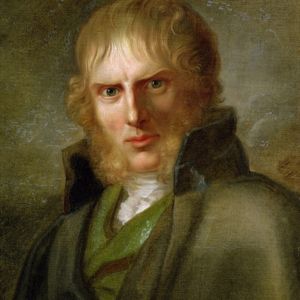
If there is an artist capable of transforming landscapes into emotion, silence, and spirituality, it is undoubtedly Caspar David Friedrich (1774–1840), considered the greatest German Romantic painter.
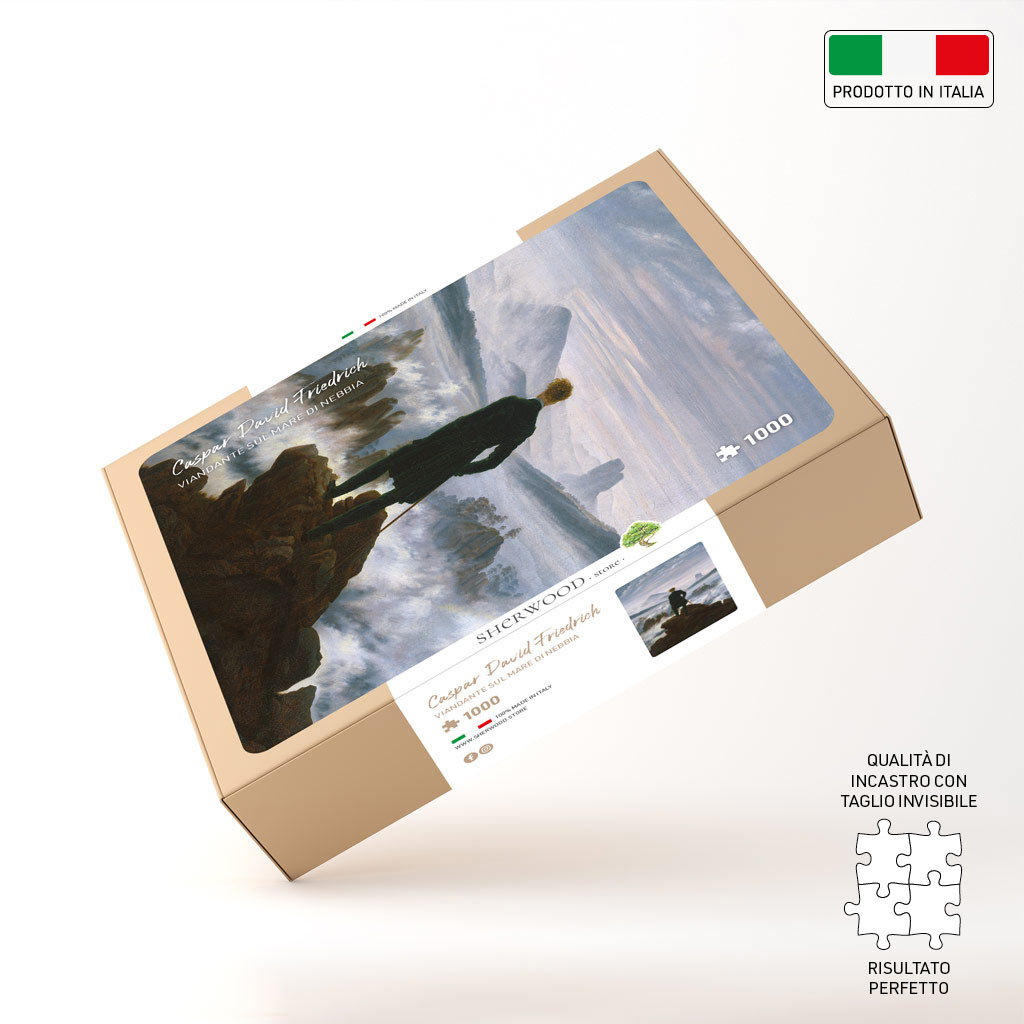
His works are not just images: they are landscapes of the soul, intimate reflections of the human condition. For this reason, today, when speaking of a Caspar David Friedrich puzzle, it means much more than a pastime: it refers to a contemplative experience, an inner journey, stage by stage, piece by piece.
Friedrich was born in Greifswald on the Baltic coast and was marked from a young age by a series of family losses. This deep sensitivity, accentuated by a strong sense of the sacred and nature, fueled a painting rich in symbolic, religious, and philosophical meanings. He studied at the Copenhagen Academy, but it was in Dresden, the nerve center of German Romanticism, that he developed his unique style.
In his paintings, nature dominates man, who is often depicted from behind, small, solitary, absorbed in contemplating the infinite. This compositional device, called Rückenfigur, invites the viewer to project themselves into the character, becoming a traveler, pilgrim, seeker of meaning.
In works such as the Wanderer above the Sea of Fog or Abbey in the Oakwood, the observer is immersed in rarefied atmospheres, suspended between the real and the symbolic, where every bare tree, Gothic ruin, or leaden sky tells the mystery of existence.
Friedrich’s paintings embody the fundamental principles of Romanticism: the cult of nature, interiority, the feeling of the sublime, the confrontation between man and the infinite. The artist does not paint landscapes to imitate them, but to reveal what is unseen, to explore spirituality in natural matter.
Emotion and Symbolism.
In the final years of his life, Friedrich was marginalized by new artistic currents and died in relative poverty. Only from the late 19th century was his work rediscovered, and in the 20th century he became an icon of modern art, inspiring filmmakers, writers, musicians, and… even puzzle creators.
Today, a Caspar David Friedrich puzzle is much more than an artistic product: it is an invitation to pause, reflect, reconnect with the landscape and with oneself. It is the opportunity to slowly build an image full of emotion and symbolism, reconstructing not only the artwork but also one’s own perspective on the world.