
Novità!

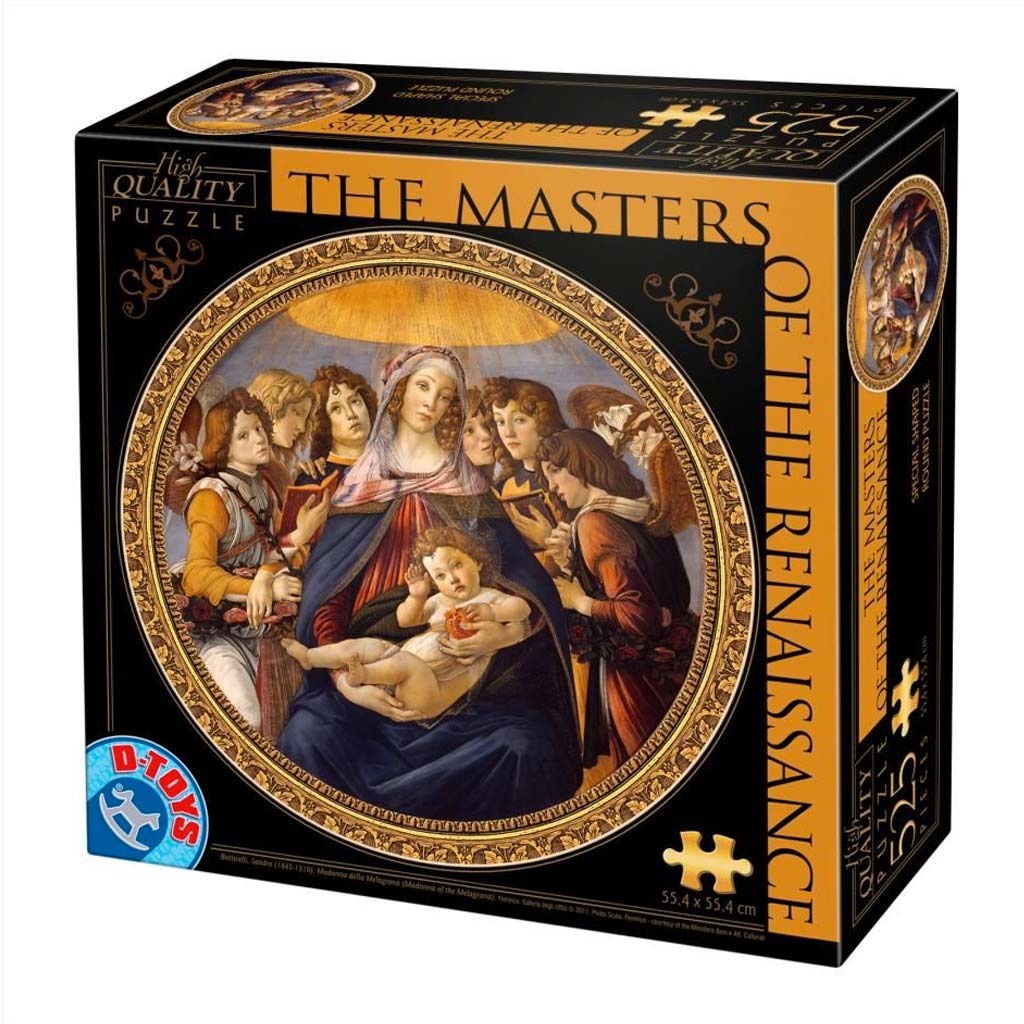
The art of Botticelli is characterized by a rediscovery of classical authors, Greek mythology, and a renewed conception of man, placed once again at the center of the universe.
We have chosen Botticelli puzzles as an example of beauty and elegance.
What strikes about Sandro Botticelli’s paintings is the continuous pursuit of perfect beauty and grace.
His works are imbued with a lyricism that makes the subjects appear more like beings from an ideal world rather than faithful representations of reality.
However, Botticelli was forgotten for more than three centuries, and only art experts in the 19th century revived the works of the great Florentine master. For this reason, like the fortunate 19th-century researchers, we at Puzzle Arte want to help you discover Botticelli’s works through his puzzles.
Observing his works in detail and discovering them piece by piece means embarking on a journey into distant worlds where men are wise and strong, and women are beautiful and delicate. Botticelli puzzles such as “Primavera” are the most fun way to begin this journey.
With late 15th-century Renaissance art, the focus shifts from volitional, historical action to human sentiment as a way of being-in-the-world.
The problem can have many solutions: sentiment as aspiration toward the transcendent or divine; as interest in understanding the natural world and participating in the deeper life of the cosmos; as satisfaction in living in a given environment or society; as nostalgia for a past, irrecoverable time; as restlessness, the desire to understand everything immediately and go beyond.
Later solutions, such as Michelangelo’s deeply ethical approach, will also emerge.
But from the initial examples, we already see the diverging Florentine tendencies of the late Quattrocento, with personalities of various greatness but all significant: Botticelli, Leonardo, Ghirlandaio, Piero di Cosimo, and Filippino Lippi.
In Florence and at the Medici court, art cannot ignore its context—it must take a position. In other words, art must address its own problems or consider others’ problems in relation to its own. It must specialize.
Botticelli was considered a mystic of ideal beauty: a pure aesthete. Yet on closer analysis, his painting is full of problems and deep Neoplatonic reflections.
His teacher was Verrocchio, and in Verrocchio’s workshop he met Leonardo, seven years younger: the contrast between the two personalities largely explains Botticelli’s painting and the Florentine period of Leonardo.
Comparing the two masters shows why Sandro Botticelli is considered the last of the great 15th-century masters and Leonardo da Vinci the first great genius of the 16th-century.
Philosophical in spirit, as Vasari noted, Botticelli traces the origin of the contrast between nature and history. His goal is to overcome antitheses, to find something beyond both nature and history.
However, Leonardo da Vinci seeks to penetrate reality, analyze it, discover its secrets: he wants experience. Botticelli seeks to transcend it, not to be “contaminated” by experience: he wants the idea.
The Neoplatonism of which Botticelli is part is not a precise definition, but a vague being-beyond, beyond nature (or space) and history (or time). Beauty, intertwined with the idea, is aliquid incorporeum: distrust of reality rather than a perfect image.
For the philosophers and writers of the Neoplatonic circle, the idea is beyond time.
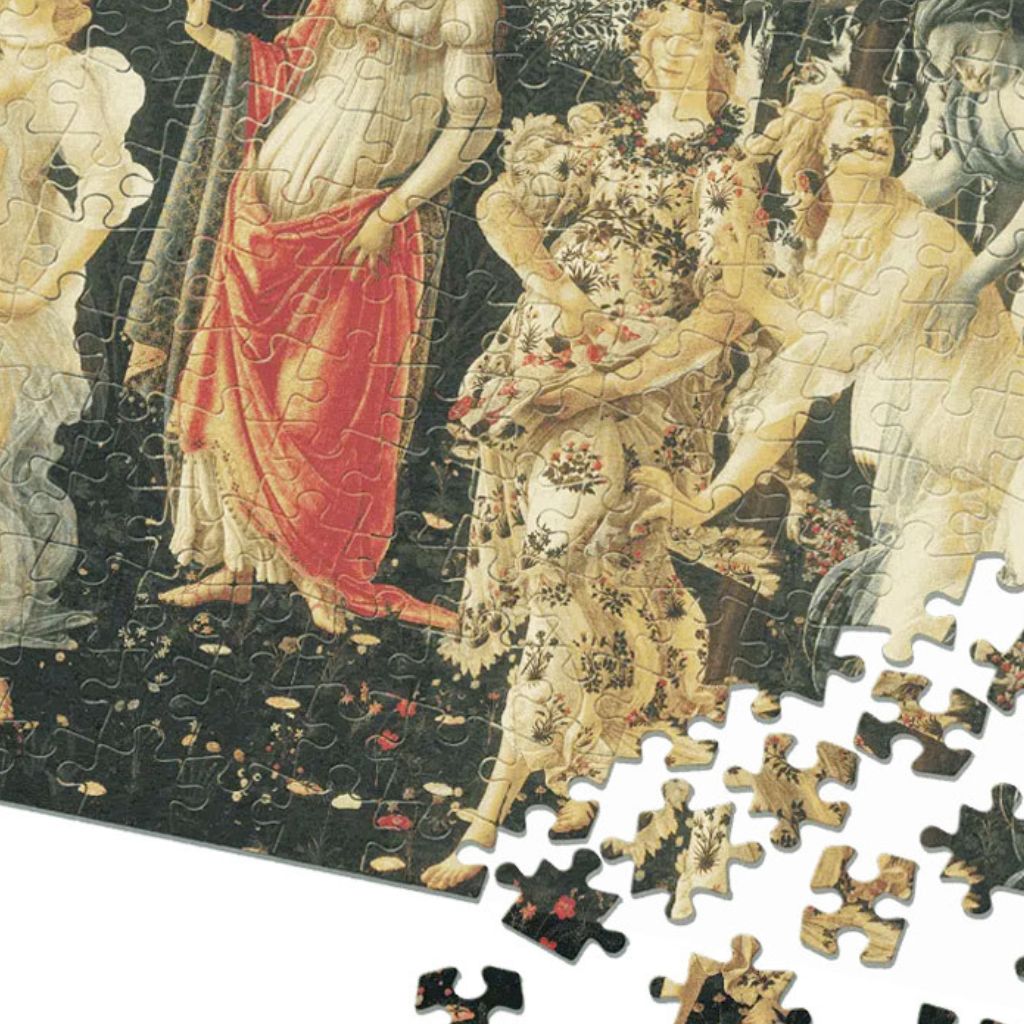
The allegorical meanings of Primavera (c. 1478) are varied and complex, but the work’s message is received on multiple levels.
The conceptual meaning is clear only to philosophers, but everyone can appreciate it in the pleasant grove and flowering meadow, the rhythm of the figures, the attractive beauty of bodies and faces, the flow of lines, and the delicate harmony of colors.
Since the signs’ purpose is no longer to frame and explain reality but to transcend it, all the accumulated knowledge factors of early-15th-century Florentine painting fall away, culminating in Piero’s grand theoretical construction.
Thus, structural perspective disappears, light as physical reality disappears, and the search for mass and volume as concreteness of objects and space disappears.
Nothing is less perspectival than the alignment of tree trunks or the embroidery of leaves in the Primavera background. Yet against this shallow background and repeated cadence of parallel lines, the linear rhythms of the figures gain meaning. Likewise, the subtle color transitions matter in contrast with the sharp silhouettes of trees against the bright sky.
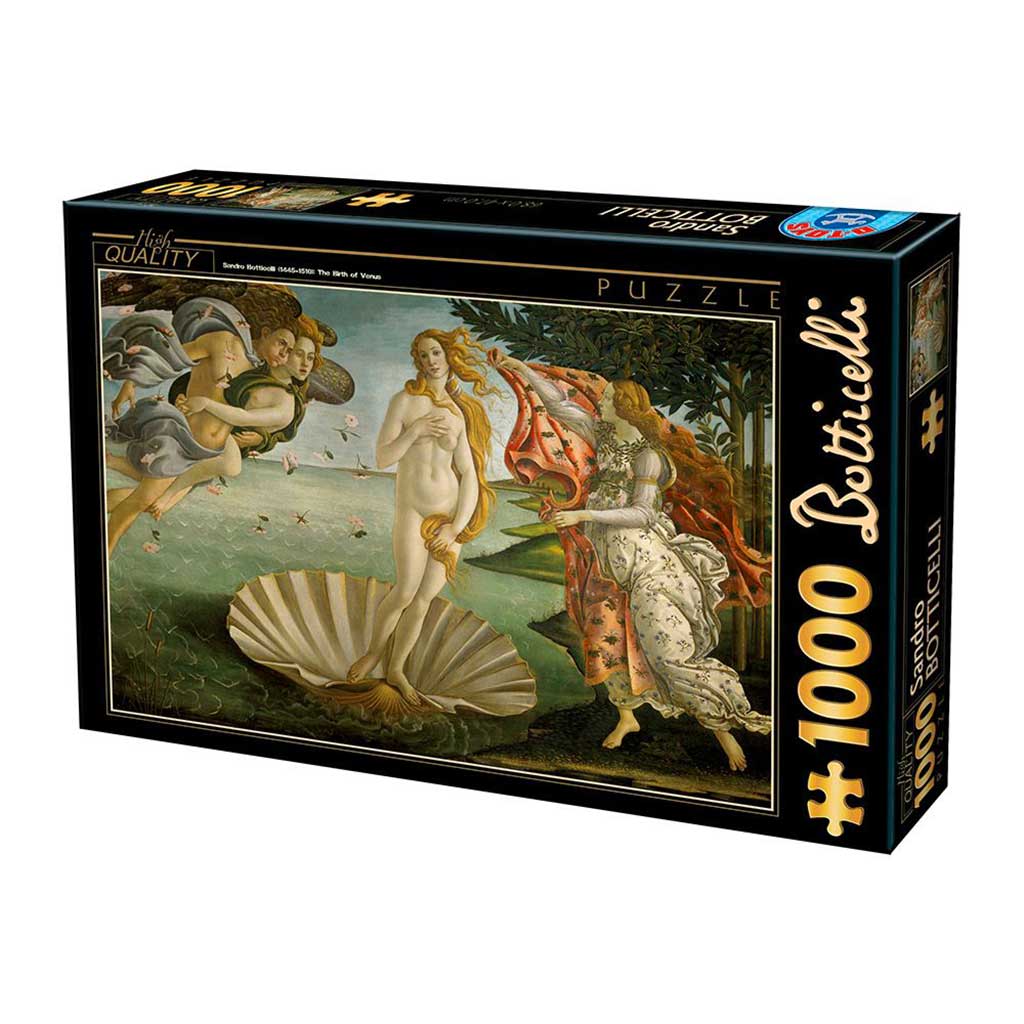
The Birth of Venus, painted by Botticelli around 1485, does not depict a pagan celebration of physical beauty.
Its deeper meaning lies in the relationship between the myth of Venus’s birth from sea foam and the Christian idea of the soul’s birth from baptismal waters.
The beauty Botticelli wants to exalt is spiritual, not physical.
Venus’s nudity symbolizes simplicity and purity.
Within the vast horizon, the three scenes of Botticelli’s Venus unfold.
The first scene depicts the Winds, then Venus rising from the shell, and finally the attendant approaching with a flowered mantle (alluding to nature’s dress of herbs and flowers).
The rhythm rises three times to its peak and then fades.
The spiritual anxiety in Botticelli’s intense, abruptly truncated lines acquires a spiritual accent, transforming the idea and thought of the great Florentine master.
Over the years, as Florentine events worsened, Botticelli’s spiritual anxiety became anguish, solitude, and despair. Vasari describes Botticelli in his later years as a decrepit man, fervent follower of Savonarola, increasingly “sophisticated.”