

Home / Springbok Puzzles and Art
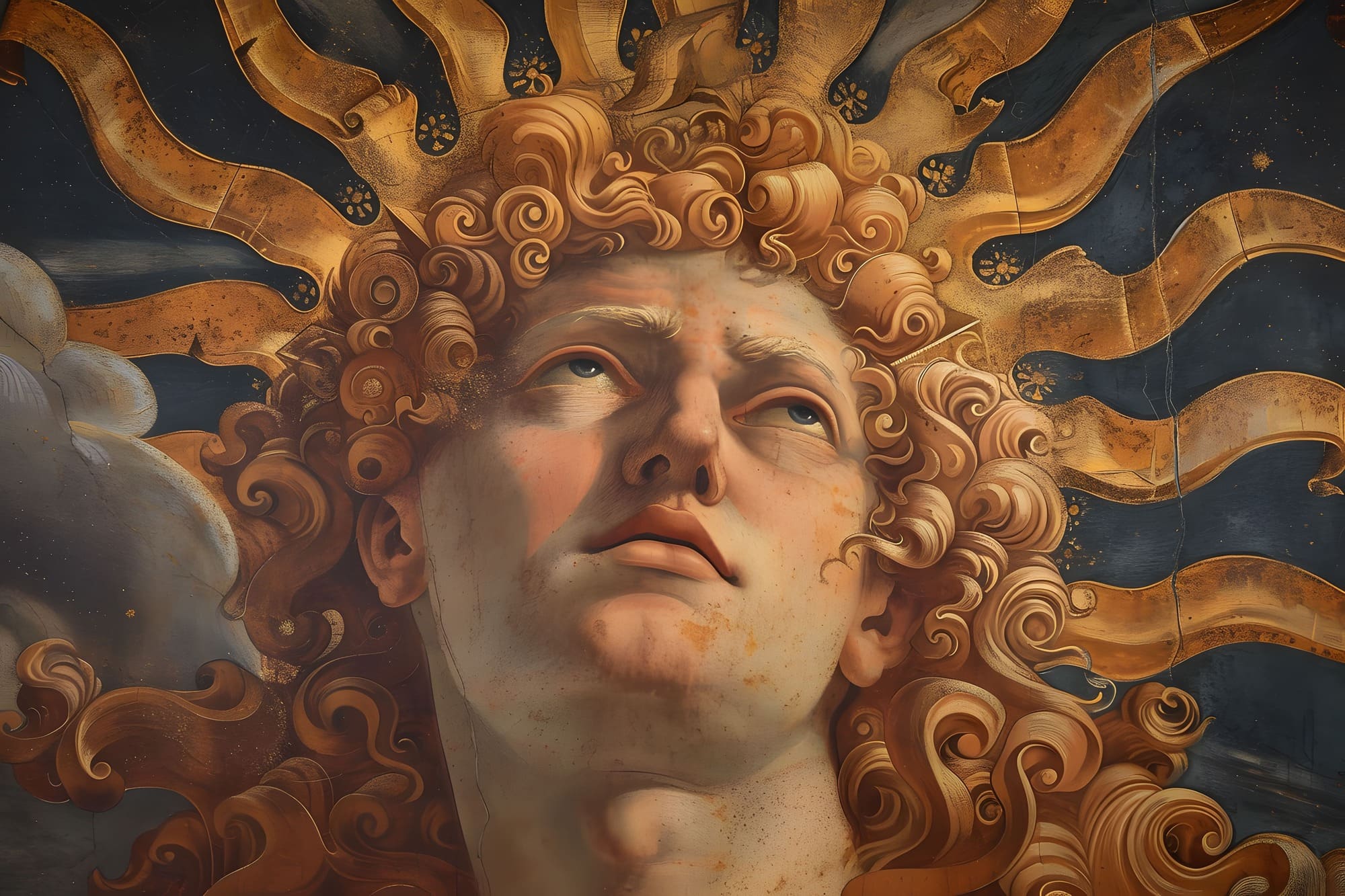
Discover the history of the famous American puzzle company Springbok.
The company that first introduced the artistic subject into puzzles and that understood that this combination could create a truly winning product: the art puzzle.
Puzzles in the 1950s in the United States reflected the culture of the time. Postwar prosperity, the Eisenhower presidency, and the population boom were a widespread symptom of stability and tranquility. Puzzles reflected that general contentment.
Brands like Milton Bradley’s “Big Ben,” Whitman Publishing’s “Guild,” and Consolidated Box’s “Perfect” offered traditional artwork. Scenic photographs, bucolic farms, and human-interest cartoons continued the trend of what had been popular in the 1930s. The 1960s, however, brought new and disruptive ideas.
In American society, the decade saw the civil rights movement, the assassinations of Kennedy and Martin Luther King, Lyndon Johnson’s “Great Society” program, the first moon landing, the Vietnam War, women’s liberation, and the hippie movement. These great changes also affected the world of puzzles, albeit in very different ways. The Beginnings of Springbok
Springbok Editions was the company that, since 1964, started a new wave of interest in the world of puzzles .
Owners Katie and Bob Lewin had been intrigued by the circulated puzzles that John Waddington Ltd. was producing in Leeds, England.
In the early 1960s, with technical assistance from Waddington, Katie and Bob founded Springbok Edizioni to produce die-cut puzzles for adults in the United States similar to those of John Waddington Ltd.
Interestingly, the technology was coming full circle: just as Waddington learned the puzzle business in the 1930s from Einson-Freeman of New York, the Lewins were now learning it from him.
The novelty of Springbok’s circular and octagonal puzzles had a strong impact on the market.
But that wasn’t the only innovation made.
Indeed, another revolutionary move by the company was to focus on art. Springbok created a sensation with its “Convergence” puzzle, an abstract painting by Jackson Pollock.
Full of blotches and random paint drips, it was billed as “the world’s most difficult puzzle.” This puzzle quickly captured the public’s imagination and sold over 100,000 copies in its first year.
Springbok continued to break the mold with images never before seen on puzzles. Katie Lewin searched the world for striking images that would make her puzzles challenging and interesting.
I went through museums with puzzle eyes.
He said.
In addition to modern art, Katie Lewin selected unusual subjects such as 15th-century Italian religious masterpieces, Kabuki embroidery, millefiore paperweights, Roman mosaics, a two-hundred-year-old astronomical chart, and exquisite 18th-century Chinese porcelain plates.
Museum curators were delighted to collaborate on this effort and provided helpful feedback on how to create the Springbok puzzles. The success of Pollock’s puzzle also had an unexpected twist.
Officials at the Albright-Knox Gallery in Buffalo, where the original painting was housed, were surprised by the steady stream of museum visitors coming to admire it after they had spent so many hours putting the puzzle together.
Katie Lewin commented on this event:
You understand a Jackson Pollock better after you complete the puzzle.
With jigsaw puzzles featuring charming paintings of vibrant, graceful patterns, Springbok appealed to a nation sensitized to environmental issues by the recent publication of Rachel Carson’s book, “Silent Spring.”
Springbok puzzles weren’t just for art intellectuals. The element of whimsy and surprise in Springbok puzzles breathed new life into a field—puzzles—that had fallen into monotony and banality since the 1950s.
Other examples of subjects that could be found printed on Sprinbok puzzles were “The Best 18 Holes of Golf in America”, Parisian newspaper headlines, Sherlock Holmes or women’s hats.
The company was also the first to cater to the fanatics, the diehards who simply wanted the most difficult puzzle without considering the framework.
Springbok gave them a set of 500-piece plain-colored puzzles: “Little Red Riding Hood’s Hood” (all red), “Close-Up of the Three Bears” (all brown), and “Snow White without the Seven Dwarfs” (all white).
The puzzles sold well although it is unclear how many were actually assembled.
The Lewins not only found new and interesting images for their puzzles, but they used cutting-edge lithographic techniques.
Bob Lewin had spent his entire career in the printing industry.
He made numerous trips to the National Gallery in London and other museums to fine-tune the lithographic proofs until their colors precisely matched the original paintings.
Bob’s experience and careful work ensured that Springbok puzzles surpassed other cardboard puzzles available at the time.
Additionally, most boxes included several booklets: “14 Tips on Jigsaw Puzzling” (how to assemble puzzles successfully), “The Puzzle Party” (including tips for cookie puzzles and pizza puzzles), and, of course, a few showcasing other puzzles created by Springbok.
Quality, however, came at a price.
Springbok puzzles sold for $3 to $3.50 at a time when most other brands were selling for less than $1.
But a superb advertising campaign overcame shoppers’ reluctance to spend more.
All the weekly magazines and numerous newspapers across the country were advertising Springboks and Katie Lewin who became famous as the housewife who became president of her own business after her children left home.
His twenty-minute appearance on NBC’s Today Show just before Christmas in 1964 gave the company free national exposure worth a small fortune. Over time, Springbok diversified its subject matter, also creating wooden puzzles for the British market.
A special edition puzzle for Henri Bendel, the New York women’s clothing store, sold for $75.
Hallmark Cards of Kansas City, Missouri, had been eyeing Springbok editions since its inception.
Hallmark has produced a few puzzles in the past, including a weekly series in the 1930s and some greeting cards featuring small puzzles.
He had long wanted to market a major line of puzzles for adults in his Hallmark stores, but was reluctant to incur the costs of developing them from scratch.
The acquisition of Springbok Editions was the solution. In 1967, Hallmark made the Lewises an offer they couldn’t refuse. The Lewins continued to manage the Springbok division for two years. They retired in 1969, but only temporarily.
Within weeks Bob Lewin had started Mill Pond Press in Venice, Florida, to produce limited-edition artist prints of wildlife and other bucolic subjects.
Mill Pond also released a number of wooden puzzles during the next decade.
But the legacy of Springbok Editions did not end with the Lewins’ sale of the company.
Hallmark continued to produce Springbok puzzles for over thirty-four years, using the same high-quality manufacturing technology. However, the new owner soon moved away from museum-quality art, relying instead on images produced by its large staff of in-house artists. Hallmark stopped producing puzzles in 2001, causing consternation among the hordes of devoted Springbok fans. The “Bokkers,” as they called themselves, organized an online petition to try to change Hallmark’s mind.
Their determination convinced Allied Products of Kansas City to purchase the line in 2002 and bring Springbok puzzles back to the shelves.
Springbok puzzles have also had a huge impact on their competitors, transforming the adult cardboard puzzle market.
By the late 1960s, major manufacturers such as Milton Bradley, Whitman, Jaymar, Saalfield, Tuco, and Warren were also offering round and octagonal puzzles for the mass market.
E. E. Fairchild of Rochester, New York, marketed “Shape” puzzles with irregular edges.
While existing companies were not abandoning their basic puzzles, they were all attempting to offer a greater variety of artwork.
Springbok Editions brought a breath of fresh air to the puzzle industry and proved that creativity is the key to attracting new customers, even in challenging times.