

Home / Art and Faith: The Best Religious Puzzles
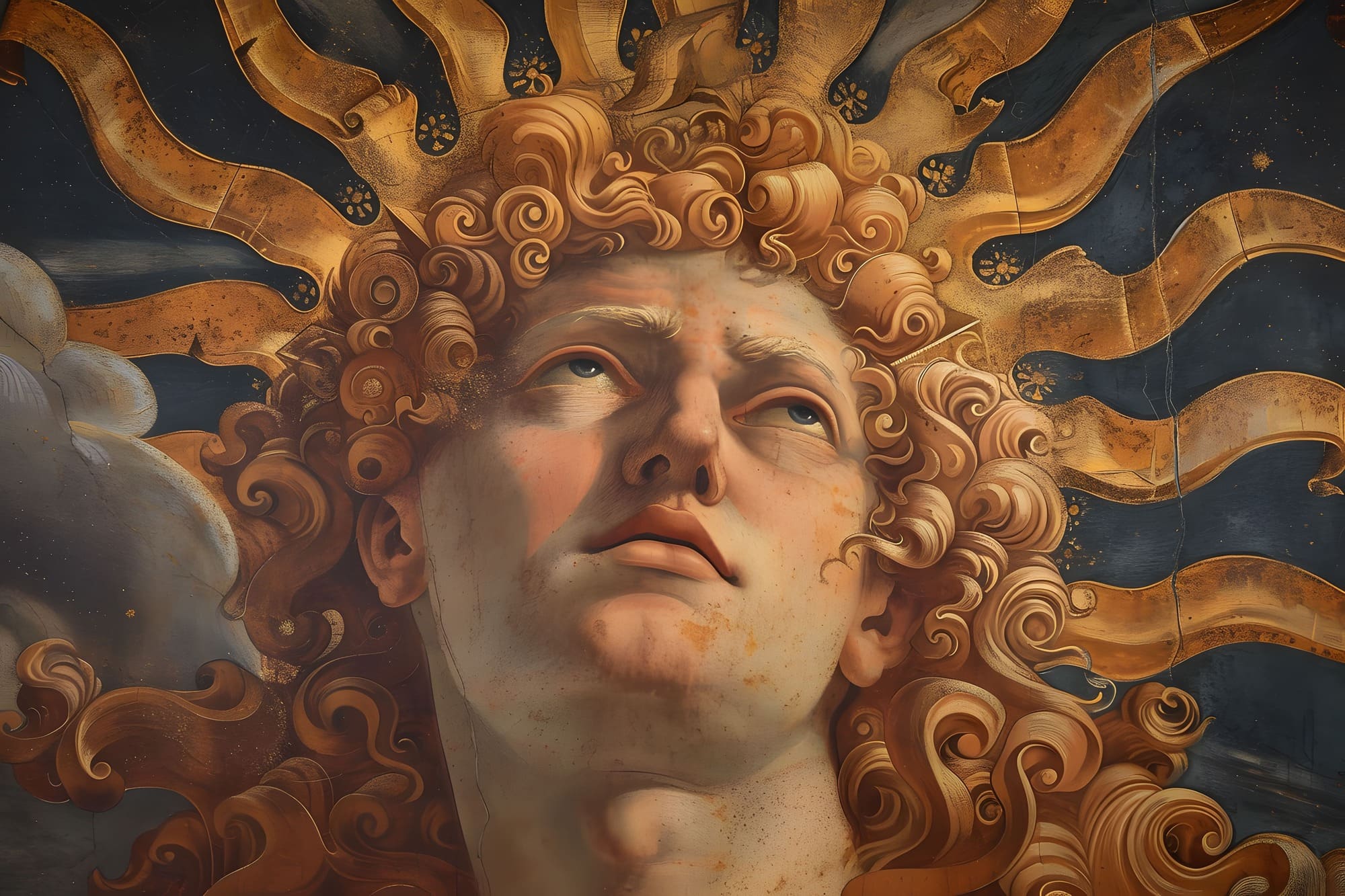
The intersection of art and faith is one of the most fascinating and complex aspects of human history. Throughout the centuries, artists of every era have explored and depicted religious themes, creating works that not only reflect the devotion and spiritual beliefs of an era or culture, but also speak to the human soul on a universal level. Religious art, in particular, becomes a bridge between the visible and the invisible, between man and the divine, offering a window into how different faiths and traditions have sought to express the inexpressible.
Among all the artistic representations related to the Christian faith, Leonardo da Vinci’s “The Last Supper” holds pride of place. Created between 1495 and 1498, commissioned by Ludovico il Moro, Duke of Milan, this fresco occupies the entire wall of the refectory of the Convent of Santa Maria delle Grazie in Milan.
Beyond its undeniable technical mastery, the work is striking for the emotional and psychological depth with which Leonardo portrayed Jesus and his apostles at the crucial moment of their Last Supper together, shortly before Christ’s Passion. This scene is not only a milestone in Renaissance art, but also a profound examination of human nature, friendship, betrayal, and faith.
The representation of Christian faith in art is, of course, not limited to “The Last Supper.” Artists such as Michelangelo, with his majestic Sistine Chapel, Caravaggio, with his intense biblical interpretations, and Giotto, with the frescoes in the Scrovegni Chapel, have all explored the complexity of faith through their works.
These creations are not only testaments to the artists’ personal devotion or commissions, but also represent attempts to connect viewers with stories and principles greater than themselves, through the beauty and evocative power of art.
The artistic exploration of faith is not limited to Christianity. Other religious traditions have produced masterpieces that express humankind’s spiritual quest and its relationship with the divine. For example, Islamic art, with its predilection for geometric and calligraphic motifs, reflects the desire to represent the infinite beauty and complexity of Allah without depicting His image. Similarly, Buddhist art uses symbols and figures to express concepts such as enlightenment, compassion, and the cycle of rebirth.
Religious art plays a crucial role not only as an expression of individual or doctrinal faith, but also as a means of educating, inspiring, and strengthening communities.
In our journey through sacred art and its connections with faith, another work deserves special mention: “The Tower of Babel” by Pieter Bruegel the Elder. This painting depicts the biblical narrative of the construction of a tower destined to reach heaven, a human project that directly challenges God, culminating in the confusion of languages and the dispersion of peoples across the earth. Bruegel magnificently captures not only the boundless ambition and collective folly of this undertaking, but also the incredible diversity and complexity of humanity.
Bruegel’s depiction, rich in minute detail and scenes of everyday life set within the tower’s grandiose yet unsuccessful design, invites reflection on the themes of communication, human pride, and cultural diversity. The work, with its intricate composition and thematic depth, is a splendid example of how art can explore profound questions of the human condition through the prism of faith and biblical narrative.
Gustav Klimt, one of the most recognizable and innovative artists of the modernist movement, created works that transcend time and space, inviting reflection and contemplation. Among these, “The Tree of Life” stands out for its ability to explore themes deeply rooted in faith and spirituality through a rich and symbolic visual language.
This fresco, part of a larger cycle of works created for the Palais Stoclet in Brussels, depicts an elaborately unfolding and expanding stylised tree, whose intertwined branches and roots symbolise the connections between heaven , earth and underground , between life , death and rebirth .
Sandro Botticelli, a master of the Florentine Renaissance, delicately and profoundly explored the theme of the Madonna in works such as “The Madonna of the Pomegranate” and “The Coronation of the Virgin.” Through the use of symbols, vibrant colors, and harmonious compositions, Botticelli conveys the sacredness and emotional depth of his religious scenes, inviting the viewer to spiritual reflection.
When contemplating the intersection of art and faith, one cannot ignore Sandro Botticelli’s “Madonna of the Magnificat.” This work, rich in symbolism and grace, depicts the Virgin Mary writing the Magnificat, a canticle of praise and thanksgiving to God, with the Child Jesus guiding her. Surrounded by angels and with her humble yet penetrating gaze, the Madonna of the Magnificat embodies devotion and maternal love, elevated to symbols of purity and spirituality.
The use of bright colors and rich detail, typical of Botticelli’s style, only accentuates the sacredness of the moment depicted, inviting viewers to meditate on the depth of their faith and the meaning of the divine in art. The painting’s circular composition, or tondo, emphasizes the idea of completeness and perfection, reflecting the celestial harmony that pervades the work.
Another emblematic example of art that profoundly explores religious themes is Michelangelo’s “The Creation of Adam,” part of the majestic fresco cycle that adorns the Sistine Chapel ceiling in the Vatican. Depicting the biblical moment when God gives life to Adam, Michelangelo not only demonstrates his mastery of color and form, but also conveys a powerful message about the connection between humanity and the divine. This work exemplifies art’s ability to capture and communicate profound spiritual and philosophical truths.
Raphael Sanzio, a contemporary of Michelangelo and Leonardo, left an indelible mark on religious art with his “Madonna della Seggiola.” This circular painting, also known as a tondo, depicts the Virgin Mary in a moment of family intimacy with the Child Jesus and Saint John the Baptist. The sweetness, harmony, and balanced composition of this work reflect the Renaissance ideal of beauty and perfection, while also expressing a more personal and accessible aspect of divinity.
In the digital age, the connection between art , faith , and contemplation takes on new forms. A significant example is represented by artistic puzzles reproducing famous religious artworks. Putting together a religious puzzle becomes an act of meditation, a way to approach the work and its most intimate meanings piece by piece. This process offers not only an opportunity for aesthetic appreciation, but also a moment to reflect on the themes and messages conveyed by the work, in a context of quiet and concentration.
Returning to Leonardo’s Last Supper, our panoramic version of the puzzle offers a truly unique experience. Thanks to its expanded format, this puzzle not only allows you to appreciate the detail and intricacy of Leonardo’s work in a more immersive way, but also becomes a perfect decorative piece to frame and hang in your bedroom or any other space you desire. Each puzzle piece has been designed to capture the mastery and emotional intensity of the original, transforming the assembly process into a journey through art history and spirituality.
As Easter approaches, a holiday that celebrates renewal and reflection, many are looking for a gift that goes beyond the conventional, offering not only joy but also a meaningful experience between art and faith . Leonardo da Vinci’s Last Supper puzzle emerges as an impeccable choice, embodying the perfect synergy between art , faith , and introspection .
This extraordinary masterpiece, which portrays one of the most intense and significant moments of Christianity, becomes a unique opportunity for contemplation and spiritual connection .
Assembling the puzzle allows us not only to appreciate Leonardo’s artistic mastery, but also to immerse ourselves in a profound meditation on the universal values and messages that Easter represents.
We invite anyone seeking a special gift this holiday to consider the Last Supper puzzle: a gift that promises to be an enriching experience, a journey through beauty and spirituality, to be shared with loved ones or undertaken alone to find inner peace and inspiration.